Safari sans mobiles: Experts welcome ban, but suggest steps for better eco-tourism in State
12 Jun 2025 11:42:52
By Kaushik Bhattacharya :
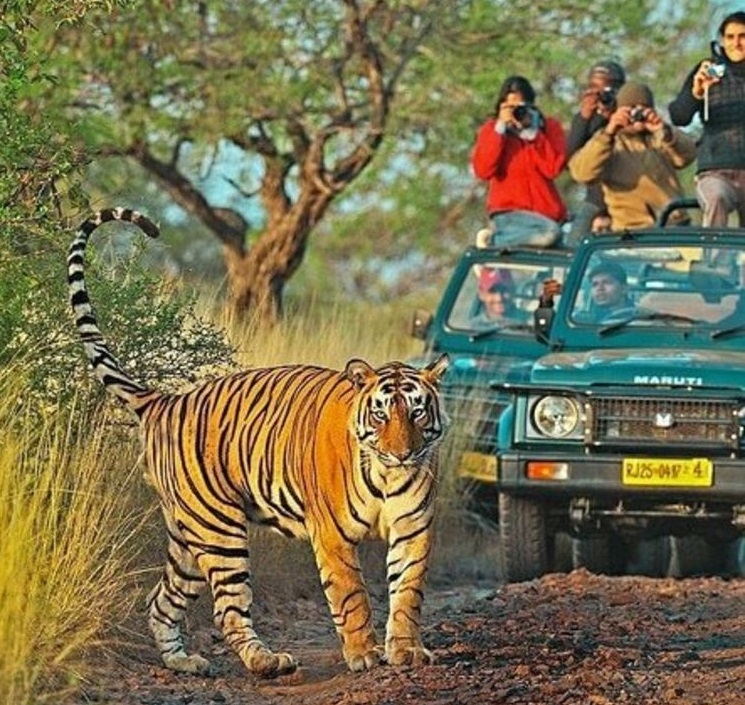
The recent decision by the Maharashtra Forest Department to ban mobile phones during safaris in tiger reserves is rooted in a well-intentioned conservation policy and came into effect after a group of tourists encircled a tigress and her five cubs for photographs in Umred Paoni Karhandala Wildlife Sanctuary (UPKWS).
Though the decision of banning mobile phones was arrived at to reduce the crowding of tourists while sighting, the wildlife experts and naturalists are now demanding lifting the ban as it was causing safety issues for tourists during safari in all tiger reserves in the State.
In a recent incident, an evening safari turned into a harrowing experience for an elderly couple and their friend when their vehicle broke down in the core zone of Pench Tiger Reserve (PTR) last month, leaving them stranded for over two hours in complete darkness and surrounded by wildlife.
As per the recent ban, mobile phones are not permitted inside the reserve during their safari, cutting off all communication with the outside world. Fortunately, the Forest staff on the gate observed that one vehicle was missing and then, they started searching the vehicle and around 8 pm, the occupants were rescued from the jungle.
Initially, the ban on mobile phones in the State Forest zones sparked a controversy and even criticism. This latest incident in PTR once again highlighted the issue and wildlife experts, wildlife conservationists, wildlife photographers and naturalists came out in one voice, demanding some leniency in the rule for better eco-tourism in State.

Train safari drivers, guides in
managing tourists: Dr Krishna
“The blanket ban on mobile phones during jungle safari is a bold step by the Forest Department in wildlife conservation. However, the core issues of mismanagement and crowding around
animals are not caused by mobile phones alone,” Dr Umesh Krishna, Director, NatEdu Welfare Foundation and a wildlife enthusiast told ‘The Hitavada’.
“What is really needed is a stronger emphasis on training safari drivers and guides in managing tourists, along with strict enforcement of park regulations. Rather than penalising all visitors, targeted discipline and education would yield more lasting benefits for both wildlife and people,” said Dr Krishna.
While protecting our forests and wildlife is non-negotiable, policies must be both, effective and inclusive. An approach such as regulated phone usage, designated photography zones, or in-vehicle phone lockboxes could strike the right balance between conservation and community welfare, he added.

‘Allow mobile usage in
controlled manner’
Mobile phones definitely cause disturbance among wildlife due to crowding for photographs during safari but it has many benefits which is directly benefiting tourists as well as the Forest Department, said Naturalist Jigar Vaidya.
Mobile phones provide a crucial line of communication in case of emergency for tourists, guides and drivers. Along with this, it is useful in capturing the beauty of nature - not only big cats of the jungle, but also small species like snakes, insects, scenic beauty, etc. Similarly, social media sharing of photos and videos act as a powerful promotion tool for the Forest Department. It will also help in promoting eco-tourism among masses and also, the most significant being the mobiles help visitors to record rare wildlife sightings or note unusual behaviour of wildlife which will help park authorities monitor changes in the ecosystem, said Vaidya.

‘Ban helps professional photographers’
The recent ban on mobile phones during safari could inadvertently promote exclusivity, favouring those with expensive camera equipment and deprive occasional safari-goers and budget-conscious tourists, said Neha Sonone, Wildlife Conservationist.
“While the intention behind this move might be to preserve natural environment and promote eco-tourism, it raises concerns about safety and accessibility. A more correct approach may lead to balanced conservation with tourists,” she added.

‘At least, allow one mobile inside forest
during safari’
“The recent incident in PTR may happen with anyone in the jungle because tourists, guides and drivers have no option to communicate with Forest staff outside the jungle. The decision was definitely a positive step towards wildlife conservation, but it requires a review by the department to promote eco-tourism in tiger reserves,” said Aman Gujar, Wildlife Conservationist. “Moreover, many rely on mobile phones for capturing precious wildlife memories, lacking professional cameras. A balanced approach is needed to protect wildlife while ensuring a positive and safe visitor’s experience,” Gujar added.

‘Only guides be allowed to use mobile during safari’
Banning mobile phone during safari is a positive step by the Forest Department, but at least one mobile phone per gypsy per guide should be allowed. In view of security, the guide should be allowed to carry the mobile. During breakdown or any emergency, it will help in contacting the Forest staff, said Vaibhav Singanjude, Wildlife Photographer.
PTR to install GPS
sets in Gypsys soon
In the wake of demand for reconsidering mobile phone use during jungle safaris in the State, the Pench Tiger Reserve (PTR) management is planning to equip all authorised Maruti Gypsys with GPS sets to
track all safari vehicles during the excursion. Last month, a senior couple was stranded for hours in core area of PTR due to breakdown of their safari vehicle, raising safety concern of tourists during safari. After two hours, the tourists were rescued by the Forest team with their safari vehicle.
To avoid such incidents in near future, the PTR management is working on installing GPS sets in all safari vehicles.
“The decision of mobile ban during jungle safari came from the Head of Forest Force (HoFF) and it will continue. Whereas to provide more safety to our tourists, we are working on installing GPS in all vehicles,” said Dr Kishor Mankar, Field Director, PTR.
“We have tested the GPS sets in Chorbaoli forest area and the network there is good. Currently, the testing is going on in Sillari forest area and soon, it will be implemented in all gates in Pench,” said Mankar.