UN human rights chief voices concern over B’desh law on political party ban
| Date :18-Jun-2025 |
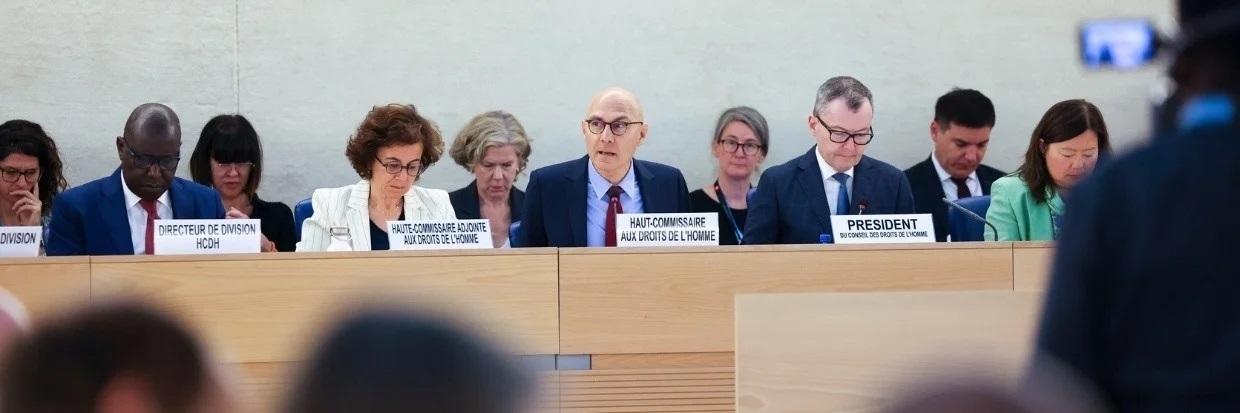
GENEVA :
UNITED Nations High
Commissioner for Human Rights
Volker Turk has expressed grave
concern over recent legislative
amendments made under the
Muhammad Yunus-led interim
government in Bangladesh that
allowed the ban of political parties, organisations, and their
related activities.
Addressing the 59th session of
the Human Rights Council in
Geneva on Monday (local time),
the UN human rights chief urged
the interim government to make
meaningful advances on reforms
to create the environment for
free and inclusive elections.
“I am concerned about recent
changes to legislation to allow the
banning of political parties and
organisations and all related
activities. This unduly restricts
the freedoms of association,
expression, and assembly,” said
Turk.
“I am encouraged that the
Interim Government and political parties in Bangladesh are
making progress through dialogue. I urge meaningful
advances on reforms to create the
environment for free and inclusive elections,” he said.
Previously, the Office of the
United Nations High
Commissioner for Human Rights
(OHCHR) presented a fact-finding report that included suggestions in certain specific domains,
such as accountability and justice, police and security, civic
space, political system, and economic governance.
According to the fact-finding
report, the UN noted that prohibiting political parties would
hinder a genuine transition to
multiparty democracy and
would essentially disenfranchise
a significant portion of the
Bangladeshi electorate.
Recently, Human Rights
Watch, a US-based advocacy
group, severely criticised the
Yunus regime for attempting to
suppress the rights of supporters of Sheikh Hasina and the
Awami League party.
The recent legislative initiatives by the interim government
risk undermining fundamental
freedoms, the rights body
emphasised in a statement.
“On May 12, the interim government ordered a ‘temporary’
ban on the Awami League using
newly introduced powers under
a draconian amendment to the
Anti-Terrorism Act. The ban
includes, among other actions,
meetings, publications, and
online speech supporting the
party,” said Human Rights Watch
(HRW).
“The ban on the Awami
League will apply until party leaders have faced trial for abuses
committed during their 15-yearrule, a process that could last
years, thus effectively proscribing the party. The interim government has prohibited all activities, including any kind of publication, media, online and social
media, any kind of campaign,
procession, meeting, etc. by theBangladesh Awami League, curtailing supporters’ freedom of
speech and association,” it further added.