‘Illegal mining near Kazirangaintensified despite SC ban’
| Date :05-Jun-2025 |
NEW DELHI :
THE Central Empowered
Committee (CEC) has told the
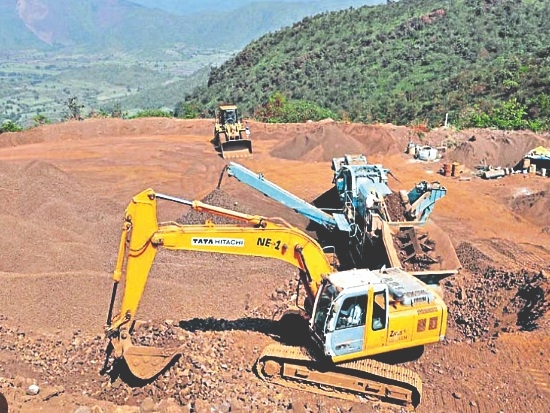
Supreme Court that illegal mining has continued and intensifiedinAssam’sParkupPahararea
neartheKazirangaNationalPark,
despite a 2019 top court order
banning all mining and related
activitiesinandaroundthepark’s
eco-sensitive zone.
Kaziranga, a UNESCO World
Heritage Site, is home to around
65 per cent of the endangered
one-hornedrhinopopulationin
the world. It forms part of an
important wildlife corridor
betweentheBrahmaputrafloodplains and the Karbi Anglong
hills.
The SupremeCourt, actingon
earlier findings by the CEC, had
prohibited all mining and relatedactivities inthis regiontoprevent degradation of critical
wildlife habitats and forested
landscapes.
Based ona complaintfroman
anonymous government
employee in Assam and fieldlevel verification, the CEC submitted a fresh report dated May
30 to the SC, saying that mining
activitiesintheregionhave“continued and intensified” despite
the apex court’s ban ordered on
April 4, 2019.
“Rampant mining continues,
particularly in the Parkup Pahar
Range,adeclared wildlife sanctuary forming the southern
boundary of the Kaziranga
National Park,” the report said.
The complaint received from
the government employee in
December 2024 contained
GoogleEarthimagery from 2019
to 2023 and site-specific data.
Theimagesreportedlyshowed
that mining, which had stopped
followingtheSC’s2019banorder,
resumed and intensified after
2021.
The CEO forwarded the complaint to the Assam forest and
police departments, requesting
a factual report.
The principal chief conservator of forests, Assam, submitted
a detailed report on February 5,
outlining the actions taken,
includingthesuspensionofmining leases.
The report confirmed that
stoneminingwasoccurringclose
to the Borjuri Waterfall and its
surroundingstreams,whichflow
towards Kaziranga.
The CEC report also said the
Karbi Anglong Autonomous
Council (KAAC) gave fresh permissions for “dozens” of mines
in forest areas and in proposed
eco-sensitivezones,violatingthe
SCbanandwithouttherequired
approvalfromthestandingcommittee of the National Board for
Wildlife and theCentral government under the Forest
(Conservation) Act, 1980.