IIIT-NR researcher introduces CORE–2 framework for sustainable talent acquisition
| Date :05-Jun-2025 |
Staff Reporter :
RAIPUR
The ‘CORE–2 framework for successful and sustainable talent acquisition’ is
published in a globally renowned A-category journal Organizational Dynamics
published in a globally renowned A-category journal Organizational Dynamics
In a pioneering contribution to the field of Human Resource Management (HRM), IIIT–Naya Raipur researchers have introduced an innovative talent acquisition framework ‘CORE–2?’.
The CORE–2? framework, with a practitioner friendly customisable candidates’ assessment matrix at its heart, is designed to make recruitment not only smarter and more strategic, but also sustainable in the face of today’s dynamic workplace challenges.
Developed by Associate Professor Ambika Prasad Choubey and Dr Amit Agrawal, the framework appears in their research paper titled ‘Recruit to Rise and Retain: The CORE–2? Framework for Successful and Sustainable Talent Acquisition’, published in Organizational Dynamics, a globally renowned A-category journal dedicated to leading-edge research in organizational behaviour, HRM and strategic management.
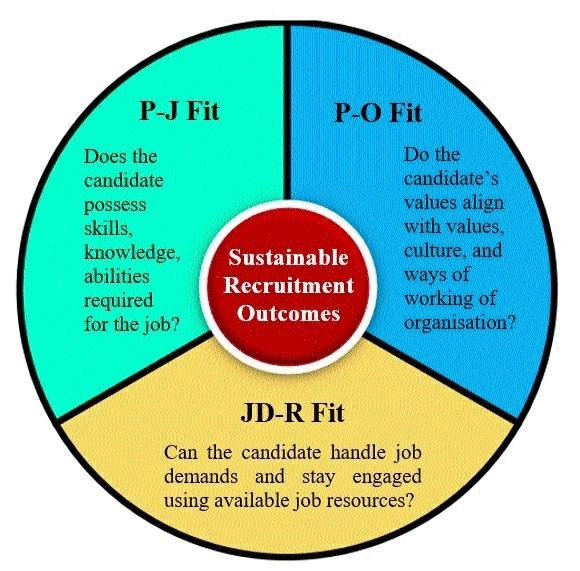
CORE–2? framework enables organisations to evaluate candidates holistically across three dimensions - candidates’ technical competence and job alignment (P–J Fit); their compatibility with organizational values and culture (P–O Fit) and their psychological resilience and adaptability to workplace demands (JD–R Fit). Unlike traditional models that assess one or two of these factors in isolation, CORE–2? integrates all three into a unified evaluation matrix, offering a 360-degree view of a candidate’s suitability. This integrated approach helps organizations not only identify candidates who are capable today, but also who are more likely to stay committed, engaged and high performing in the long run even in the changing and challenging world of work.
At its centre, the CORE–2? framework has a customisable candidate evaluation matrix that recruiters can use to assign weighted scores across these three dimensions based on specific job roles, making it both academically robust and operationally practical.
It brings greater transparency to the selection process and reduces the risk of costly recruitment errors, early burnout and disengagement issues that are increasingly common in contemporary work environments.
As businesses strive to build high-performing and enduring workforces, the CORE–2? framework offers not just a method, but a vision for the future of recruitment, one that aligns capability with culture and resilience with responsibility. It marks a shift from transactional hiring to a transformative talent acquisition strategy, empowering organizations to hire not just for roles, but for lasting impact.
For HR leaders, business decision-makers and policy professionals, this framework offers not just a new assessment matrix for candidates but also a new mindset and roadmap for hiring in a rapidly evolving world of work.