Plastic waste offers empowerment for rural women in Bemetara distt
| Date :06-Jun-2025 |
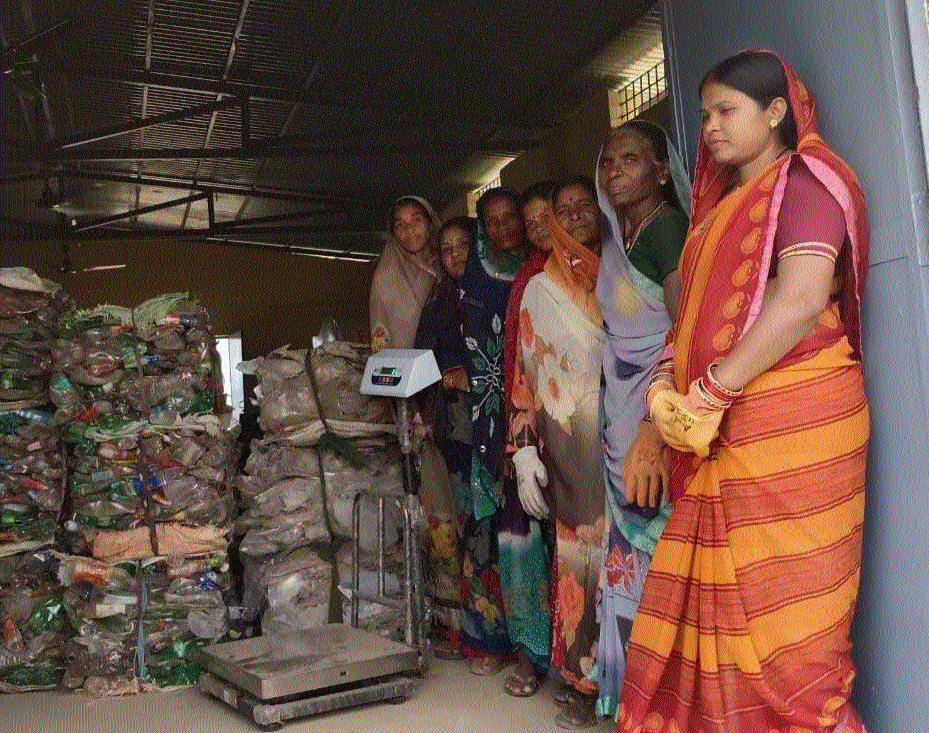
Swacchata didis with local
sanitation workers.
Our Correspondent :
BEMETARA
What was once seen as an environmental menace is now turning into a means of livelihood and dignity for rural women in Bemetara district. At the heart of this quiet but impactful shift lies a plastic waste management initiative, which, far from being a mere administrative effort, is fast becoming a model of decentralised empowerment through sanitation.
At Rakhi village in Saja block, a Plastic Waste Management Unit, established under the Swachh Bharat Mission (Gramin), is being operated by local self-help groups. Here, Swacchata didis local sanitation workers drawn from surrounding villages collect, segregate, and bundle plastic waste using a mechanised bailing system. The recycled output is then sold to registered firms, generating a modest but steady stream of income.
This is about value of labor, of the environment, and of the women often overlooked in policy rhetoric. Under the guidance of Collector Ranbir Sharma and District Panchayat CEO Tekchand Agrawal, the initiative has created a rare convergence of environmental sustainability and economic empowerment at the grassroots.
“The effort is helping safeguard the environment while giving rural women a chance to become self-reliant,” said Collector Sharma, echoing the larger vision behind the decentralised model.
District authorities have replicated this intervention across all development blocks in Bemetara, with units at various stages of operational maturity. While the scale may still be modest, the message is clear: when the state sees rural women not as beneficiaries but as partners in change, even something as unglamorous as plastic waste can become an engine of transformation. The story unfolding in Rakhi village serves as a timely reminder: real change is often born quietly, one plastic bag, one empowered woman at a time.