PWD introduces new water disposal system
08 Jun 2025 10:10:35
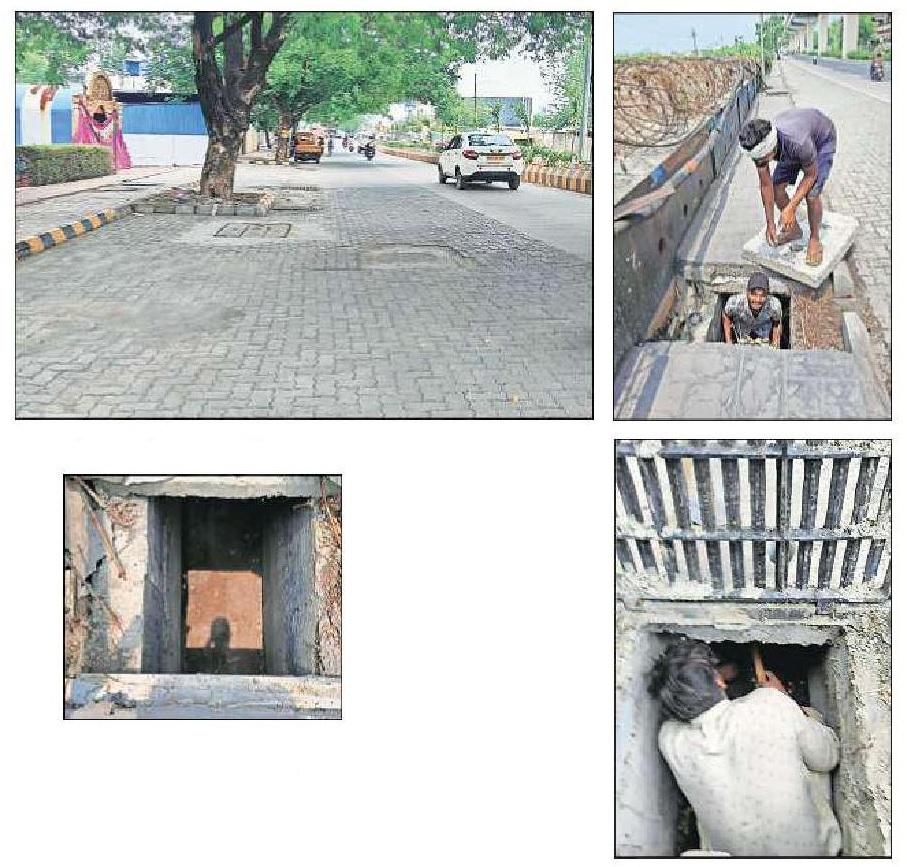
By Vikas Vaidya :
Come rain and flood and waterlogging tests Nagpur. But the Public Works Department (PWD), under a special World Bank project, has introduced a new drain system on a pilot basis near Padole Square that would dispose of water in a proper manner. PWD is hoping for good results from this system when the city witnesses good rains.
PWD is mulling over installing the system in the areas where flood-like situations occur. For example, in every rainy season, people using Narendra Nagar RUB have to suffer as water gets logged inside it. According to PWD officials, it can be resolved through the water disposal system installed near Padole square.
The area between Raje Sambhaji Chowk and Padole Hospital Chowk witnesses a large amount of water accumulation during the rainy season. In order to properly drain this water and take measures against this, the work has been approved for the construction of Reinforced Cement Concrete (RCC) drain from Raje Sambhaji Chowk to Narendra Nagar nullah along with proper drainage on the Ring Road.” RCC drains, also known as precast RCC drains, are drainage systems made of reinforced concrete. These drains are commonly used in construction for applications like water drainage, sewerage, culverts, and irrigation.
Under the said work, the RCC drain on both sides of the Ring Road from Sambhaji Chowk to Narendra Nagar nullah has been constructed under IRDP, most of which has become dilapidated. It is proposed to reconstruct this RCC drain as per the required capacity at present.
A large amount of water accumulates on the Ring Road from Padole Hospital Chowk to Radhe Mangalam Hall, due to which the traffic on the Ring Road is blocked on one side during the rains. The level difference between Raje Sambhaji Chowk and Pratap Nagar Chowk is 7 metres, and the height of the road is more on the road towards Pratap Nagar, due to which it was very difficult to remove the water from this area beyond Pratap Nagar Chowk. Also, it was considered to provide a lateral pipe to drain the water accumulating on the Ring Road from Padole Hospital Chowk to Radhe Mangalam Hall. Thus, it was considered to connect the lateral to the adjacent drain. But the said drain is very narrow due to the surrounding settlements. The width of the drain in this area is approximately 3 m. Therefore, approximately 2 to 3 feet of water accumulates in the said settlement during the monsoon. If the laterals mentioned in the work in this drain are removed, it was observed that a larger amount of water would accumulate in the settlement of the said place than before, and when asked by the citizens living around, they also said the same.
How does the system work?
“Considering “the level difference on the Ring Road and the surrounding conditions, it was decided to pump water and release it into the drain located in front of Pratap Nagar. Accordingly, a pump house was planned in front of Radhe Mangalam Hall, as the water from IT Park, VNIT, and some parts of this area was accumulating at this place. The water accumulating at this place is collected by building a sump and a 40 HP capacity
submersible pump has been installed.
This can pump sludge along with wood waste. The working of this pump is fully automated and will operate immediately if water accumulates in the sump.” The accumulating water is pumped through this pump, and a 600 mm diameter HDPE pipeline is encasing it near the Ring Road. The rainwater collected from this HDPE pipe is released into the drain located near Pratap Nagar Chowk. The drain of Ring Road is now in good condition and is being discharged into the drain near Chhatrapati Chowk which later meets Narendra Nagar nullah.