A Taste Of Shared Prosperity
13 Jul 2025 11:15:47
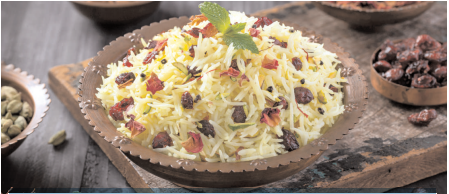
A Taste Of Shared Prosperity
By CHARVI ARORA
What do blueberry sandesh
and cranberry pulao have
in common? They are both
delicious examples of how
food reflects the growing
U.S.-India trade ties.
The February 2025, US-India Joint
Leaders’ statement emphasised expanding bilateral agricultural trade as a key
priority for both governments. At AAHAR
2025 , an international food and hospitality fair in New
Delhi, the US
Pavilion, organised
by the Department of
Agriculture’s Foreign
Agricultural Service
(FAS), was a major
highlight.
The word
“Aahar” means food,
diet or nourishment.
Jorgan K Andrews, Chargé d’Affaires,
a.i., US Embassy New Delhi, inaugurated
the pavilion with the theme “Taste of
America 2025.” In his remarks, he highlighted the importance of trade in the US -
India bilateral relationship. Over five days,
American food producers and trade councils worked together to show how US food
and beverage exports are becoming a
trusted part of Indian kitchens. The pavilion featured California almonds, walnuts,
pulses, blueberries, cranberries, pecans,
as well as US duck and turkey products.
These items weren’t just on display. Chefs
prepared traditional Indian dishes with
them, showing how American ingredients
adapt to local culinary preferences.
US Ingredients In Indian Dishes
Fusion dishes were a highlight of the US
pavilion, underscoring how American
ingredients can integrate seamlessly with
Indian culinary traditions. This adaptability is key to deepening market acceptance
and expanding trade. Raj Kapoor of the US
Highbush Blueberry Council says Indian
companies are experimenting with US
blueberries - fresh, frozen and dried - in
products like blueberry lassi, kaju katli
with blueberries, and blueberry kalakand.
“We bring blueberries in bulk and
supply them to the industry in large quantities so they can test and
experiment. Once they are
satisfied, they continue to buy
from us,” he explains.
Sumit Saran, a longtime promoter of American foods in
India, represented the American
Pecan Council and the US
Cranberry Institute at AAHAR.
“Both pecans and cranberries
are becoming very popular,” he
says, citing increased consumer
interest. He highlighted examples like cranberry mithai and
cranberry namkeen — classic
Indian snacks reimagined with
US ingredients—as part of a larger trend
toward fusion cooking in Indian homes.
Shiven Khanna, who works with the
California Walnut Commission and the US
Egg and Poultry Export Council, emphasizes how regional Indian dishes are
incorporating American elements. “India
has a range of regional preferences, and
we see that American ingredients fit in
well,” he says, pointing to new creations
like Turkey Biryani and Assamese Duck
Curry with pumpkin.
He also noted walnuts’ longstanding
role in Indian sweets, such as California
walnut halwa, reinforcing their natural fit
in local recipes.
US exhibitors didn’t just
offer ingredients - they also demonstrated
possibilities. At the pavilion, American
blueberries were featured in dishes like
blueberry kulfi, nankhatai, suji halwa,
and even a blueberry dhokla, demonstrating the versatility of US produce in
familiar Indian formats.
Cranberries were equally prominent,
appearing in laddoo, modak, papdi chaat,
and khandvi. Even the classic thandai got
a twist with cranberry milk thandai, while
desserts such as cranberry mango kulfi
and cranberry coconut kulfi attracted
attention for their inventive blend of
flavours. These examples showed how
cranberries can support both tradition and
innovation.
Deepening Trade Ties
The growing presence of US agricultural
products in Indian kitchens reflects more
than evolving tastes - it signals a deeper
economic partnership.
As outlined in the
February 2025 US - India Joint Leaders’
Statement, both governments reaffirmed
their commitment to strengthening agricultural trade. Events like AAHAR bring
that commitment to life by creating platforms for US producers and Indian businesses to collaborate, exchange ideas and
adapt to changing consumer demands.
“Building stronger and more resilient
trade ties is essential,” says Saran,
emphasising that such fairs support innovation, investment and job creation. “The
world of food is beautifully interconnected,” he adds.
In the 2023 financial year, the United
States exported approximately USD 1.8
billion worth of agricultural and related
products to India, according to the US
Department of Agriculture. Tree nuts,
pulses and fresh fruits are among the top
US agriculture export prospects to India,
according to a USDA International
Agricultural Trade Report. From healthy
snacking to festive sweets, American
ingredients give Indian consumers greater
variety and flavour while helping US producers reach new markets. As bilateral
trade deepens, the role of food in diplomacy and commerce continues to grow.
■