‘Climate-conscious structures are no longer optional, but essential’
| Date :14-Jul-2025 |
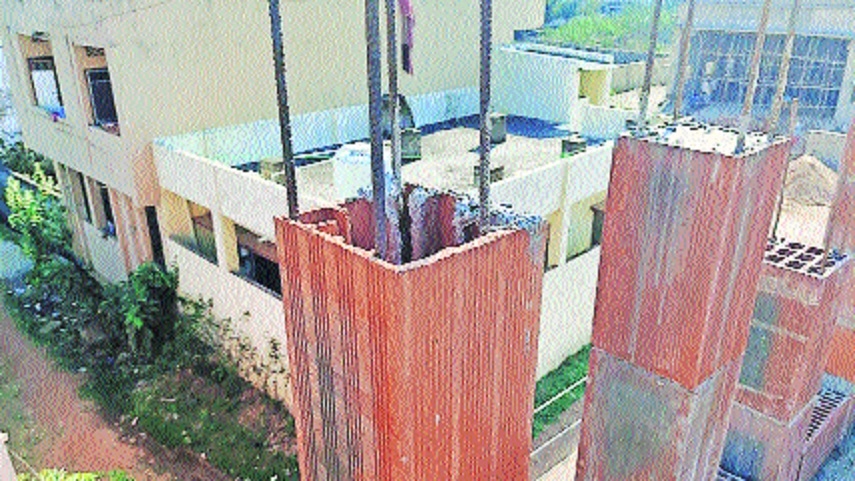
Terracotta materials being used in slab and column work during construction. (Pic by Prakash Jaiswal)
By Vaishnavi Pillay :
A gradual yet a steady shift is taking place in the housing construction sector, as awareness about climate-friendly practices and eco-conscious building materials begins to grow among both professionals and homeowners. Builders, architects, and consultants are now actively introducing innovative methods that minimise the carbon footprint of homes. From selecting low-impact materials to adopting energy-efficient designs, the construction community is exploring ways to reduce environmental damage.
Prakash Jaiswal, a Consultant and an Innovator, who has been working extensively on decarbonising the construction sector, shared with ‘The Hitavada’ about the environmental impact of traditional building materials. “Cement, a primary ingredient in concrete, contributes significantly to carbon dioxide emissions,” Jaiswal pointed out.
“Moreover, concrete absorbs a large amount of heat and reflects very little, which intensifies heat-related challenges, increases energy use for cooling, and alters the local microclimate,” he added.
Jaiswal stressed on the importance of rethinking architectural designs, particularly in Indian regions that receive abundant sunlight throughout the year. “It is high time we move away from Western-style architecture that relies heavily on glass façades. Such designs trap heat indoors, resulting in excessive use of air conditioning and energy,” he noted.
Jaiswal further highlighted the growing attention being given to passive cooling techniques, urging that awareness about them must expand. “These techniques aim to maintain comfortable indoor temperatures without excessive dependence on mechanical cooling systems,” Jaiswal explained. Some of these approaches include natural ventilation, strategic shading, thermal insulation, cool roofing, passive solar design, and the use of natural landscaping.
Citing projections that indicate a substantial rise in residential air conditioning demand in India in the near future, Jaiswal emphasised the need to adopt ‘socially responsible architecture’ that prioritises environmental well-being.
“One of the methods I strongly recommend is the use of terracotta materials and strategies to reduce cement usage.
Terracotta cavity blocks, due to their natural thermal insulation properties, can significantly lower indoor temperature" he said. These blocks, when used in exterior walls or building envelopes, reduce heat absorption from direct sunlight, helping keep interiors cooler and reducing the dependency on mechanical cooling.
Jaiswal also shared examples from several projects, where HP (Horizontally Perforated) terracotta blocks have been used in structural columns and slab work. “These materials not only offer practical thermal benefits but also provide an aesthetic appeal,” he said. The exterior surface of these terracotta blocks is visually appealing, that often leave them unplastered, which further reduces the use of additional materials.
“During construction of houses, people usually go for 5 to 6 inches of slab thickness, but I suggest that slabs can be built with thickness of 2 to 2.5 inches by incorporating terracotta materials in the slab, which is also one of the ways to reduce cement usage,” he added.
Jaiswal stressed that as the urgency to combat climate change intensifies, the construction industry holds immense potential to lead the way in climate-appropriate structures.