AI 171 pilots should not be vilified: ICPA
| Date :14-Jul-2025 |
MUMBAI :
AI 171 crew acted in line with responsibility under challenging conditions, said the Indian Commercial Pilots’ Association (ICPA)
THE Indian Commercial Pilots’ Association (ICPA) on Sunday said the crew of the AI 171 flight that crashed last month acted in line with their training and responsibilities under challenging conditions, and the pilots should not be vilified based on conjecture.
Strongly rejecting insinuations in some quarters about pilot suicide, the association representing narrow-body pilots of Air India stressed that until the official investigation is concluded and the final report is published, any speculation is unacceptable and must be condemned.
It may be noted here that the Airline Pilots’ Association of India also had on Saturday demanded a fair and fact-based probe into the Air India plane crash as it claimed that the tone and direction of the investigation into the Air India plane crash suggests a bias towards pilot error.
ICPA is the narrow-body fleet pilots’ body at Tata Group-owned Air India.
The Aircraft Accident Investigation Bureau (AAIB) has released its preliminary report into the fatal Boeing 787-8 plane crash on June 12 that killed 260 people.
The report has found that the fuel supply to both engines of Air India flight AI171 was cut off within a second of each other, causing confusion in the cockpit and the airplane plummeting back to the ground almost immediately after taking off.
The 15-page report says that in the cockpit voice recording, one unidentified pilot asked the other why he had cut off the fuel, which the other denied.
In its preliminary report on the crash of Air India’s AI 171 flight from Ahmedabad to London Gatwick on June 12 that killed 260 people, the Aircraft Accident Investigation Bureau (AAIB) on Saturday said the fuel switches of the Boeing 787-8 aircraft were cut off soon after takeoff.
“Fuel switches moved without input, points to possible glitch”: Federation of Indian Pilots Chief: President of the Federation of Indian Pilots, Charanvir Singh Randhawa, on Sunday raised doubts over the preliminary report on the Air India AI171 crash, saying it fails to clarify who was in control of the cockpit and points to a possible electrical or software malfunction in the aircraft.
Too premature to draw conclusions on pilots’ role: Former AAIB chief
NEW DELHI,
July 13 (PTI)
IT WILL be too premature to draw conclusions on the role of pilots from the preliminary investigation report into the fatal crash of Air India plane last month and the final report will mention about the most probable cause for the accident, former AAIB chief Aurobindo Handa said on Sunday.
A day after the Aircraft Accident Investigation Bureau (AAIB) released its preliminary report into the crash that killed 260 people, he said, “We should allow AAIB to complete the investigation in a fair, unbiased and transparent manner.”
Handa has investigated more than 100 aircraft accidents, including the Air India Express plane
crash in Kozhikode in 2020.
“AAIB has done a good job. Going forward, they will now focus to find out as to why and how these fuel switches moved and whether there could have been any mechanical and/or electrical failures/malfunction,” he told PTI.
The report, released on Saturday, said the fuel switches of the crashed Boeing 787-8 plane’s engines were cut off within a gap of one second, and later switched on.
From the cockpit voice recording, one of the pilots is heard asking the other why he did cut off the switch and the other pilot saying he did not do so.
The report did not mention which pilot asked the question and which pilot responded.
The co-pilot was Pilot Flying (PF), and the Pilot In Command (PIC) was Pilot Monitoring (PM) for the flight.
“It will be too premature to draw any conclusions, including the role of one of the pilots from the AAIB’s preliminary investigation report on Air India flight 171... We should allow AAIB to complete the investigation in a fair, unbiased and transparent manner,” Handa said.
The Pilot In Command (PIC) was 56-year-old Captain Sumeet Sabharwal and the First Officer was 32-year-old Clive Kundar. Sabharwal’s flying experience with 787 was more than 8,596 hours, including 8,260 hours as PIC, while Kundar’s flying experience with this type of aircraft was 1,128 hours.
Kundar was pilot flying while Sabharwal was pilot monitoring for the AI 171 flight operated with the nearly 12-year-old Boeing 787-8 aircraft.
According to the preliminary report, both pilots had adequate rest period prior to operating the flight.
“In some quarters, especially in foreign media, there are endeavours to indicate that one of the pilots could have been at fault. Yet again, I would like to request our veteran aviators to refrain from any sort of speculation,” Handa said.
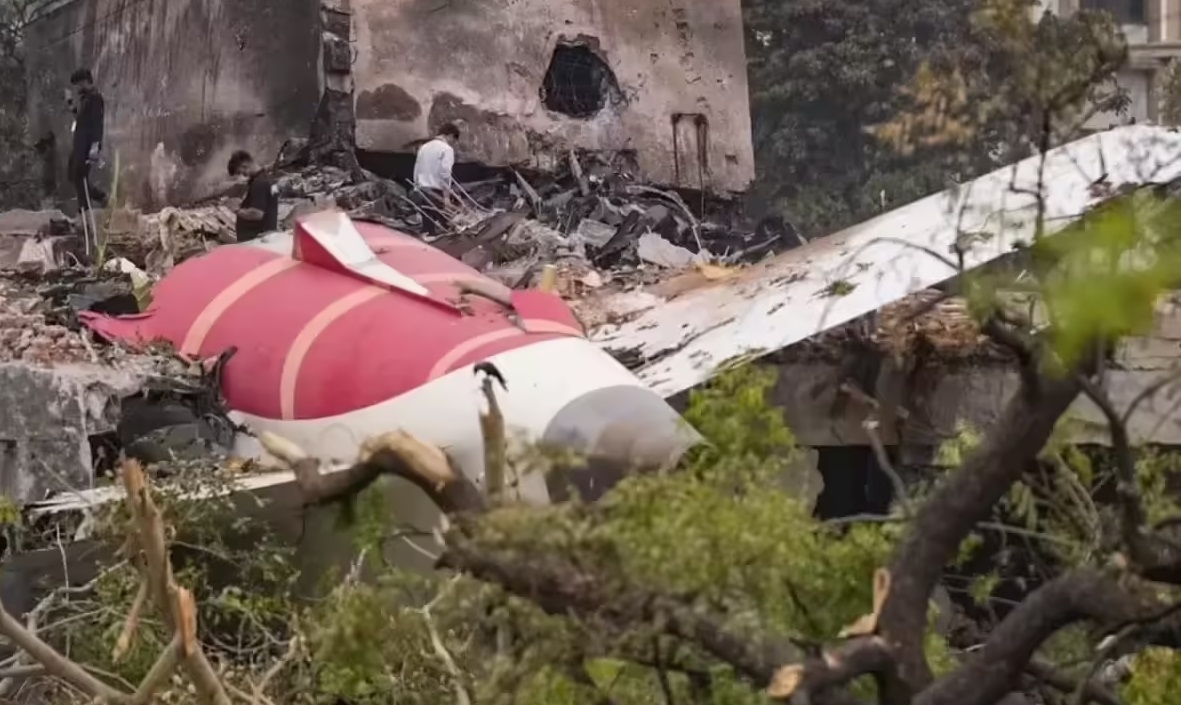
The AI 171, operated with a nearly 12-year-old Boeing 787-8 aircraft, flying from Ahmedabad to London Gatwick crashed into a building soon after takeoff and 260 people died. Out of the 242 people onboard the plane, only one survived.
On Saturday, Civil Aviation Minister K Rammohan Naidu said one should not jump into any conclusions on the role of pilots in the Air India plane crash and there are multiple things that need to be looked into before preparing the final investigation report.