Umred-Paoni-Karhandla Sanctuary best in State in MEE framework, says report
| Date :15-Jul-2025 |
By Kaushik Bhattacharya :
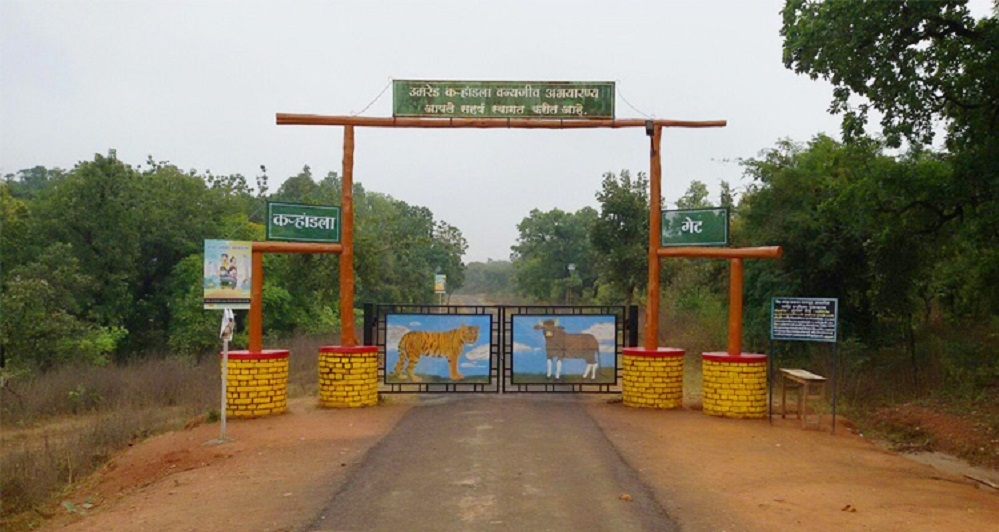
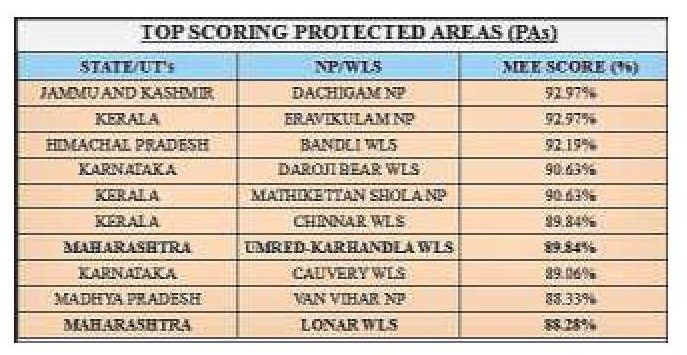
Umred-Paoni-Karhandla Wildlife Sanctuary (UPKWS) performed the best in Maharashtra and stood 7th in the country in Management Effectiveness Evaluation (MEE) framework, revealed report of ‘Management Effectiveness Evaluation of Protected Areas and Wildlife Sanctuaries’ recently.
The report has been released by Wildlife Institute of India (WII), Ministry of Environment Forest and Climate Change (MoEF&CC), Government of India. As per the report, UPKWS got 89.84 per cent MEE score. Similarly, Lonar Wildlife Sanctuary stood second in the State and 10th in the country with 88.28 per cent MEE marks.
In the top ten list, Dachigam National Park of Jammu and Kashmir and Eravikulam National Park of Kerala
achieved the first and second ranks with 92.97 per cent MEE marks respectively. Other well-managed sites included Bandli WLS (92.19%), Mathikettan Shola NP (90.63%), and Daroji Bear WLS (90.63%), all demonstrating exceptional conservation effectiveness.
UPKWS covers 189 square kilometres in the Bhandara and Nagpur districts. It serves as an ecological corridor linking to Tadoba-Andhari Tiger Reserve (TATR) and Navegaon-Nagzira Tiger Reserves (NNTR).
The report mentioned that UPKWS is facing challenges, including limited size affecting transient tiger numbers, inadequate and delayed funding, staff vacancies, biotic disturbances, increasing tourist traffic, and ineffective monitoring of tigers. Preparation and implementation of the Zonal Master Plan for the Eco-Sensitive Zone (ESZ) is needed for the wildlife sanctuary, recommended the report. It also advised the addition of adjacent forest areas to help transient tiger movement and its upgradation as a Tiger Reserve (TR).
The report was also of the view that proper monitoring of the transient tigers in the landscape and filling up of the vacancies of staff and improved training programmes are equally needed.
Improved grassland management, ecological studies, monitoring of endangered species, improving the publicity and outreach functions, and enhanced financing are also needed for UPKWS, claimed the study.
India has been conducting the MEE of its Protected Areas (PAs) using the globally accepted framework developed by IUCN’s World Commission on Protected Areas since 2006. The MEE score is based on a range of factors, including the performance and management of each National Park and Wildlife Sanctuary over time.
MEE represents a systematic approach to assessing how well PAs are managed and their effectiveness in conserving targeted flora and fauna. MEE is a vital component of systematic conservation planning and provides policymakers with essential information to bridge the gap between conservation objectives and real-world outcomes.
MEE scores can help identify strengths and weaknesses within a PA, facilitate communication among stakeholders, and inform resource allocation decisions.