Expert breathes new life into 16 of 19 trees transplanted in Besa
20 Jul 2025 10:23:45
By Kaushik Bhattacharya :
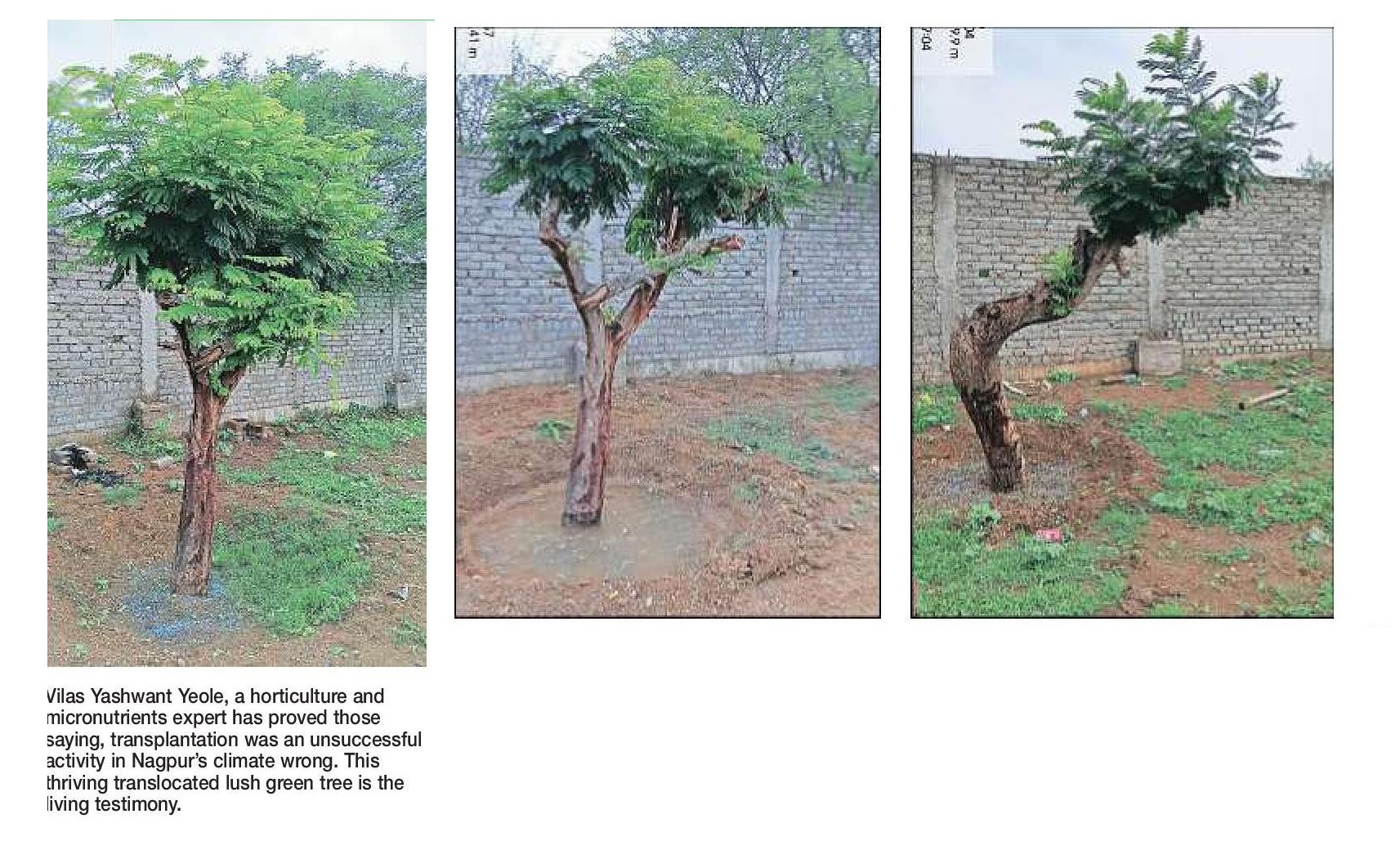
Utilising technology with skill and expertise is crucial for the successful implementation of any project. It enables better planning, efficient execution, and improved long-term performance of the project. Dr Vilas Yashwant Yeole, a horticulture and micronutrients expert, proved this by saving 16 out of 19 trees that were transplanted from one place to another for widening of Besa Pipla Road 6-8 months ago.
At the time of transplantation of these 19 trees, many raised questions over the process of shifting of trees, stating transplantation was an unsuccessful activity in Nagpur’s climate. To some extent, it was right as most of the previous transplantation projects in city proved unsuccessful. Forest Development Corporation of Maharashtra (FDCM) did the first transplantation with the help of specialised machinery brought from outside for construction of Balasaheb Thackeray Gorewada International Zoo in Gorewada forest area. In that transplantation project, around 70% trees survived.
Thereafter, many Government organisations like Nagpur Metro, National Highway Authority of India (NHAI), Nagpur Municipal Corporation (NMC), etc. transplanted many trees, but the survival rate of those trees was very less.
Dr Yeole has successfully transplanted trees in some earlier projects. He monitored the 19 trees for last 8 months and now, life has started sprouting.
“The sprouting of leaves on 16 trees is clearly visible now, whereas the Biological Oxygen Demand (BOD) in the roots of remaining three trees is less due to poor monsoon so far. Hopefully, in coming days, the sprouting of leaves in remaining trees will take place,” said Dr Yeole while talking with ‘The Hitavada’.
“Transplantation is all about proper care and knowledge about the plant or the tree. Every tree behaves differently when you are disturbing its natural growth.
Transplantation is also a disturbance in its life,” said the micronutrients expert.
Dr Yeole took care of the trees during the entire summer season with the help of nutrition management, fungal management and irrigation. Before transplanting the trees, the expert ensured proper healing, irrigation and then, carefully transplanted the root balls to avoid damage to the roots. After planting at another place also, he undertook nutritional treatment of all the 19 trees.
Instead of using specialised machinery, Dr Yeole used excavators to transplant the root balls from one place to another. It saved money too for the implementing agency. “From transplantation to sprouting of leaves, it took Rs 6,000-8,000 per tree. Instead of spending hefty amounts, one should put efforts in caring to get success in transplantation,” claimed the horticulture specialist.