KANWAR YATRA: A divine confluence of faith, tradition and austerity
| Date :21-Jul-2025 |
By Sanjay Mishra :

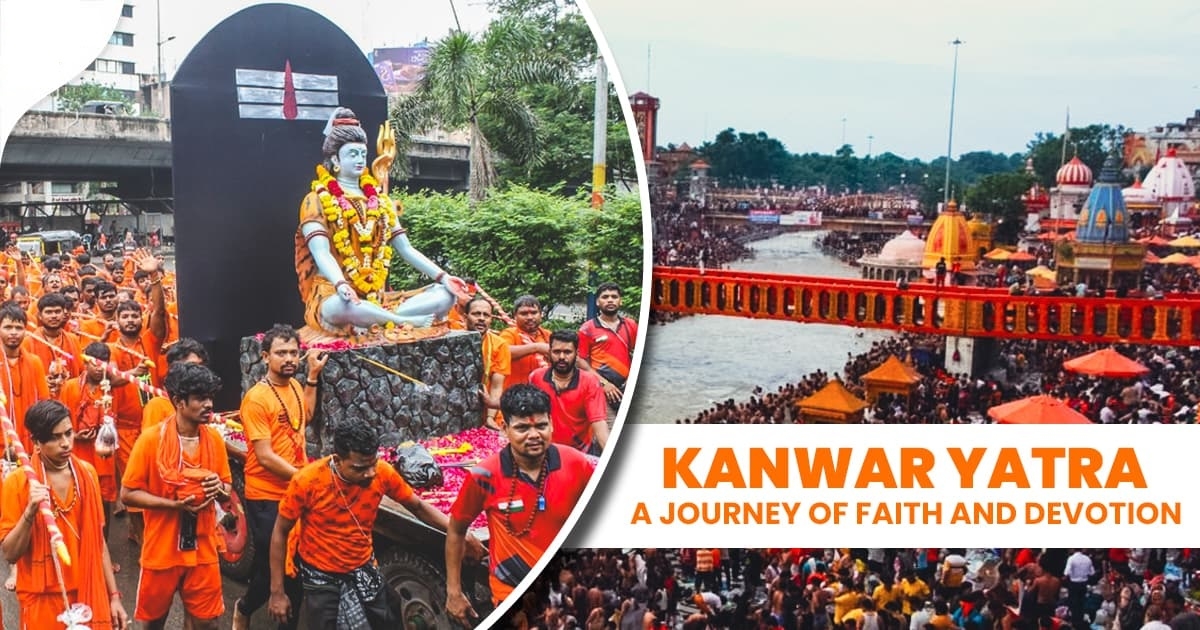
The culturally rich city of Jabalpur, often referred to as Sanskardhani, witnesses the commencement of its annual Kanwar Yatra with rituals and worship held at the banks of the holy Narmada River, particularly at Gaurighat, under the spiritual guidance of revered saints.
Apart from the iconic Sanskar Kanwar Yatra, devotees also embark on pilgrimages carrying Kanwar’s (decorated bamboo structures for holy water) to prominent temples such as Kachnar City’s Lord Shiva temple, Gupteshwar Mahadev, Saket Dham at Gaurighat, Pashupati-nath at Gopalpur and the Trishul Mandir located in Chargawan.
This sacred journey, rooted deeply in ancient tradition, holds immense spiritual significance. Pilgrims believe that the divine blessings of Lord Shiva, who resides in Kailash Dham, showers upon the families of the city. The kanwariyas (pilgrims) offer water collected from the Narmada River upon Shiva lingas at these temples, earning spiritual merit equivalent to offering water at India’s twelve Jyotirlingas: Baidyanath Dham, Mahakaleshwar, Omkareshwar, Mallikarjuna, Kashi Vishwanath, Rameshwaram, Somnath, Trimbakeshwar, Bhimashankar, Nageshwar, Grishneshwar and Kedarnath.
Mythological origins
of Kanwar Yatra
According to Hindu mythology, the tradition of the Kanwar Yatra traces back to the Treta Yuga, when the devoted son Shravan Kumar carried his blind parents in a Kanwar on a pilgrimage to Haridwar for a dip in the Ganga. He brought Ganga water back with him-thus beginning a practice that continues to this day. Another belief credits Lord Shri Ram with initiating the yatra.
It is said that he carried Ganga water from Sultanganj (Bihar) to offer it on the Shivling at Baidyanath Dham in Deoghar. This sacred pilgrimage, blending faith, tradition and austerity, is not merely a religious ritual but a symbol of spiritual strength, devotion and service. In the holy month of Shravan, the Kanwar Yatra provides a sense of deep spiritual fulfillment to devotees and promotes social unity.
Spiritual significance
of Kanwar Yatra
The Kanwar Yatra is believed to absolve sins, fulfil wishes and bring devotees closer to salvation. Devotees earn divine blessings by offering sacred water to Lord Shiva. This ritual is especially believed to help with desires for progeny and mental peace. The journey infuses devotees with positive energy and brings peace, happiness, and prosperity into their lives.
Unique importance
of Kanwar Yatra
in Jabalpur
In Jabalpur, the Sanskar Kanwar Yatra holds special significance. Thousands of devotees undertake a 35-kilometer pilgrimage from the Narmada River to Kailash Dham at Matamar, where they perform the sacred abhishek of Lord Shiva. The yatra also delivers a message of environmental conservation-devotees carry and plant saplings along the hilly terrain as part of their spiritual journey.
Beyond Kailash Dham, several other temples serve as vital spiritual centers for kanwariyas. Devotees believe that the grace of Lord Shiva protects the city from calamities and ensures the fulfillment of their wishes.
Year after year, the Kanwar Yatra in Jabalpur continues to grow in scale and devotion, reaffirming the city’s identity as a beacon of faith, tradition and community spirit.
(The author is APRO at JMC)