Bhopal Metro: Oscillation, emergency braking tests conducted successfully
22 Jul 2025 14:29:08
Staff Reporter :
These tests were conducted from July 9 to July 21, 2025, on the main line track between Subhash Nagar and AIIMS Metro Station
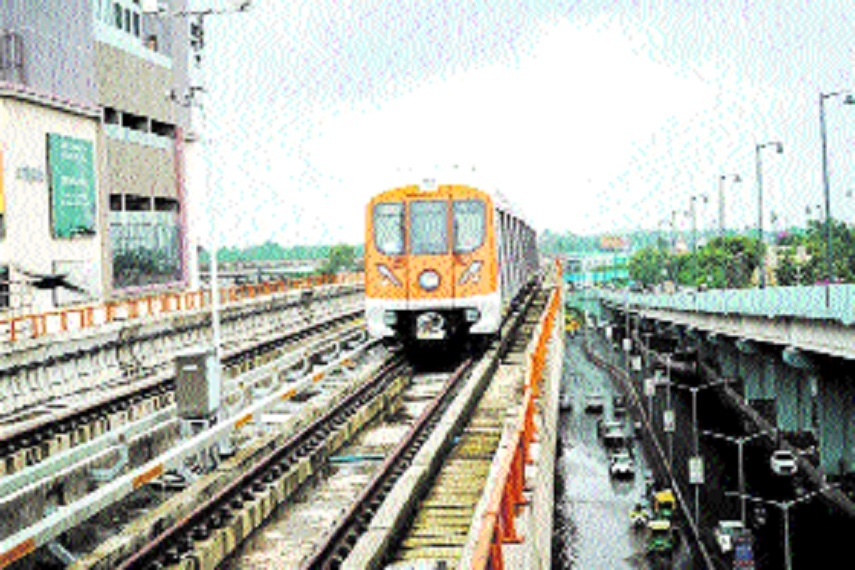
The Bhopal Metro Rail Project has crossed another significant milestone. Madhya Pradesh Metro Rail Corporation Limited (MPMRCL), in collaboration with the Research Designs and Standards Organisation (RDSO), has successfully completed the oscillation and Emergency Braking Distance (EBD) tests for the Metro's rolling stock (trains). These tests were conducted from July 9 to July 21, 2025, on the main line track between Subhash Nagar and AIIMS Metro Station.
This success further strengthens the prospects of Bhopal Metro commencing operations by September 2025.
The tests were led by RDSO's Director (Testing), Sandeep Gupta. Their primary objective was to evaluate the oscillation behavior and emergency braking distance of metro trains under various operational scenarios. The RDSO expert team collected data on critical parameters such as ride quality, stability, braking system, and overall rolling stock functionality. This data will play a crucial role in obtaining safety certification and technical clearance for the Metro's commercial operations.
S. Krishna Chaitanya, Managing Director of MPMRCL, described this achievement as a significant step forward for the Metro project. "The successful completion of oscillation and EBD tests is historical for Bhopal Metro. I congratulate the Metro team, contractors, and consultants for their hard work and dedication. This success is a major stride towards realizing our vision of providing a world-class Metro system in Bhopal," he stated.
During the tests, metro trains were run at a speed of 90 kilometers per hour from Subhash Nagar to AIIMS. Experts examined the track fitness, signal system, and braking system. The tests, which lasted three to four hours, involved trains completing 10 to 15 rounds. Passenger movement and other technical aspects were also evaluated at AIIMS, Alkapuri, and DRM Office stations. Following the review of the test findings, MPMRCL has now focused on finalizing the safety certification and technical clearance process.