Hoofed mammal population depleting in TATR: NTCA
22 Jul 2025 11:21:05
By Kaushik Bhattacharya :
- Chital, Sambar, Barking Deer abundance seen in all ranges of Tadoba
- Tadoba is experiencing high rates of livestock depredation, leading to increased human-wildlife conflict
- Deforestation, urbanisation, agricultural expansion major reasons for depletion of ungulate population
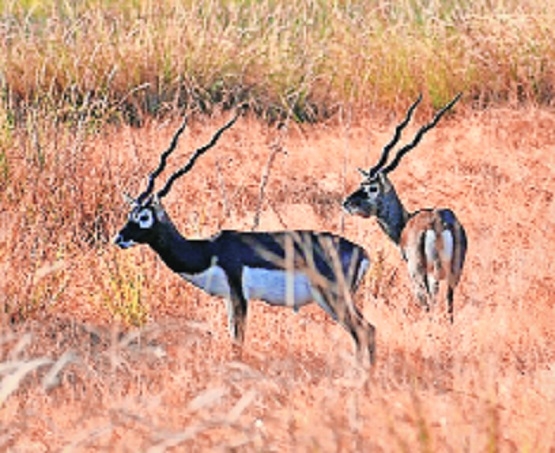
Tadoba Andhari Tiger Reserve (TATR), which boasts of the highest number of tiger population in Maharashtra, is witnessing depletion of ungulate population (hoofed mammal), which is the main prey base for carnivores, says latest study by National Tiger Conservation Authority (NTCA). Ungulates, a diverse group of hoofed mammals, are vital components of the ecosystem. Ungulates, including species like deer, antelopes, and wild boars are primarily herbivorous mammals.
The study named ‘Status of Ungulates in Tiger Habitats in India’, revealed that TATR is experiencing high rates of livestock depredation, leading to increased human-wildlife conflict in recent time. The study also revealed that the depletion of ungulate population is a major reason behind increased human-animal conflict in the Tiger Reserve.
“In tiger reserves of Maharashtra, particularly Tadoba, carnivore presence is high, whereas prey density remains low. Without prey recovery and supplementation, human-wildlife conflict in this region is also expected to rise rapidly,” claimed the study.
Despite their importance, ungulates face significant threats, including habitat loss due to deforestation, urbanisation, and agricultural expansion. Poaching for meat, and other traditional uses poses a major threat besides competition with livestock for grazing. All these threats are existing in TATR due to which the population of ungulates is decreasing, it stated.
As per the study, chital and sambar in abundance is predicted while conducting the research. Whereas barking deer, gaur, nilgai and wild pig in abundance is also noticed in the Tiger Reserve, which is also mapped using camera trap photos. The landscape model predicted chital abundance in all ranges of Tadoba, with the highest abundance in the Kolara and Tadoba range. Sambar is also abundant throughout the reserve, with the highest in the Tadoba and Kolara range.
Similarly, barking deer has a high abundance in the Moharli, Kolara, Karwa, and Chandrapur buffer ranges, the study revealed.
While mentioning about the reason of abundance, the study stated, “Alterations in climate patterns can significantly affect the distribution of vegetation types that ungulates depend for food and shelter. Changes in precipitation patterns can lead to droughts or floods that disrupt food availability and breeding success,” its stated.
While supporting the relocation of villages in Melghat Tiger Reserve in Maharashtra, it stated, “In Melghat, voluntary village relocation has facilitated grassland regeneration.
This landscape holds significant potential for wildlife management, as prey recovery programmes such as augmentation and supplementation could contribute to carnivore population recovery.”
To address population declines, targeted reintroduction and habitat restoration efforts are essential. Augmenting native ungulate species, which serve as principal prey for larger carnivores, into areas where they have low densities or have been locally extirpated can help restore predator-prey dynamics and improve habitat conditions for apex predators like tigers, recommended the study.