India,UK ink landmark FTA
Date :25-Jul-2025
LONDON :
India’s average tariff on British products will drop from 15 per cent to 3 per cent. India will see an elimination of tariffs on around half its exports to the UK, including textiles, footwear and
agricultural produce
INDIA and the UK on Thursday inked a landmark Free Trade Agreement (FFTA) that seeks to boost both the economies, slash tariff lines across 99 per cent of Indian exports, unlock thousands of jobs and cut tariffs on British whisky, cars and an array of other items.
The pact, officially named as the Comprehensive Economic and Trade Agreement (CETA), was signed by Commerce Minister Piyush Goyal and British Trade Secretary Jonathan Reynolds in the presence of the Prime Ministers of India and the UK.
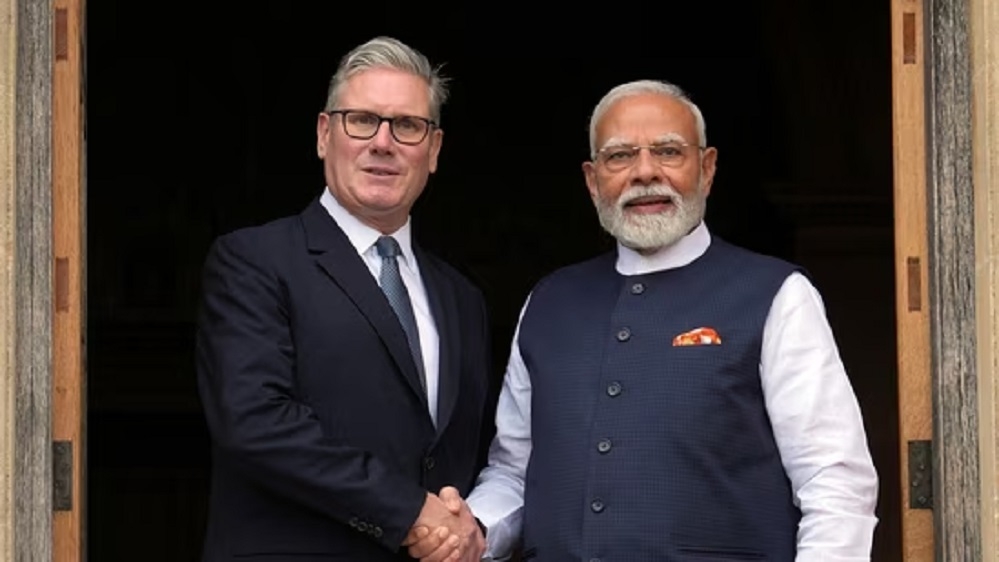
The mega deal was formalised shortly after British PM Keir Starmer hosted his Indian counterpart Narendra Modi at Chequers, the countryside residence of the British PM that is located 50 kms northwest of London.
The CETA, firmed up after three years of negotiations, is expected to ensure comprehensive market access for Indian goods across all sectors and India will gain from tariff elimination on about 99 per cent of tariff lines (product categories) covering almost 100 per cent of the trade values, officials said.
“I’m really pleased and privileged to welcome you here today on what I consider to be a historic day for both of our countries, and the delivery of the commitment that we made to each other,” said Starmer, as he greeted the Indian Prime Minister.
In his remarks to the media, Modi said the UK and India are “natural partners” and said the nations were “writing a new chapter” in their history.
He highlighted Indian textiles, footwear, gems and jewellery, seafood
and engineering goods will get better market access in the UK, with agricultural products and processed food industry winning new opportunities for growth following the trade deal.
“This agreement will prove especially beneficial for India’s youth, farmers, fishermen and MSME sector. On the other hand, people and industries in India will be able to access products made in the UK such as medical devices and aerospace parts at affordable and attractive prices,” Modi said.
“Along with this agreement, we have also reached a consensus on the Double Contributions Convention (DCC). This will inject new energy into the services sectors of both countries, especially in technology and finance.” “It will promote ease of doing business, reduce cost of doing business and increase the confidence of doing business,” he said. The Prime Minister went on to use cricket as a metaphor for the UK-India relationship, saying there may be a “swing and a miss” at times, but they are committed to playing with a “straight bat” and building a “high-scoring, solid partnership”.
The trade pact was inked at the Great Hall of Chequers.
According to the UK Department for Business and Trade (DBT), once the trade pact comes into force, India’s average tariff on British products will drop from 15 per cent to 3 per cent. It will mean British companies selling products to India, from soft drinks and cosmetics to cars and medical devices, will find it easier to sell to the Indian market. Whisky producers will benefit from tariffs slashed in half, reduced immediately from 150 per cent to 75 per cent and then dropped even further to 40 per cent over the next 10 years, giving the UK an advantage over international competitors in reaching the Indian market, DBT said. India will see an elimination of tariffs on around half its exports to the UK, including textiles, footwear and agricultural produce such as mangoes and grapes.