Business ‘e-Commerce platforms misused for terror funding during Pulwama attack’
| Date :09-Jul-2025 |
NEW DELHI :
The FATF report flagged that terrorists have been abusing e-commerce platforms and online marketplaces and said terrorists have used such platforms for their procurement (equipment, weapons, chemicals, 3D-printing material)
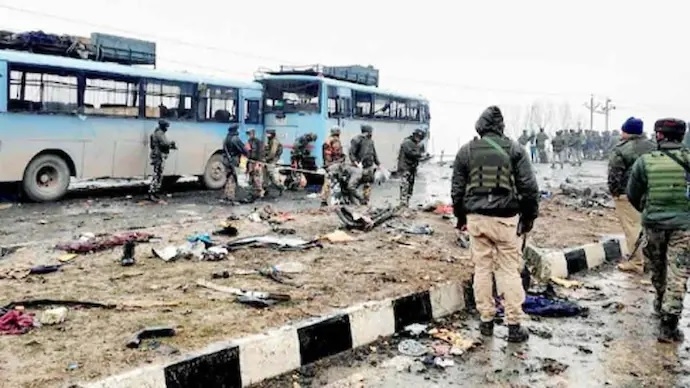
GLOBAL terror financing watchdog FATF on Tuesday cited the February 2019 Pulwama terror attack, which killed 40 CRPF personnel, and the 2022 Gorakhnath Temple incident to say that e-commerce platforms and online payment services are being misused for terror financing.
In its ‘Comprehensive Update on Terrorist Financing Risks’, the FATF also flagged ‘state sponsorship of
terrorism’ and said a variety of
publicly available sources of information and delegations’ inputs to this report indicate that “certain terrorist organisations have been and continue to receive financial and other forms of support from several national governments”.
“Delegations reported on this trend by referring to the use of state sponsorship for TF (terror financing) either as fundraising technique or as part of the financial management strategy of the certain organisations engaging in terrorist acts. Several forms of support have been reported, including direct financial support, logistical and material support, or the provision of training,” the Financial Action Task Force (FATF) said. In June, the FATF, while condemning the April 2025, Pahalgam terror attack, in which 26 people killed, and saying such attacks would not have been possible without financial support, had said it would come out with a “comprehensive analysis of terrorist financing”, compiling cases provided by its global network consisting 200 jurisdictions.
Giving the case study of use of e-commerce platform for procurement of materials for terrorist attack in India, the FATF said a key component of the improvised explosive device used in the attack -- aluminum powder -- was procured through the EPOM Amazon. This material was used to enhance the impact of the blast.
The FATF report flagged that terrorists have been abusing e-commerce platforms and online marketplaces and said terrorists have used such platforms for their operational procurement (equipment, weapons, chemicals, 3D-printing material).
EPOMs can also be used by terrorists to sell items to finance their projects and operations, including lower value items that were previously not in demand.
“EPOMs can be used for fund-moving purpose inspired by trade-based money laundering schemes. Traded goods can indeed offer disguise to value being transferred from an accomplice to another member of the network. In such scheme, the first actor would purchase items, send them to his accomplice through an EPOM, for the latter to sell items in another jurisdiction and use profit to finance terrorism,” the FATF said.
he FATF in its update on TF risks also highlighted the methods used to raise, move, and manage funds and other assets for terrorist financing purposes and said online fund transfers using payment services platform offer less traceability and transparency compared to wire-transfer, making it harder to clearly identify initiators and recipients of transfers.
In February 2019, a suicide bombing targeted a convoy of Indian Security forces in Pulwama in Jammu & Kashmir, resulting in the deaths of 40 soldiers. India’s authorities concluded that the attack was orchestrated by Jaish-I-Mohammed (JiM).
As a result of the investigation, 19 individuals were charged under relevant provisions of the Unlawful Activities (Prevention) Act, including sections related to TF. Among those charged were seven foreign nationals, including the suicide bomber. LEAs also recovered moveable and immovable assets connected to the attack, such as vehicles and terrorist hideouts.
Indian authorities have repeatedly highlighted Pakistan’s persistent support for terrorism and its funnelling of multilateral funds for arms procurement. India has consistently held that Pakistan has given safe haven to designated terrorists and according to sources, India views that such action by Pakistan warrants that the country be put in the “grey list” of the FATF.