How ‘Reels’ habit is short-circuiting memory
Date :18-Aug-2025
By Shashwat Bhuskute :
- Experts warn that constant barrage of rapid videos is overloading brain
- Teachers have observed students who can flawlessly recall a viral audio trend but forget what was taught in class the previous day
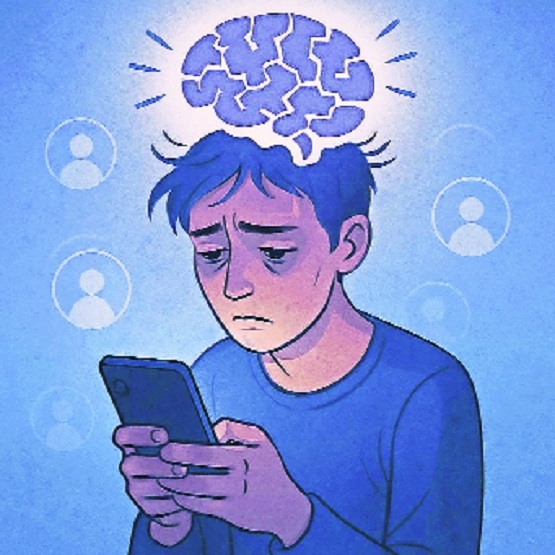
The growing trend of endlessly scrolling ‘reels’ is causing sensory overload, short-term memory lapses, and even what psychiatrists are calling digital amnesia. Experts warn that the constant barrage of rapid videos is overloading the brain, leaving little capacity for storing everyday details.
Short clips lasting 10-45 seconds are engineered to hook viewers through jump-cut visuals, trending music, and fast captions. While entertaining, this overstimulation crowds out working memory, the brain’s temporary storehouse for information.
“When the brain is flooded with rapidly changing, unrelated content, it has less capacity to store everyday details,” said Rita Agrawal, Consulting Psychologist while speaking to ‘The Hitavada’. “This affects the process of transferring information into long-term memory.”
Teachers have observed students who can flawlessly recall a viral audio trend but forget what was taught in class the previous day. Office managers complain of staff remembering jokes from ‘reels’ but missing meeting points. Parents too say they lose track of small tasks after long scrolling sessions.
The strain lies in ‘context switching’, the rapid movement from a recipe to a prank, to news or a tragedy, forcing the brain to repeatedly reset. Over time, this constant switching drains attention and weakens retention.
Psychiatrist Dr Pravir Waradkar describes the phenomenon as digital amnesia.
“People are increasingly outsourcing memory to devices, and with non-stop exposure to fast-changing content, the brain stops retaining details as it once did,” he said. To explain, he likens the brain to muscles in a dumbbell workout. “If you lift the same dumbbell repeatedly, after four or five attempts the muscles tire out. The brain behaves in the same way, after the initial push against information overload, it simply gives up, and memory fails.” he stated.
Both experts stress that the solution is not to abandon social media but to use it consciously. Suggested strategies include limiting daily screen time, muting videos by default, replacing late-night scrolling with slower activities like reading or conversation, and writing down important tasks before opening applications.
Specialists caution that without such steps, users risk not only memory lapses but also stress, anxiety, sleep disturbances, and growing disconnection from their real surroundings and relationships.