Tribal women demand codification of customary laws for rights, justice
18 Aug 2025 12:47:11
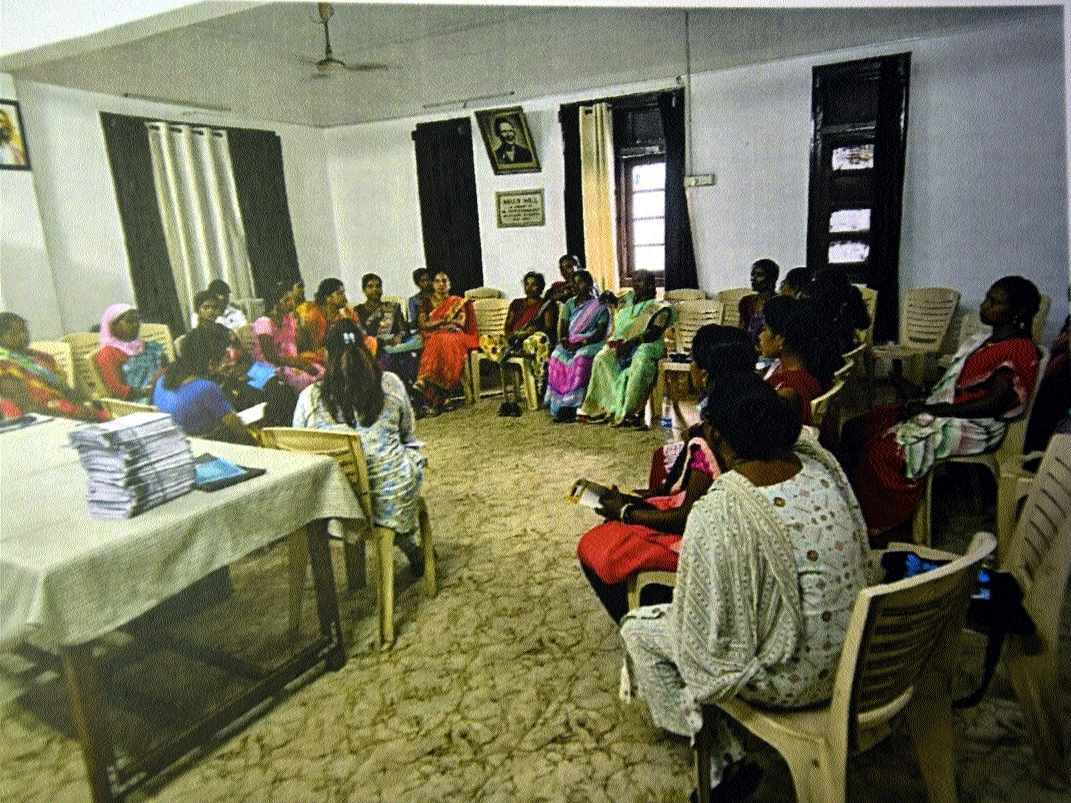
Tribal women attending the workshop.
Staff Reporter
RAIPUR
Tribal women in Chhattisgarh are demanding that their customary laws be formally defined and written down to ensure fair access to rights and justice. This call was the central focus of a two-day workshop on ‘Women’s Rights and PESA’ held at the Gass Memorial Centre in Raipur from August 16-17. The event, organised by the social organisation Adivasi Samta Manch, brought together 54 tribal women from various regions including Mainpat, Lailunga, Dharamjaigarh, Kanker, Bhanupratapur, and Pandariya, along with eight social workers.
During the workshop, Indu Netam President of Adivasi Samta Manch highlighted the risks associated with unwritten customary laws. She explained that without a written record, these laws are often misinterpreted, leading to traditional rulings that conflict with constitutional safeguards for women.
“Many of these judgments are in direct violation of our constitutional rights and the principles of the Convention on the Elimination of All Forms of Discrimination Against Women (CEDAW), to which India is a
signatory,” Netam stated. She stressed the need to carefully codify these laws to ensure they do not infringe upon fundamental rights.
Advocating for the same cause, lawyer Priyanka Shukla agreed that the lack of written customary laws makes it incredibly difficult for tribal women to seek justice in the formal legal system when their rights are violated. Netam added that lawmakers and the judiciary should hold extensive consultations with both Adivasi men and women across the country to define and then codify these laws. She also praised the recent Supreme Court judgment granting tribal women equal property rights in their parents’ property.
Beyond the issue of customary laws, participants voiced concerns over the near-zero implementation of the Provisions of the Panchayats (Extension to Scheduled Areas) Act (PESA) in Chhattisgarh.
The PESA Act is designed to ensure tribal communities have a greater say in their governance and natural resources. However, many women noted a failure to establish key institutions mandated by the law.
Bhojmati Rathiya from Lailunga PESA block lamented that the mandatory Women’s Sabha has not yet been formed in her area. Nitiya Rathia from neighboring Gharghoda block shared a similar frustration, stating that neither the Resource Planning and Management Committee (RPMC) nor the Peace and Justice Committee (PJC), both of which require 50% women members, have been constituted in her block. Pushpa Soren from Bhanupratapur urged the government to immediately form these committees to ensure women’s equal participation in village-level decision-making.
Dr. Rajesh Ranjan, a researcher from Adivasi Samta Manch, called for the Chhattisgarh government to issue a clear guideline book on PESA implementation. He explained that a lack of clear instructions has left officials at all levels without a concrete understanding of how to enact the provisions of the law.
The workshop also featured views from other community leaders, including ex-Sarpanch Pramila Salam, Sarpanch Savita, and a number of other participants who actively participated in the discussions.