Dr Banjara hails CG’s Baiga breastfeeding culture as global model
| Date :02-Aug-2025 |
Staff Reporter
Raipur
Exclusive breastfeeding reduces infant respiratory risk by 70% Kangaroo Mother Care key to neonatal survival and tribal bonding
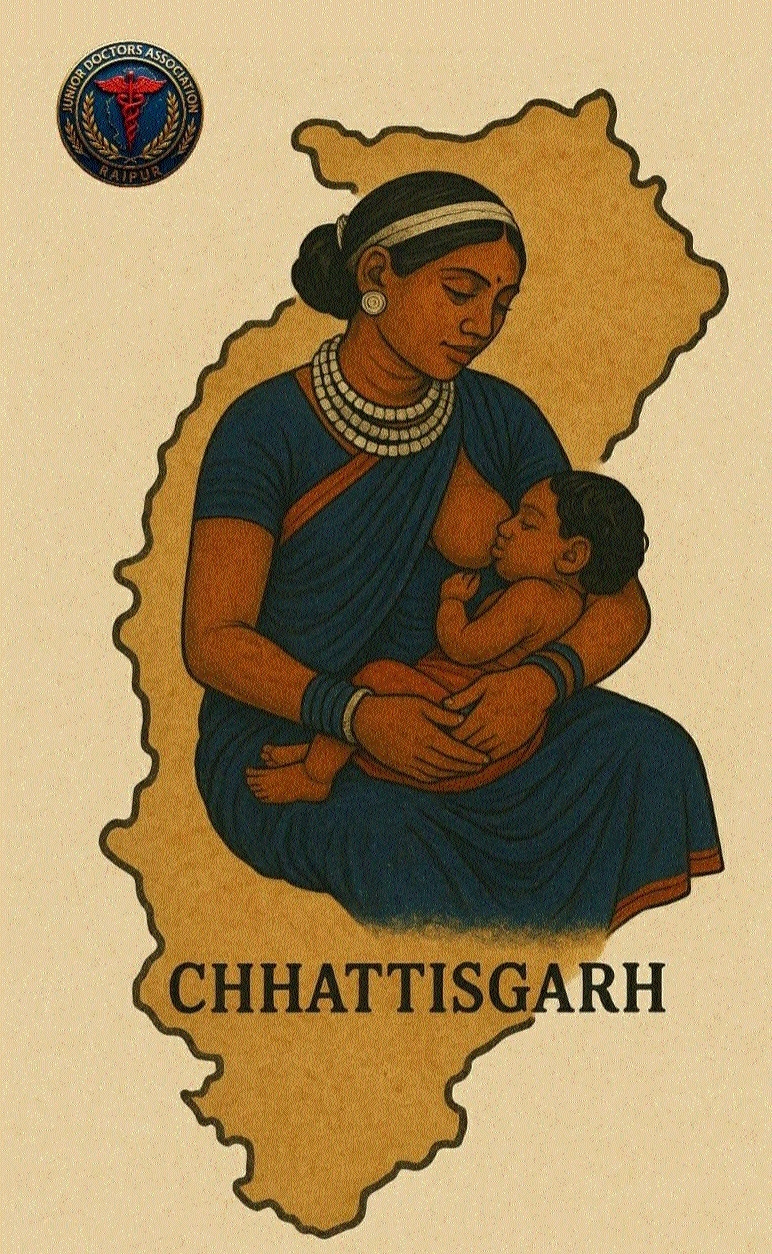
“Baiga women of Chhattisgarh offer the world a fearless, instinctive model of breastfeeding and infant care,” remarked Dr Amit Banjara, Secretary of the Junior Doctors’ Association (JDA) at Pt Jawaharlal Nehru Memorial Medical College, Raipur, as World Breastfeeding Week commenced on August 1. Hailing their cultural embrace of open breastfeeding and Kangaroo Mother Care (KMC), Dr Banjara said the Baiga tribe’s maternal practices reflect a public health ideal-free from stigma, rooted in nature, and worthy of global emulation.
He further affirmed that “Exclusive breastfeeding for the first six months, as recommended by the World Health Organization (WHO) and the Indian Academy of Paediatrics (IAP), is not only a biological necessity but a socio-economic and environmental shield.” It helps reduce postpartum depression, certain cancers, cardiovascular risks, and unintended pregnancies, while also lightening household financial burdens and lowering the carbon footprint from formula use.
KMC, he noted, involves uninterrupted skin-to-skin contact and exclusive breastfeeding, strengthening newborn immunity, especially in low-resource communities.
Referencing the Baiga community of Chhattisgarh - classified as a Particularly Vulnerable Tribal Group (PVTG) - Dr Banjara said their practice of unhesitant breastfeeding, rooted in natural wisdom, dismantles prevailing taboos. “Their lived example challenges both orthodox rigidity and misguided modern hyper-feminism, offering a teacher’s role in today’s maternal health discourse,” he noted.
Campaigns such as NHS England’s “That Feeling” and the “No Bra Day” on October 13 echo similar goals of breast
health awareness.
However, Dr Banjara underscored that the Baiga tribe represents more than advocacy-they live the values instinctively.
Citing Articles 21, 39(a), and 47 of the Indian Constitution, he emphasised the State’s duty to ensure maternal and child health, nutrition, and dignity. “From cradle houses to gender-sensitive policies, India must walk farther-but the Baiga torch burns bright,” he concluded.