RTMNU exhibition to showcase treasures from Pachkhed excavation
| Date :10-Sep-2025 |
By Kunal Badge :
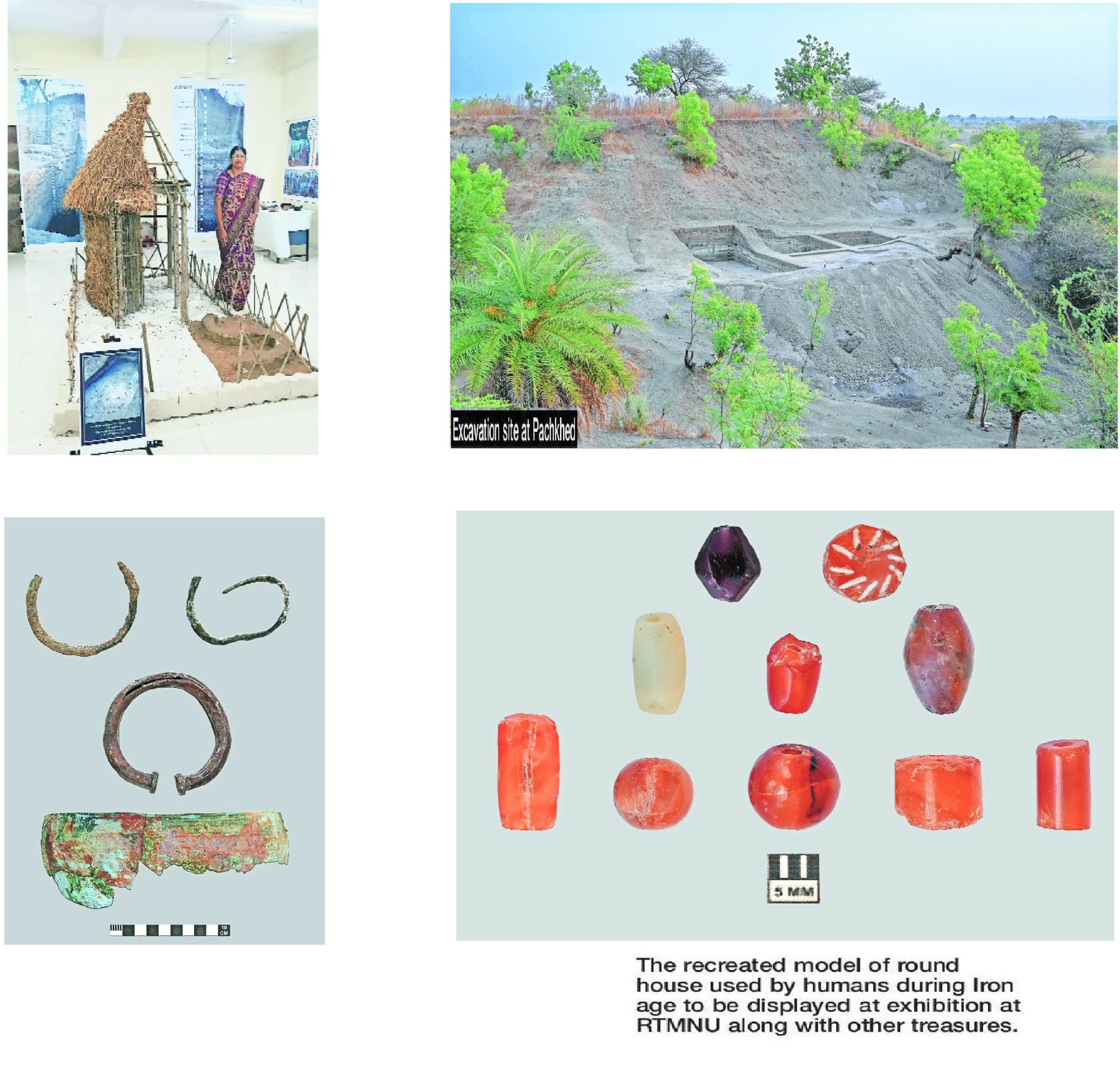
The Department of Ancient History, Culture and Archaeology (AIHC&A) of Rashtrasant Tukadoji Maharaj Nagpur University (RTMNU) is set to open an exhibition that promises to transport visitors thousands of years back into Vidarbha’s early history. Titled ‘Pachkhed Excavation: Unravelling the Early History of Vidarbha’, the event will showcase rare and fascinating finds from the recently excavated Pachkhed archaeological site in Babhulgaon tehsil of Yavatmal district. The exhibition will be open to the public from 11 am to 5 pm on September 10 and 11.
Spread across the Vidarbha landscape are sites that witnessed human activity since the Palaeolithic and Stone Ages, yet many locals remain unaware of this rich heritage. The exhibition aims to bridge this gap.
“We want people of the region to connect with their traditions and cultural treasures scattered across their own soil,” said Dr Prabhash Sahu, Head of Department, while speaking to The Hitavada.
The Pachkhed site has yielded discoveries of extraordinary significance. Foremost is a Lime Kiln, the first of its kind discovered in India. While lime usage is well-known in the Sindhu culture, never before has a kiln been unearthed. Alongside the kiln, deposits of seashells used in lime-making were found. A detailed model of the kiln will be on display, offering visitors a rare glimpse into ancient construction technology.
Equally captivating is the ground plan of Iron Age round huts, with remnants of wooden posts still rooted in the ground.
These circular dwellings, dating back nearly 3,000 years, have been recreated in model form for the exhibition, allowing viewers to step back into everyday life of the era.
Other treasures include beads of precious and semi-precious stones and potsherds inscribed with Brahmi script, speaking of trade, craftsmanship, and early literacy. Evidence from later periods reveals terracotta tiles and pebble foundations hinting at mediaeval settlement patterns, while charred grains and animal bones narrate stories of food and livelihood. Situated near the confluence of the Chandrabhaga and Wardha rivers, Pachkhed appears to have served as an industrial hub, first for metal smelting during the Iron Age and later for lime slaking under the Satavahanas. Even during the Nizam era, the mound was fortified, marking its strategic importance.
With recreated models, rare artefacts, and insights from the
excavation, this exhibition is not
just a display but an invitation to rediscover Vidarbha’s untold past and walk the paths of its earliest
settlers.