Navratri’s rhythmic ‘evolution’
29 Sep 2025 12:32:38
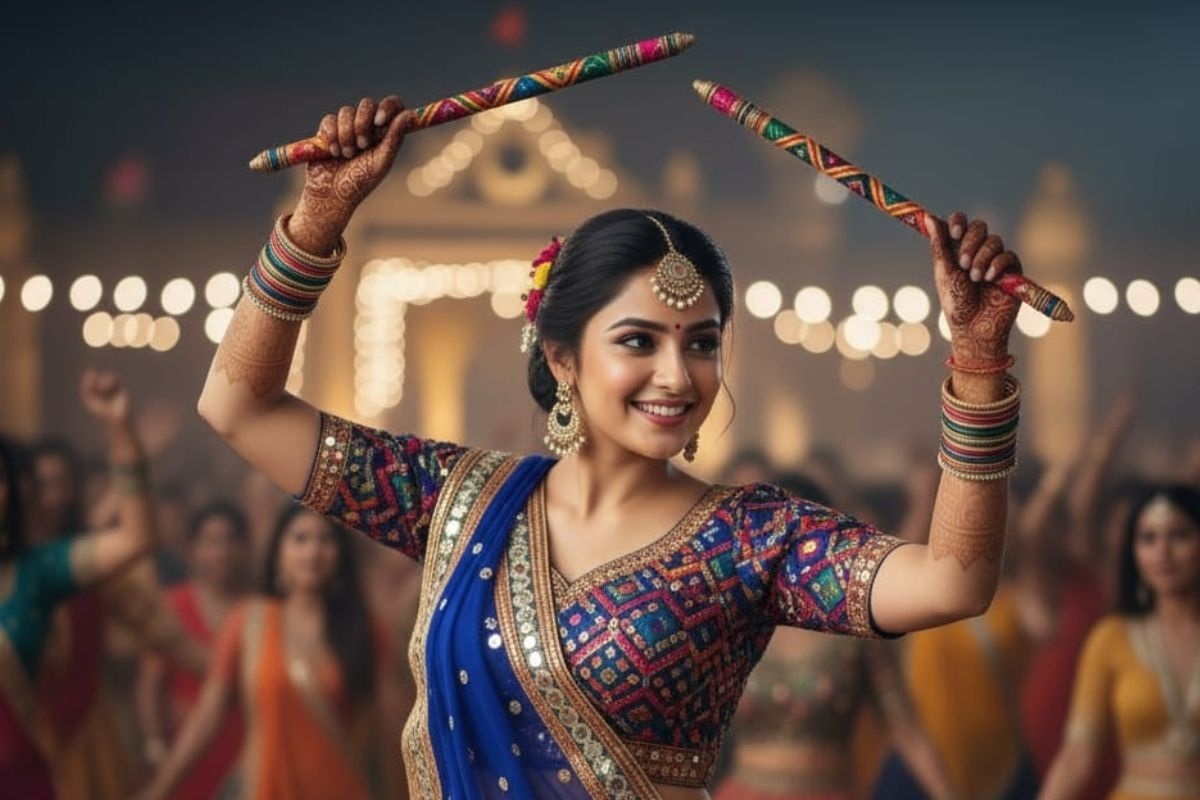
Navratri celebrates Goddess Durga’s various manifestations and represents one of the most vibrant cultural events. And in its heart lie two traditional Gujarati dance forms: Garba and dandiya raas. The nine days, or nights, are as much about devotion as they are about the dancing and the rhythm.
The intersection of tradition and modernity in contemporary garba and dandiya celebrations offers a compelling lens through which to examine cultural evolution, globalisation’s impact on folk traditions and the dynamic nature of cultural identity in the 21st century.
Garba, derived from the Sanskrit word ‘garbha’ (womb), traditionally honours the divine feminine principle through circular dance movements that symbolise the cosmic cycle of creation.
Performed around a clay pot with a lamp inside (representing life in the womb), garba was historically women’s ritual dance, deeply embedded in agrarian cycles and fertility worship. Dandiya raas has its origins in Lord Krishna’s legends. This dance form traditionally represented the cosmic battle between the good and the evil, with the sticks symbolising swords used by Goddess Durga to vanquish demons. Contemporary Navratri celebrations have undergone dramatic scaling. Technology has reshaped the experience. Professional DJ systems have replaced traditional systems. The traditional chaniya cholis for women and kediyus for men-has evolved into a significant fashion industry.
The commercialisation and modernisation of garba and dandiya raise fundamental questions about cultural authenticity. Folk songs with deep spiritual meaning share space with remixed versions designed for mass appeal. This tension reflects a broader dilemma in cultural modernity: how to maintain traditional essence while remaining relevant to contemporary audiences.
The challenge lies in distinguishing
between evolutionary adaptation and superficial
commercialisation.
The social media has created new forms of festival participation, where documenting and sharing the experience becomes as important as the experience itself.
Modern Garba and Dandiya celebrations demonstrate that culture is not a museum artifact but a living, breathing entity capable of growth and adaptation. The festival’s continued popularity across generations and geographies suggests that
when traditional practices successfully integrate contemporary
elements while maintaining their essential spirit, they can thrive in modern contexts.
By Vasavi Barde