Nagpur to get new ‘Made in India’ X-Band Doppler Radar
03 Sep 2025 12:20:48
By Kaushik Bhattacharya :
The new DWR will be a Made In India radar, which will provide accurate weather data of 100-150 km range
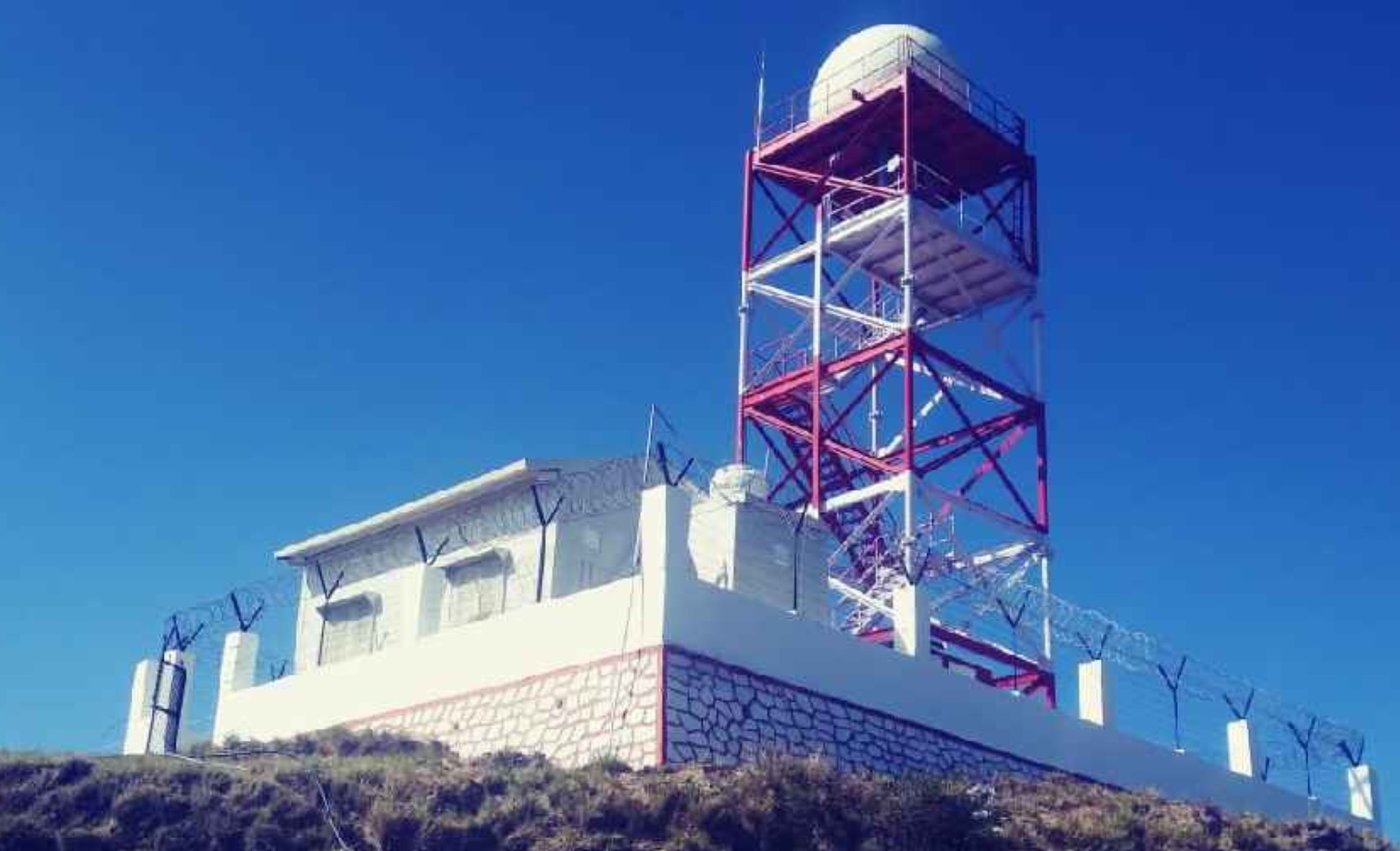
Keeping the weather vulnerability and climate change in mind, the India Meteorological Department (IMD) is going to install a state-of-the-art X-Band dual polarised Doppler Radar in Nagpur soon. Regional Meteorological Centre (RMC), Nagpur has started sight identification work for installation of the new Doppler Radar in city.
“The site identification for installation of the radar is underway.
Thereafter, the soil
testing and other required tests will be carried out before installation of the radar,” Dr Shrikant TS, Scientist C, and In-charge of Doppler Weather Radar Division, Nagpur told The Hitavada.
Nagpur already has a S-Band Doppler Weather Radar (DWR) which is capable of getting weather data of 500 km distance. The existing DWR is situated in the premises of Dr Babasaheb Ambedkar International Airport and is run by the RMC, Nagpur.
Under ‘Mission Mausam’, the Ministry of Earth Sciences is working to install two DWRs in every metro city and Nagpur also comes under the same list of cities. In case of breakdown of one DWR, the other will be functional. After installation of S-Band DWR in 2011, the radar witnessed breakdown many times. The new radar will be a good replacement for the existing one in case of breakdown.
According to the senior meteorologist, the new X-Band Radar will be India Made and the department is also searching for the supplier of the radar.
As per the information, the existing DWR is a USA-made radar, whose maintenance is costly and time consuming. The new radar will be more efficient and provide more clear and accurate data than the existing S-Band DWR.
The system, with a frequency range of 9300 to 9500 MHz, shall be capable of detecting and estimating meteorological parameters of severe weather phenomena. It is capable to capture data with the help of Radar Calibration station (Automatic Weather Station) which is situated 25-30 km away from the Radar Station.
The existing S-Band DWR is single band polarisation capable whereas the new one will have dual polarisation capability by simultaneous transmission and receive in both linear horizontal and vertical polarisation, said a meteorologist. The existing DWR can cover 500 km distance whereas the new radar will cover 100-150 kms with high resolution and accurate data than the S-Band DWR. The entire operation of the new X-Band DWR shall be fully computer controlled and remotely manageable and the data will be processed within 8 minutes to the command centre.