700 herbivores to be shifted from TATR to NNTR after monsoon: Jagtap
06 Sep 2025 11:31:58
By Kaushik Bhattacharya :
The management of Navegaon Nagzira Tiger Reserve (NNTR) will release 700 herbivores in its buffer area to increase the prey base for big cats soon.
As per the latest Tiger Census, there are 12 tigers in NNTR which is spread over 1894.90 square km area, which includes 656.36 square km that comes under the core area and the remaining 1241.24 square km that is part of the buffer region.
“We are waiting for end of monsoon season, as it will be difficult for heavy vehicles to enter in forest area with these herbivores. We have to release these wild animals till December,” Piyusha Jagtap, Field Director, NNTR, told
The Hitavada.
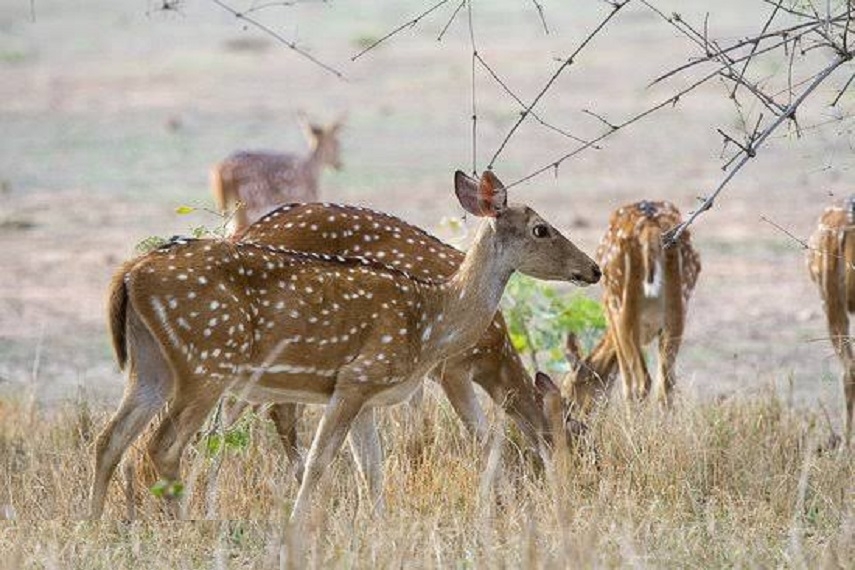
“In the first batch, we will get 50 Chitals from Tadoba Andhari Tiger Reserve (TATR) and the remaining 450 Chitals and 200 Sambars in the second phase,” said Jagtap.
As per the Wildlife Management Project, relocation of wild animals will take place in Navegaon Meadows.
On the other side, the TATR management is also all set to capture these herbivores. After monsoon season ends, the process will start.
The initiative aims to strengthen the
prey base in NNTR, which has fewer herbivores and, consequently, a lower population of carnivores.
The Forest Department launched the tiger relocation project to curb man-animal conflicts in Chandrapur and Yavatmal districts by shifting excess tigers to NNTR.
In the first two phases, three tigers, both from the Yavatmal and Bramhapuri divisions in Chandrapur, were relocated last year.
“Like big cats, population of herbivores in NNTR also is low.
A robust prey base is essential for the relocated tigers to survive and thrive. Hence, we will move 700 Chitals and Sambars from TATR to NNTR in phases from this month end,” added Jagtap.
Large enclosures, known as Bomas have been prepared at TATR and NNTR. TATR authorities will capture the chitals that have gathered in the Boma, before relocation.
Similarly, after translocation, the deer will be kept in Bomas for acclimatisation before being released into the wild. The herbivores will be introduced in ranges including Umarzari, Koka, Navegaon Park, and Dongargaon Bonde within NNTR.
The translocation will be a coordinated operation between the TATR and NNTR. The NNTR authorities have also prepared release closures in their area where these translocated chitals will be kept for acclimatisation. After the first batch is acclimatised and released in the jungle in NNTR, the next batch of spotted deer will be translocated from TATR.