Bhopal breathes easy for now, pollution spike expected next month as monsoon ends, warn experts
07 Sep 2025 07:07:43
Staff Reporter :
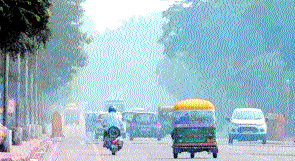
With the monsoon showers continuing to lash the city, Bhopal is currently enjoying a spell of pleasant weather and clean air. The Air Quality Index (AQI) has remained in the ‘Good’ category for several weeks, offering a rare window of relief to residents. But environmental experts and officials warn that this calm is temporary, and the city should brace for a sharp rise in pollution levels once the rains retreat. According to data from the Central Pollution Control Board (CPCB), Bhopal recorded an AQI of 38 on September 8, 2024, placing it firmly in the ‘Good; category.
However, just a month later, on October 8, 2024 the AQI spiked to 133, falling into the ‘Poor’ category. Officials say this pattern is likely to repeat this year, with deteriorating road conditions and dry weather contributing to a surge in airborne pollutants. In December 2024, Bhopal recorded an AQI of 155, categorised as ‘Unhealthy’, with several monitoring stations reporting levels above 200. Officials fear similar conditions may arise this year unless mitigation efforts are ramped up.
“Rainfall naturally suppresses dust and particulate matter, but once it stops, we see a rapid deterioration in air quality,” said Brajesh Sharma, Regional Officer of the Madhya Pradesh Pollution Control Board (MPPCB).
“The roads are in a dilapidated state, and as they dry, dust clouds will return, pushing AQI levels upward.”
Under the National Clean Air Programme (NCAP), a joint committee comprising MPPCB, Bhopal Municipal Corporation, PWD, National Highway Authority, and the RTO has been tasked with implementing preventive measures. These include filling potholes and repairing damaged roads ,cracking down
on garbage burning and use of traditional tandoors in hotels and action against vehicle who create pollution.
Sharma noted that while 80–90% of days in Bhopal fall under the “Good days”, nearly 10–20% are classified as
“Bad Days”, when AQI is under 200 it is called good days, when exceeds 200, considered bad days and it poses serious health risks.
Dr Parag Sharma, a pulmonologist in GMC, warns that rising pollution levels can trigger a host of respiratory and cardiovascular issues, particularly among vulnerable groups such as children, the elderly, and those with pre-existing conditions. High concentrations of PM2.5 and PM10 particles have been linked to asthma, bronchitis, heart disease, and stroke. Long-term exposure may also impair lung development in children and exacerbate chronic illnesses.
Citizens are advised to monitor AQI levels regularly via CPCB’s dashboard, avoid strenuous outdoor activities during high pollution hours, and report violations such as garbage burning to municipal authorities. As Bhopal enjoys its current spell of clean air, the message from experts is clear: enjoy the breeze, but prepare for the haze.