Fans face traffic chaos
22 Jan 2026 12:39:02
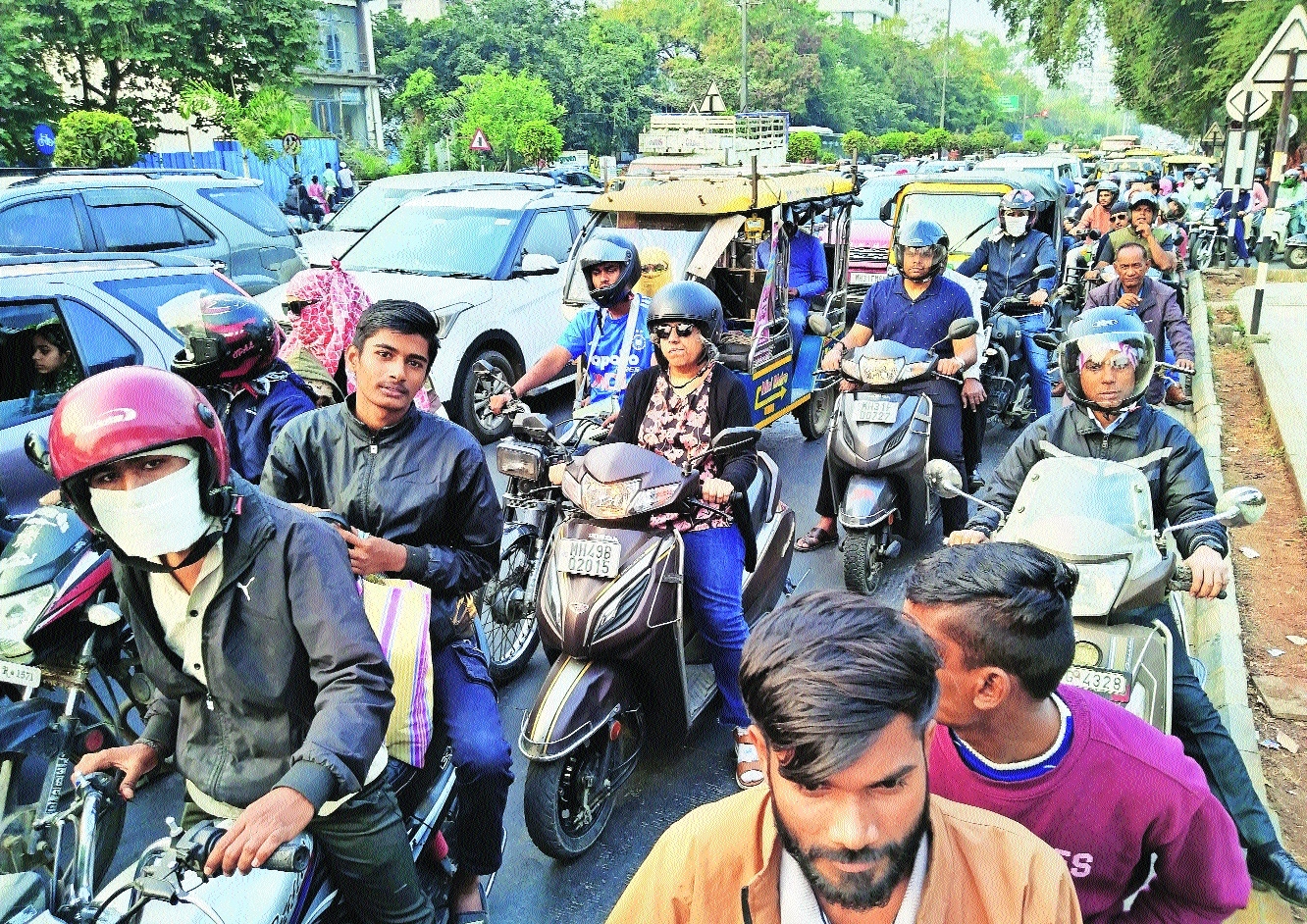
Cricket fans encountering traffic-jam on Wardha Road while on way to Jamtha stadium on Wednesday evening. (Pic by Anil Futane)
By Kabir Mahajan :
Gridlock in city creates long delay for other commuters too
The excitement of the T20 International between India and New Zealand at the Vidarbha Cricket Association Stadium in Jamtha on Wardha Road was overshadowed by traffic jams that paralysed city roads. Despite prior arrangements by the City Police, fans headed toward Jamtha were left frustrated due to traffic-jams. The situation on Wardha Road became worst post-match even for other road-users. While the match was scheduled for later in the day, the chaos began as early as 2 pm. Fearful of missing the toss or being caught in security queues, thousands of fans began their journey to the stadium simultaneously.
This massive, early exodus transformed the Wardha Road and the Outer Ring Road into sprawling parking lots. The sudden surge in vehicle density quickly overwhelmed the traffic points, leading to bumper-to-bumper jams that stretched for several kilometers.
The congestion did not just affect those with match tickets. Regular commuters, travellers heading to the Dr Babasaheb Ambedkar International Airport and residents of suburban townships found themselves trapped in the gridlock. Many fans who had travelled from neighboring districts reported delays of over two to three hours, with some expressing concern that they would not reach their seats before the first ball was bowled.
While the Police Department had deployed a significant number of personnel and designated specific parking zones, the local infrastructure struggled to cope with the influx of private vehicles.
“We started three hours early, but the traffic near the stadium approach roads was at a complete standstill,” noted one fan.
Officials have often pointed towards a lack of public transport utilisation as a reason for such chaos. However, the lack of seamless last-mile connectivity for large-scale events remains a recurring problem in city.
As the sun set on a day of world-class cricket, the conversation among citizens shifted from the players’ performance to the urgent need for a more robust, event-specific traffic management plan to prevent the city from coming to a standstill in the future.