Candidates forced to pay for electoral rolls
| Date :04-Jan-2026 |
Staff Reporter :
In the era when digital governance is repeatedly projected as a cornerstone of public administration, the Nagpur Municipal Corporation (NMC) has taken a conspicuously regressive step ahead of the upcoming municipal elections. While the Union Government under Prime Minister Narendra Modi has consistently promoted paperless systems and digital access, the NMC has chosen a path that is both costly and opaque for NMC poll candidates.
The issue surfaced when candidates approached the NMC to obtain the final booth wise electoral rolls for their respective prabhags. They were informed that the rolls would be supplied only in hard copy and that a fee of Rs 2 per page would be charged. Requests for digital or PDF copies were flatly refused.
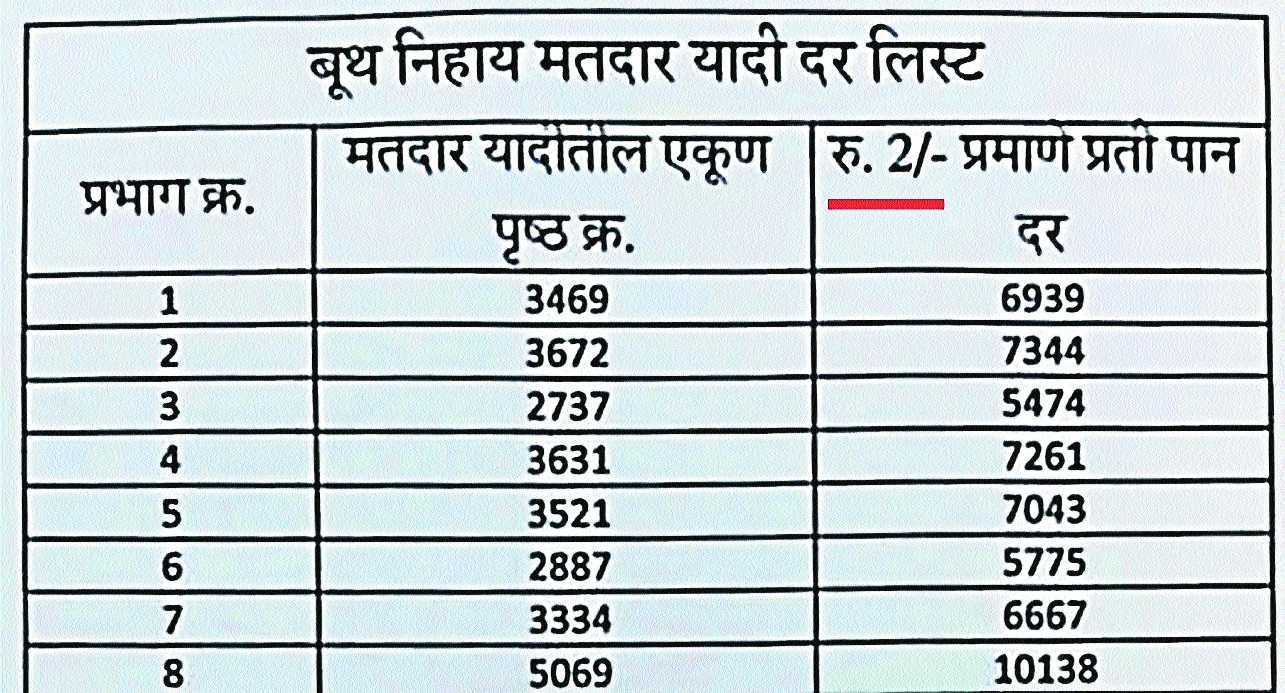
For prabhags where electoral rolls run between 3,000 and 6,000 pages, the financial burden on candidates ranges from Rs 6,000 to Rs 11,000 per ward—an expense many describe as unnecessary and avoidable.
The final booth-wise electoral list for Prabhag 36 is available at a whopping Rs 11,306, highest among all prabhags. The lowest amount is required for Prabhag 6, where the electoral roll is available for Rs 5,775.
The decision has drawn sharper criticism as candidates pointed out that electoral rolls were provided free of cost during the Assembly elections held last year. “If the system could be free and accessible then, why is it suddenly a paid commodity now?” asked a political party worker. “This looks less like procedure and more like a deterrent, especially for smaller parties and independent candidates.”
Senior officials of Nagpur Municipal Corporation have defended the move, stating that the charges are being levied as per directives issued by the State Election authorities. However, the explanation has done little to quell concerns, particularly around transparency.
The electoral rolls uploaded on the NMC website do not contain voter photographs, a crucial requirement for candidates and booth-level agents to verify voter identity on polling day.
Another party worker questioned the logic of withholding digital copies. “Without a soft copy, candidates are forced to make multiple photocopies for different booths. It wastes money, paper and time. In the name of elections, we are being pushed into inefficiency,” the worker said.
The absence of digital access also undermines environmental considerations, with thousands of pages being printed and duplicated unnecessarily. More importantly, critics argue that such practices contradict the broader narrative of digital empowerment and risk creating barriers in the democratic process.
As Nagpur prepares for civic polls, the insistence on paid, paper-only electoral rolls has raised uncomfortable questions about intent, access and accountability, questions that remain unanswered even as candidates quietly pay the price.