State’s first bio-fencing technique helping Nagpur Division to curb man-animal conflict in Parseoni
| Date :11-Oct-2026 |
By Kaushik Bhattacharya :
The Nagpur Forest Division in Parseoni taluka is working on a model of cost effective biological wildlife barricade
(bio-fencing), which will help restrict wild animals from entering human settlements and also curb human movement in forest areas.
This initiative is the first of its kind in Maharashtra to curb man-animal conflict in the region. Nagpur Forest division is initially implementing
this project in 5 km area
covering five villages
— Dolamine, Gugshi, Pali, Maori and Umri which
are among the most man-animal conflict-affected villages in the taluka.
“The traditional chain-link fencing and solar fencing are costlier and require time to time maintenance. Shielding all conflict-prone villages and agriculture fields with such fencing is not possible for the department as it require more funds. Poachers and villagers even connect these chainlink and solar fencing with electricity with the intention of poaching or killing wild animals. A majority of electrocution cases happens through these techniques.
However,
this new bio-fencing will
help to curb electrocution in coming days,” said Dr Vinita Vyas, Deputy Conservator of Forest, Nagpur Territorial to ‘The Hitavada’.
As per information, Guardian Minister Chandrashekhar Bawankule also appreciated Nagpur forest division for this technique of separating forest from human settlements and agriculture fields.
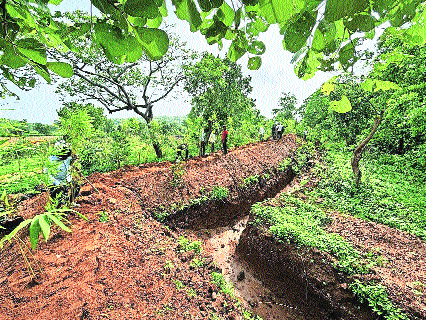
Rahul Shinde, Range Forest Officer, Ramtek said, “This bio-fencing is made of thorny bamboo variants named Bambusa bambos which is easily available in forest area. The two trenches on both side of the bamboo plantation gives it double protection to the fencing which also makes it impossible for wild animals to cross the fence.”
During monsoon, these trenches help to store water which can be used by the wildlife for drinking and also help to increase the water table in the area, said Shinde.
“Initially villagers from Dolamine and Gugshi villages opposed the project as they were losing an approaching road to a temple situated over the hill. Now they are supporting it because they are getting visible results of the project. The entering of wild animals in both villages has now stopped and the crop damage due to wild animals like wild boars and spotted deer is also decreased drastically,” said Shinde. As per the officer, Parseoni taluka has seven resident tigers including one male, two female, and sub-adults. However, one or two tigers are frequently moved from Pench Tiger Reserve (PTR) to this territorial forest for the last few years. “Nagpur forest division is working to increase the wildlife monitoring in territorial forests of Parseoni and Ramtek talukas in recent times as the tiger population has increased manyfold. This project will help to curb man-animal conflict in the region which is now on rise from past 2-3 years,” said Shinde.