Water crisis: Swimming pools might face the heat
| Date :22-Oct-2026 |
By Anupam Soni :
AMID growing water scarcity in the city, declining groundwater levels and restrictions on borewells, swimming pools might come under the administration’s scanner much sooner than later.
Though those handling the pools are ready to abide by whatever the authority — City Collector, Nagpur Municipal Corporation and the Nagpur Improvement Trust — orders, they feel that it will not be completely prudent to shut down the pool. They have also come up with certain suggestions for those in power as well as the citizens.
City’s swimming pools can be broadly divided into two categories — those which have their own arrangement for water (like wells and borings) and draw that from non-drinking source, and the other using corporation’s water to fill the pool.
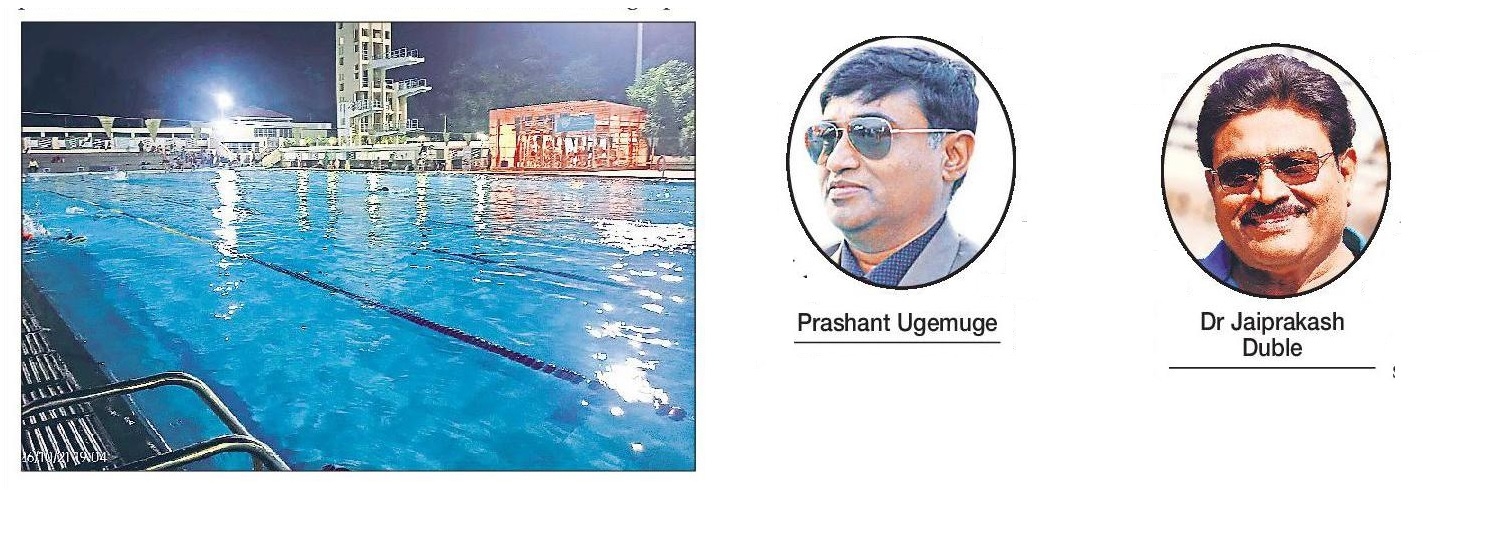
“Water for the pool and the showers (used before entering the pool and after swimming) comes directly from Ambazari. It has no connection to domestic water or drinking water supplies, as Ambazari water is not used for drinking purposes in Nagpur. Once the pool is filled, water wastage or usage is very low because the water is continuously filtered. Only the water that splashes out during diving or bathing, or is used in showers, requires topping up,” informed Prashant Ugemuge, Managing Director of Midland Sports and Wellness Private Limited, the private operator managing NIT pool while talking to ‘The Hitavada’.
But in a scenario where the authority asks for shutting down the activities in the pool, the operator will abide by it.
“Currently, no official directives have been issued by NIT to close the pool.
However, if instructions are received from the administration or NMC, necessary steps will be taken according to the rules.” Ugemuge added.
Ugemuge believes that the bigger issue than water scarcity is “civic sense” and the improper use of water.
“By adopting small habits — such as using a bucket instead of a shower, or not leaving taps running while shaving or washing dishes — large amounts of water can be saved. Facilities like IT parks use Sewage Treatment Plants (STPs) to recycle used water for gardening and car washing, a practice that needs to be implemented in other large buildings as well,” he stated.
“Instead of relying solely on the government or administration to deal with natural calamities or water crises, we as citizens must also improve our daily habits and conserve every single drop of water.”
Dr Jaiprakash Duble, a former Deputy Director of Sports, Maharashtra and international swimming coach, who is also Director of the National Institute of Swimming having its pool at Manewada-Besa Road, echoes the same sentiments.
Dr Duble feels that one must treat swimming pools not as water-wasting hazards, but as active centres for water conservation.
“Traditionally, public and private swimming pools faced criticism for requiring frequent draining and refilling every fortnight, consuming massive volumes of freshwater.
However, modern facility managers emphasise that contemporary pools equipped with advanced filtration plants operate on a closed-loop recycling system, filtering and reusing water.
“When 200 members use a swimming pool daily, the water is recycled rather than wasted down in drains if they bathe at home. Furthermore, if they use bucket-based washing and shower responsibly within the facility, the net water consumption significantly drops,” explained Dr Duble.