Cough syrup toxicity crisis: AIIMS doctors save one child
| Date :01-Feb-2026 |
Staff Reporter :
- Paediatrics Department endeavoring to save another child
- AIIMS Nagpur conducts a detailed study over the issue
Of the two children, the
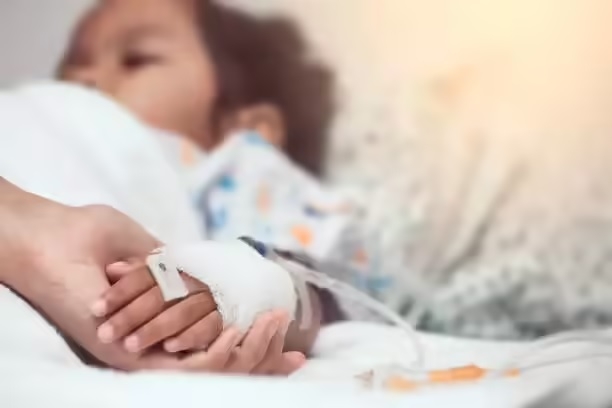
victims of disputed cough syrup were hospitalised at All India Institute of Medical Sciences (AIIMS) Nagpur in a very critical state, one child has been saved while another is in critical condition and battling for life.
Both of them were in deep coma, with no spontaneous breathing and the pupils of both eyes dilated and fixed
suggesting significant
brain damage.
The entire staff of Paediatrics Department, led by Dr Meenakshi Girish including paediatric intensivist, Dr Abhijit Choudhary have been working tirelessly to manage these children. One patient who was on ventilator for
more than 3 months and was successfully discharged after 114 days of hospitalisation, while the other is still in a very critical state.
The Chief Minister of Madhya Pradesh, Dr Mohan Yadav, Deputy Chief Minister Rajendra Shukla, and Durga Das Uikey, the Union Minister of State for Tribal Affairs in India, also visited the children at AIIMS Nagpur.
The hospital administration waived off hospital charges for these unfortunate children before Madhya Pradesh Government extended moral and financial support to the tiny victims of this horrendous tragedy.
In early September 2025, across the districts of Chhindwara, Betul, and Seoni in Madhya Pradesh, previously healthy children mostly between 2 and 5 years old, were arriving at hospitals with fever and symptoms of Acute Kidney Injury (AKI) and Acute Encephalitis Syndrome (AES). As the cases began to rise the Metropolitan Surveillance Unit (MSU) in Nagpur flagged the cluster for urgent investigation.
The Integrated Disease Surveillance Programme (IDSP) of the National Centre for Disease Control (NCDC) collaborated with AIIMS Nagpur to investigate these cluster of 48 cases in Nagpur. Department of Community Medicine and Department of Paediatrics at AIIMS Nagpur, jointly planned the outbreak investigation across various health facilities in Nagpur. Investigators found that 50% of the cases had a confirmed history of consuming cough syrup for minor ailments before their condition spiralled.
A total of 18 cases of unexplained AKI from Madhya Pradesh and one from Maharashtra fulfilled the case definition.
The majority of cases (88.9%) were from Madhya Pradesh, with Chhindwara being the most affected district. The cases predominantly affected younger children, with the highest incidence in the 2-5 years age group (55.5%).
Why cough syrup should be avoided?
Experts at AIIMS Nagpur stated that cough syrup should be avoided in children, as they have never been proven to work any better than placebo in children, cough and cold medications have been associated with fatal overdose even with appropriately prepared pharmacological agents, safe dosing recommendations have not been established for children.
Study confirms kids
consumed Coldrif
Exposure history to cough syrup was documented in 50.0 % of cases. The findings confirmed the prevailing suspicion of a possible toxin induced AKI which was then linked to consumption of contaminated cough syrup with the brand name ‘Coldrif,’ a syrup manufactured by Sresan Pharmaceuticals, Tamil Nadu. By early October 2025, laboratory tests confirmed that ‘Coldrif’ syrup was contaminated with diethylene glycol (DEG). The testing revealed a concentration of approximately 48.6% DEG, which is 480 times the permissible safety limit of 0.1%. Madhya Pradesh government issued a state-wide ban on Coldrif. This was followed by a national alert from the Central Drugs Standard Control Organisation (CDSCO) and a subsequent WHO alert on October 13, 2025.
Study leads to Structured Epidemiological Investigation
Executive Director, AIIMS Nagpur, Dr Prashant P Joshi
said that early detection
and timely action by the MSU has contributed hugely in averting many more impending deaths.
The exemplary collaboration between the MSU and medical institutions like AIIMS Nagpur served as a vital bridge between community-level surveillance and high-level clinical expertise; in the present outbreak, it marked a critical turning point by transforming a series of 'mysterious' deaths into a structured epidemiological investigation.