SWM Act, 2026: Buffer Zone in every dumping yard; impossible task for NMC!
01 Feb 2026 13:28:04
By Kaushik Bhattacharya :
Existing buffer zone in Bhandewadi was already encroached years ago n Greens claimed new buffer zone in Bhandewadi is not possible
With an aim to strengthen the solid waste management rules, the Ministry of Environment, Forest and Climate Change (MoEF&CC) has introduced a buffer zone criteria in its new Solid Waste Management (SWM) Rules, 2026, which will come into force from April 1.
The notified rules mentioned that every local body will have to maintain a buffer zone within the total area allotted for facilities having an installed capacity exceeding 5 tonnes per day.
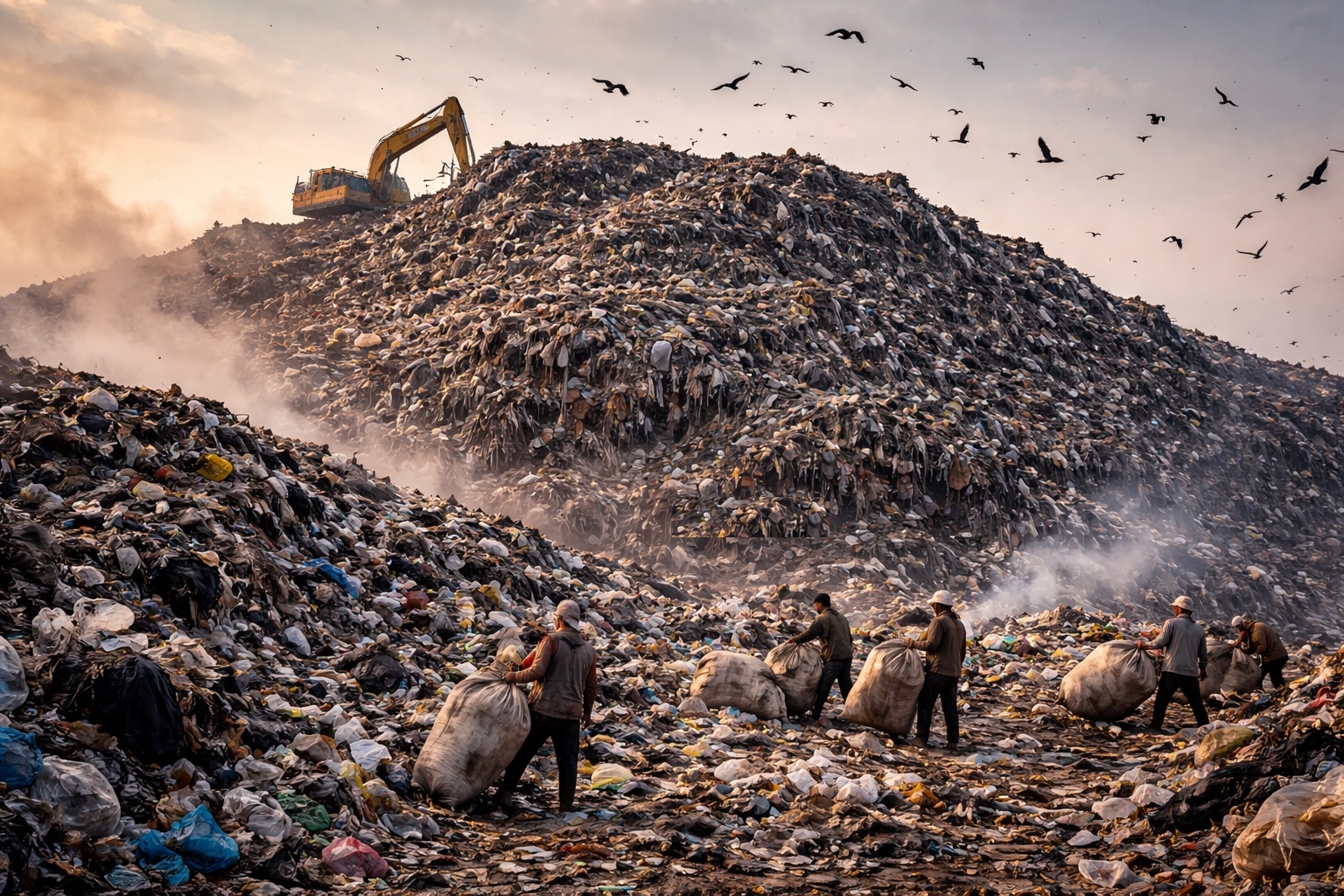
However, creating a buffer zone in city’s Bhandewadi dumping yard will be a challenging task for the Nagpur Municipal Corporation (NMC) as the dumping yard is surrounded by dense residential locality.
A senior NMC official, on condition of anonymity, informed ‘The Hitavada’ that, Bhandewadi dumping yard had a buffer zone earlier, which has now been encroached from every direction.
The encroached lands have now turned into residential colonies.
“After implementation of the new rule, the administration will think about alternatives to execute the norms,” said the official.
Green activists in city raised concern over the demarcation of buffer zone in Bhandewadi as
it is choked with infrastructure development.
“A buffer zone is a mandatory requirement for any dumping yard. However, it is often encroached upon. The same situation can be observed at the Bhandewadi Solid Waste Processing Yard. Encroachment of the buffer zone reduces the protective separation, increasing the risk of groundwater and soil contamination due to leachate,” said Kaustav Chatterjee, Swachh Bharat Abhiyan Ambassador for NMC and Founder, Green Vigil Foundation.
“Those who encroach upon the buffer zone later raise concern about pollution and health hazards and demand the removal of the dumping yard. As per the new amendment, CPCB will develop guidelines specifying the size of the buffer zone and permissible activities within it based on facility’s capacity and pollution load. However, it will be a real challenge for any urban local body to remove the encroachment and recover the encroached buffer zone,” said Chatterjee.
“Earmarking a buffer zone in Bhandewadi dumping yard, which is surrounded by slums and unauthorised housing layouts, could be challenging,” said Leena Buddhe, Director, Centre for Sustainable Development.
Feasibility in Nagpur would depend on three major factors -- Conducting a detailed site assessment to determine the required buffer size and impact on surroundings; Involving local authorities in land-use planning and possible resettlement or zoning adjustments; and Balancing environmental regulations with socio-economic realities of the affected communities, explained Buddhe.
Swachh Association founder and green activist Anasuya Kale Chhabrani said, “To implement the rule, there is an utmost need of willingness by political and civil society both. The local body should look for a new site for dumping yard outside city where it will be easy for them to establish buffer zone.”
For proper implementation of SWM Act, 2026, the local body should implement the previous rule effectively. NMC should chalk out a proper roadmap with time line to implement the rules, said Chhabrani.