Pandit Deendayal Upadhyay: Proponent of Integral Humanism and thinker of a strong India
| Date :11-Feb-2026 |
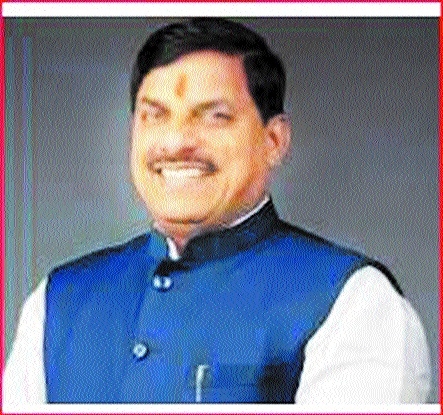
By Dr Mohan Yadav :
Chief Minister of
Madhya Pradesh
I bow with millions of salutations at the feet of Pandit Deendayal Upadhyay , the visionary who showed the path from the individual to society and from society to nation-building, and the proponent of Integral Humanism and Antyodaya.
Pandit Deendayal ’s life is a guiding beacon for the Indian nation. He was a sage-statesman devoted to the holistic uplift of the society, culture, and the nation. He regarded politics as a means of practicing national duty. His firm belief was that independent India’s journey must align with Indian philosophy, culture, and tradition.
By linking political thought with Indian values, Pandit Deendayal propounded the doctrine of Integral Humanism. This philosophy embodies harmony and balance among the individual, society, nation, and the universe.
It weaves life and the entire creation into a single thread, shaping the collective from the individual. From the spirit of Vasudhaiva Kutumbakam articulated by Krishna to today’s global perspective, this philosophy encompasses it all.
Pandit Deendayal envisioned India’s future on the foundation of the four Purusharthas, Dharma, Artha, Kama and Moksha. He believed that a balanced integration of these four leads individuals and society toward completeness. If equal opportunities for development are provided to individuals and society, a self-reliant and capable nation can be built. According to him, the ultimate goal of politics is the creation of a strong, harmonious, and self-respecting nation. His development model was not confined to economic growth alone; it included cultural consciousness, social harmony, and spiritual balance.
He emphasised that development is meaningful only when its benefits reach the last person standing in the last row, this is the true essence of Antyodaya.
Under the leadership of our illustrious Prime Minister Narendra Modi, the development path on which India is progressing is deeply rooted in Pandit Deendayal’s thought. ‘Heritage to Development’, Atmanirbhar Bharat, Vocal for Local, and Sabka Saath–Sabka Vikas are modern expressions of Integral Humanism. Prime Minister Modi has resolved to establish India as a global superpower by 2047, the centenary year of independence. This resolve is the living realisation of Pandit Deendayal ’s dream of India.
I am pleased to share that, in line with Prime Minister Modi ’s vision of a self-reliant and developed India, efforts are being made to connect every region of the state to the mainstream of development.
Regional Industry Conclaves have been introduced to harness the potential, talent, and efficiency of every region, while the Global Investors Summit held in Bhopal aimed to take local industries to the international stage. Investment outreach visits were undertaken to the UK, Germany, Japan, and Davos and roadshows were organised in Hyderabad, Coimbatore and Mumbai to invite industrialists. This marks the first strong effort to connect industries from the regional to the global level.
I am satisfied to note that, under the guidance of Prime Minister Modi, Madhya Pradesh is striving to translate Pandit Deendayal Upadhyaya’s philosophy into practice. Through harmonious, sensitive, and responsible governance, development goals and schemes are reaching the last person on the ground. The State is working through four missions focused on the welfare of the poor, farmers, youth power, and women empowerment.
This will ensure the well-being of all sections of society.
For economic development, Pandit Deendayal laid out a clear and practical sequence, agriculture, industry, transport, trade, society, security and service. In this sequence, he emphasised giving foremost importance to agriculture in an agrarian country like India. He believed that a strong agricultural sector increases farmers’ incomes, brings stability to rural life, and ensures easy availability of raw materials and labour for industries. This creates balance among farmers, consumers, and society. He considered agricultural strength and farmers’ prosperity as the foundation of holistic development. I am pleased to state that, under Prime Minister Modi ’s guidance, Madhya Pradesh is observing the year 2026 as the ‘Farmer Welfare Year’, placing farmers’ dignity, secure livelihoods, and self-reliance at the centre.
Through modern technology, improved seeds, irrigation, storage, and better market access, farming will be made a profitable enterprise. Agriculture is not only a means of livelihood but also the backbone of the state’s economy, and no effort will be spared in strengthening this sector.
I am glad to share that Madhya Pradesh is the first state in the country to dedicate the year 2025-26 entirely to farmers’ welfare. Through national projects such as the Parvati-Kalisindh-Chambal and Ken-Betwa river links, along with the Tapti Groundwater Recharge Mega Project, more than 1.6 million hectares of additional agricultural land across 25 districts will get irrigated.
Every necessary step will be taken for the comprehensive welfare of the state’s farmers.
Research centres for anna (millets), mustard, and chickpea are being established in the state. These will take millet production and nutritional security to new heights, with special emphasis on improving crop quality and productivity. Over the next three years, more than 3 million farmers will be provided with solar power pumps.
The irrigated area in the state is targeted to increase from 6.5 million hectares to 10 million hectares. Pandit Deendayal Upadhyaya envisioned an India that is self-respecting, self-reliant, and a leader in global welfare. Under the leadership of Prime Minister Narendra Modi, the nation is moving steadily in this direction. His life and philosophy will continue to inspire us all on the path of national duty. On the death anniversary of the immortal devotee of nation-building, Pandit Deendayal Upadhyay, I once again offer my reverent
salutations.