Generator mandatory at all centres to prevent examination disruptions
04 Feb 2026 12:02:21
Staff Reporter :
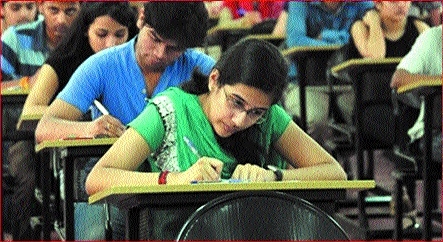
In a bid to ensure uninterrupted examinations and avoid controversies witnessed in previous years, the National Testing Agency (NTA) has made generator facilities mandatory at all NEET examination centres. Alongside this measure, only government institutions, government schools, colleges and universities, have been selected as centres, with private institutions completely excluded.
The NEET examination will be conducted in the first week of May, and over 16,000 candidates are expected to appear from the city.
41 Government institutions approved, private institutes remain excluded
A total of 41 Government institutions have been finalised as NEET examination centres following a comprehensive district-level survey completed last week. The survey report has already been submitted to the authorities concerned. Officials said that restricting centres to government institutions, along with enforcing mandatory infrastructure requirements, is intended to strengthen examination security and clearly fix responsibility in case of any lapse. Officials clarified that no private institution has been approved as a NEET examination centre to minimise the risk of paper leaks, which have occurred in the past.
The decision to rely exclusively on Government institutions is aimed at ensuring stricter administrative control and closer monitoring during the examination.
Generator facility now compulsory at every centre
As per the NEET guidelines, CCTV surveillance is mandatory at all centres, with live monitoring from the NTA control room in New Delhi. If cameras are not already installed, NTA will provide removable CCTV units through authorised vendors.
Generator facility has now been made a compulsory requirement for selection as a NEET examination centre. Speaking to ‘The Hitavada’, P K Beduye, City Co-ordinator for NEET and Principal of Kendriya Vidyalaya No. 2, said that while generator availability was required earlier, it is now being enforced strictly as a mandatory condition.
“After last year’s incident where examinations were affected due to power failure, uninterrupted electricity supply has become mandatory. Any centre that does not have its own generator will be provided one by the NTA so that students do not face any disruption during the examination,” Beduye said.
Past incidents highlight need for reliable centres
The role of examination centres has gained significance following past disruptions. Last year, a student from Indore approached the Indore High Court after electricity supply failed at his examination centre due to bad weather.
The court noted that the test environment was compromised, with reports that some candidates had to write the exam under candlelight. To prevent a repeat of such incidents, NTA has tightened norms this year by making generator facilities mandatory along with full CCTV coverage at all centres.
The seriousness of compromised examination conditions was further underlined on May 16, when Justice Subodh Abhyankar ordered that the results of a previous examination remain on hold pending review.
Concerns over transparency have also surfaced in other competitive examinations. In one instance, seven out of ten toppers for Group-2 and Sub-Group-4 Patwari posts in Madhya Pradesh were reportedly from a single centre, drawing parallels with the Vyapam scam and reinforcing the need for strict monitoring.
Reacting to the issue, Vivek Tripathi, State Congress Spokesperson, said NEET is one of the toughest examinations in the country. “After last year’s protests over the results, such incidents must be avoided. While surveying centres is important, stronger steps are needed to stop malpractices such as selling seats for money. The situation regarding NEET PG admissions is also worrying, as seats were reportedly allotted to students who scored zero,” he said.
Infrastructure Benchmarks
During the survey, all proposed centres were assessed against predefined benchmarks.
Facilities such as desks and chairs, fans, lighting, ventilation, washrooms and drinking water were inspected. Only those institutions that met all prescribed standards were selected as examination centres.
24 students per room norm followed
Room capacity was a crucial criterion during the survey. Each examination room must be large enough to accommodate 24 students comfortably. The overall seating capacity of every institution was also verified before final approval was granted.
District-Level Committee Supervised Selection Process
The survey and selection process were carried out by a District Level Co-ordination Committee chaired by the District Magistrate. The committee includes the District Police Officer, District Education Officer (DEO), District Informatics Officer (DIO) of the National Informatics Centre (NIC), and two City Co-ordinators.
Two City Co-ordinators for Bhopal
The two City Co-ordinators appointed for Bhopal are Manish Kumar Gupta, Vice Principal of Kendriya Vidyalaya No. 1, and P K Beduye, Principal of Kendriya Vidyalaya No. 2. They will function as nodal officers and oversee both examination conduct and centre management across the city.
Fresh Survey Only If Centre Count Changes
Officials said that this will be the final survey for NEET centres in Bhopal. However, if the number of candidates rises, a fresh survey will be conducted before approving additional Government institutions. If student numbers fall, the number of centres may be reduced accordingly.