Filariasis cases in Vid come down to below 1% except in three districts
| Date :06-Feb-2026 |
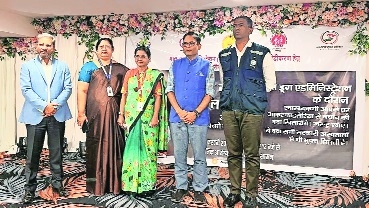
Anuj Ghosh, Dr Aditi Tyadi, Dr Nayana Duphare, Dr Shashikant Shambharkar, Dr Kamlakar Lashkare at the workshop.
Staff Reporter :
- Govt to launch Mass Drug Administration (MDA) campaign from February 10 in three districts of Nagpur Division for filariasis elimination
- A total of 15,27,813 beneficiaries across 11 blocks in Chandrapur, Bhandara, and Gadchiroli districts will be targeted to administer anti-filarial medicines
The number of cases of Filariasis has come down to below 1% in all districts in Vidarbha. There are only 11 blocks in Chandrapur, Bhandara and Gadchiroli where the percentage is high. Now, Government has targeted such blocks all over Maharashtra, which include 11 blocks of these three districts of Nagpur division. Government will launch Mass Drug Administration (MDA) campaign from February 10 in three districts of Nagpur Division for filariasis elimination.
Beginning February 10, the MDA round will be implemented in three districts of Nagpur Division namely Chandrapur, Bhandara, and Gadchiroli.
Trained health workers will ensure supervised administration of anti-filarial medicines to a total of 1,527,813 beneficiaries across 11 identified blocks
through booth-based and door-to-door outreach.
Dr Shashikant Shambharkar, Deputy Director, Health Services, Nagpur Division, stated that filariasis is a serious public health concern transmitted through infected mosquito bites and is one of the leading causes of long-term disability. Infection often occurs during childhood, though symptoms typically manifest in adulthood. The disease damages the lymphatic system and, if not prevented in time, can cause abnormal swelling of body parts, for which there is no permanent cure. He emphasised that annual consumption of anti-filarial medicines is the only effective preventive measure against the disease. He further clarified that these medicines generally do not cause serious side effects.
Some individuals may experience mild nausea or vomiting, which indicates that the medicines are effectively working on the parasites present in the body. Albendazole should be chewed after meals, while DEC and Ivermectin should be swallowed with water, added Dr Shambharkar.
Dr Nayana Duphare, Assistant Director (Malaria), Health Services, Nagpur Division, informed that the MDA campaign will administer a three-drug regimen—DEC, Albendazole, and Ivermectin—in the selected 11 blocks across the three districts. Medicines will be administered both at booths and through door-to-door visits by health workers.
Duphare clarified that children below two years of age, pregnant women, and severely ill individuals will not be administered the medicines.
The medicines must not be taken on an empty stomach and should be consumed in the presence of ASHA workers or health personnel. She also noted that these medicines help eliminate intestinal worm infections and skin conditions such as scabies, and contribute to improved physical and cognitive development among children.
Dr Kamalakar Lashkare, National Programme Officer, World Health Organisation (WHO), explained, “WHO will closely monitor the implementation of the programme at all levels to ensure equitable access in both rural and urban areas and to ensure that no beneficiary is left behind.”
Ahead of the launch of the Mass Drug Administration (MDA) round under Maharashtra’s commitment to eliminate filariasis, a media sensitisation workshop was organised on Thursday in Nagpur district. The objective of the workshop was to enhance public awareness about the filariasis elimination programme through active media engagement.
During the workshop, Anuj Ghosh, Senior Director, Global Health Strategies, appealed all to support the awareness campaign.