Pohra ‘nullah’ continues to curse Shastri Layout residents
06 Feb 2026 12:01:53
Staff Reporter :
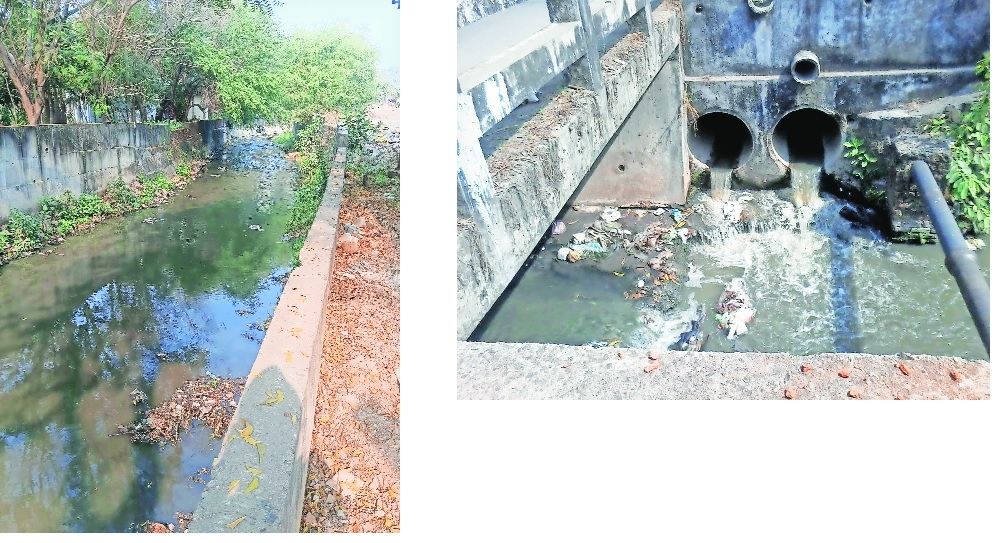
Pohra River, near Shastri Layout in Khamla, is a perfect example of a sleepy and sloppy administration. For the last three decades, residents here are suffering due to open sewage causing health hazard.
The residents of Shastri Layout have been fighting to stop release of sewage in Pohra river for the past many years, but the civic body is least bothered to take cognisance of the issue.
The erstwhile Pohra River flowing through Shastri Layout, has been reduced to an open drainage for over 35 years, forcing residents to live amidst unbearable stench and severe health issues. Plastic and other solid waste floating in the canal is also a common scene, which is an eyesore for citizens.
Nothing has improved in these years despite the Nagpur Municipal Corporation (NMC) getting crores of rupees of funds from the State Government for laying pipeline and repair retaining wall of the water body. Directly releasing sewage water in Nag, Pili and Pohra rivers became an easy way to dispose off the waste water for the civic body.
Untreated sewage flows continuously through the nullah, releasing toxic gases day and night. Residents describe their situation as “living inside a gas chamber”, where breathing itself becomes a challenge.
“Headaches, nausea, respiratory problems and mosquito-borne diseases have become routine in our locality.
We tried our level best to address the issue before the administration, but nothing changed in last many years,” said a resident of Shastri Layout, Ravinder Khurana to ‘The Hitavada’.
“We feel ashamed to invite guests or relatives due to the overpowering smell. Children, senior citizens and patients suffer silently, while the problem remains unresolved,” said Khurana.
The river’s origin is somewhere in Jaitala and it passes through Swavalambi Nagar, Ravindra Nagar, Shastri Layout, Sahakar Nagar and Jaiprakash Nagar on way to Beltarodi side.
Environmental laws clearly prohibit discharge of untreated sewage into natural water bodies. Still, the Pohra River continues to be polluted daily, reflecting alarming civic apathy.
Residents demand immediate diversion of sewage, commissioning of treatment facilities, and restoration of the river’s natural flow. This is not merely a civic inconvenience—it is a public health emergency crying for urgent action.