Breaking the grid
| Date :07-Feb-2026 |
■ By Himank Negi :
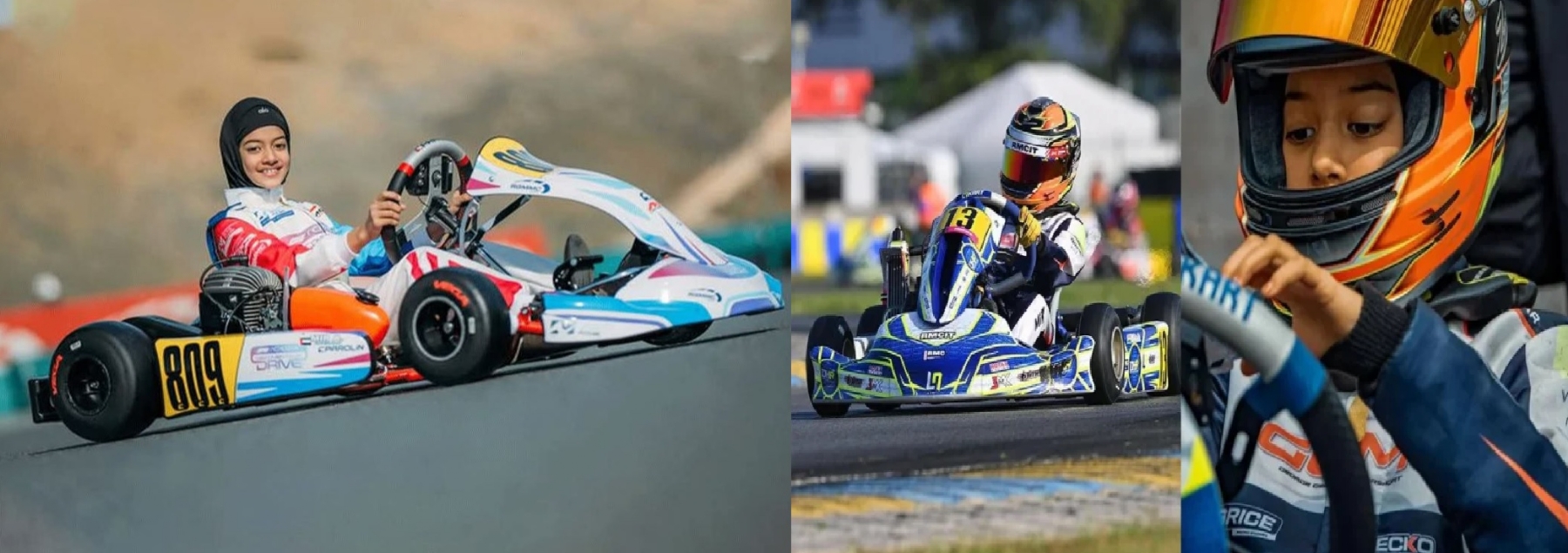
At 11, karting prodigy Atiqa Mir is navigating one of sportís toughest gender divides with confidence and speed. Competing in Europe and backed by the F1 Academy, the young Indian racer is unfazed by intimidation, focused on learning, and driven by belief as she charts her own path toward highest level.
IN A sport where no woman has raced in Formula 1
since 1992, 11-year-old karting prodigy Atiqa Mir
understands both the scale of the challenge and the
weight of history while chasing the pinnacle of motorsport. Competing in one of the most male-dominated sporting arenas in the world, the young
Indian racer believes in breaking stereotypes
rather than being intimidated by them. In an
interview with PTI after a successful international karting season, Atiqa spoke at length about
her blossoming motorsport journey and the challenges she gleefully accepts along the way.
“I think it's because of all the stereotypes and
stuff and also it being a mixed gender sport and
being male dominated, that's why many females
are not in Formula 1,” Atiqa told PTI. “And I think
my confidence and belief in myself is going to
take me there one day,” she said.
Atiqa’s rise
through the karting ranks has unfolded on grids
where she is often one of the only girls competing
against a bunch of ‘bullying’ boys, and she doesn't shy away from bullying them back. “Well, basically, I'm one of the only few girls on the track and
all the boys are there and obviously they don't like
getting beaten by a girl. So they obviously bully
me a lot on the track, but then I always bully them
back,” she said.
The behaviour, she explained, goes beyond hard
racing. “Well, sometimes they turn on me.
Sometimes they brake check me, which is
normal for everyone, I guess nowadays,
because there's no penalty in karting for a brake check.
But sometimes they also hit me, but I think I learned how
to deal with it over time.”
Rather than allowing such incidents to derail her focus, the teenager says she has learned
to use them for her growth as a racing driver. “What goes
through my mind is that I just try and learn from what I
could from the session and the rest automatically finds
its place,” she said. Motorsport runs in Atiqa's family. Her
father Asif Mir is a former national karting champion and
Formula Asia vice-champion, but she insists her career
was not shaped by obligation or expectation.
“I didn't start because of my dad. And like, there was
no such thing as like, having a dream to race in Formula
One,” she said, underlining that her journey began organically. Her introduction to Formula 1 itself came relatively late. “I didn't really know about Formula One and
stuff until like 2021. And I think the first race I actually
watched on TV was the Abu Dhabi Grand Prix in 2021,”
she recalled the epic last lap title showdown between
Lewis Hamilton and Max Verstappen. “And I remember
seeing that overtake (from Verstappen). And it was so
good. And it's still in my mind. So I really get motivated
by that”.
That moment cemented her admiration for Verstappen,
now one of her two role models alongside her father.
“So
basically, I really like his aggression and ability to drive
with the car even if it's not like top one pace,” Atiqa said.
“He's gotten loads of poles and he's basically been a
great like person in this
season when the car
wasn't good.” On track, her
own performances are
steadily strengthening her
case. Competing in Europe for
the first time this season, Atiqa
finished inside the top nine in
the RMC Euro Trophy, one of the
toughest karting championships
on the calendar.
“Since it was my first season competing in Europe, I think it's gone pretty well,” she said.
“I did the top nine finish in the wet, which I was kind
of learning how to drive on,” she said, noting that highly competitive nature of racing in Europe exposed her to
new tracks, climates and driving styles. Atiqa has also
received the coveted backing from the F1 Academy,
becoming the first Indian to be supported by the programme.
Asked whether motorsport is especially tough for
women, Atiqa acknowledged the early struggles.
“For the first one and a half years, really, it is because
no one knows you and they just expect you to be one of
those random girls driving for fun,” she said.
“But now it's getting better because of my speed, and
my determination to win,” she summed up.