NGT orders massive crackdown on illegal dumping at Kerwa, Kaliyasot Dams
| Date :07-Feb-2026 |
Staff Reporter :
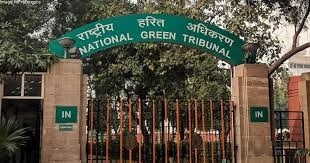
Taking a stern stand against large-scale illegal soil filling and solid waste dumping in Kerwa and Kaliyasot dam areas, the Central Bench of National Green Tribunal (NGT) has issued a comprehensive set of directives to safeguard the city’s vital water bodies.
The Tribunal emphasised that the right to a clean environment is a fundamental right under Article 21 of the Constitution and the State cannot abdicate its responsibility in protecting these ecosystems.
The order follows reports revealing that over 2,000 dumpers of murrum, kopra, and black soil were illegally dumped within Full Tank Level (FTL) and catchment area of Kerwa Dam in Mahuakheda village. It is alleged that this reclamation was intended to level the reservoir area for future plotting and real estate construction, violating the Wetland (Conservation and Management) Rules 2017, the Environment Protection Act 1986, and the Water Act 1974.
Key directives for
long-term conservation
NGT has directed the State Wetland Authority to identify and demarcate ‘Zone of Influence’ around Kerwa and Kaliyasot dams within two months to shield wetlands from developmental activities.
Further, the Collector, Divisional Forest Officer (DFO), and CEO of Bhopal have been instructed to ensure the removal of all encroachments from their respective jurisdictions.
The DFO has also been tasked with intensive plantation drives and soil-moisture conservation activities in open forest patches within the catchment to combat erosion.
Monitoring and
enforcement
To prevent further violations, the Principal Secretary of the Water Resources Department (WRD) must form dedicated patrolling teams. These teams are required to monitor FTL boundaries at least twice a month. The Tribunal noted that as Kerwa Dam falls under WRD jurisdiction, it is their primary duty to ensure no illegal dumping occurs that could reduce the reservoir’s storage capacity.
Rejection of the
‘Private Land’ defense
In a significant observation, the NGT dismissed arguments that dumping on private land within the catchment area is permissible. The Tribunal clarified that private ownership does not grant a license to violate
environmental laws. A joint committee comprising officials from the district administration, WRD, MPPCB, and CPCB confirmed that illegal filling up to 10 feet high has occurred, which poses a structural and ecological threat to the dam.
Legal advocacy and environmental impact: The matter was initially highlighted by green activist Rashid Noor Khan, with advocate Harshvardhan Tiwari representing the petitioner.
Tiwari argued that the 33-meter buffer zone has been flagrantly violated. NGT underscored that Kerwa Dam is not only a crucial wetland but also a vital alternative drinking water source for Bhopal and a primary irrigation source for thousands of hectares of agricultural land. Any degradation of its catchment area directly impacts its longevity and storage capacity, which is against the public interest.The Madhya Pradesh Pollution Control Board (MPPCB) has been directed to maintain periodic monitoring and take immediate remedial and legal action in case of any future violations.