Bhopal Metro shifts gears to ‘TOD’ model to combat dwindling ridership and economic loss
| Date :01-Mar-2026 |
Staff Reporter :
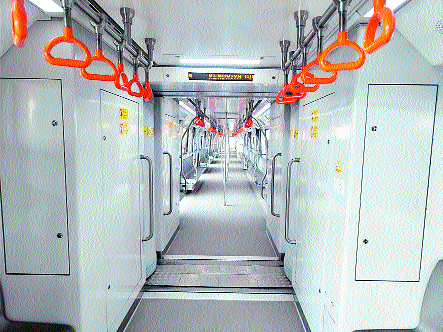
In a strategic move to revive its financial viability, the Bhopal Metro management has pivoted toward a ‘Transit-Oriented Development’ (TOD) model. This shift comes after a sharp decline in passenger numbers following the grand inauguration on December 21, 2025. Currently, the system is struggling to attract even 100 passengers per trip despite a capacity of 800, leading to significant operational losses. Despite this reduced bus network and heavy crowding in available buses, the Metro is struggling to attract even 200 passengers per day. To mitigate this crisis, the administration is now focusing on the creative and large-scale commercial utilisation of vacant land and spaces within metro station premises to generate much-needed revenue.
Understanding the TOD Model: Transit-Oriented Development is an urban planning strategy that promotes high-density commercial and residential development centered around public transport hubs. Under this model, Metro stations will no longer serve merely as transit points but will be transformed into vibrant community centers. The management has invited applications for multi-brand outlets, cafes, bookstores, and other commercial kiosks. The goal is to create a multi-purpose ecosystem where citizens are drawn to the stations for shopping, entertainment, and daily errands, thereby naturally increasing footfall and subsequent ticket sales.
The challenge of economic viability: The initial enthusiasm seen during the launch weeks has cooled significantly. Despite reducing daily rounds from 17 to 13, coaches often run nearly empty, leading to wasted electricity and high maintenance costs. Management believes the TOD model is the only practical solution to recover from this deep financial deficit. By integrating food courts and business hubs, they expect a steady rise in the ‘footfall,’ which is essential for the project’s sustainability.
Attracting major investors remains a hurdle. Due to the current negligible ridership, many premium brands are hesitant to commit capital. Furthermore, basic infrastructure gaps, such as the lack of organised and secure parking at key stations like Subhash Nagar, KV-1, and AIIMS, continue to deter potential commuters and shoppers. Addressing technical glitches in escalators and optimising power consumption are also high on the agenda to restore public and investor confidence. Reaching out to the next generation: To prevent public disillusionment, the Metro administration is specifically targeting school and college students. Educational tours are being organised to raise awareness about the benefits of this modern, pollution-free transport system. Additionally, technical upgrades are being implemented to link escalators with smart signal systems to prevent resource wastage.