Dr Satya Prakash Yadav, man who performed over 1,000 BMTs so far
| Date :10-Mar-2026 |
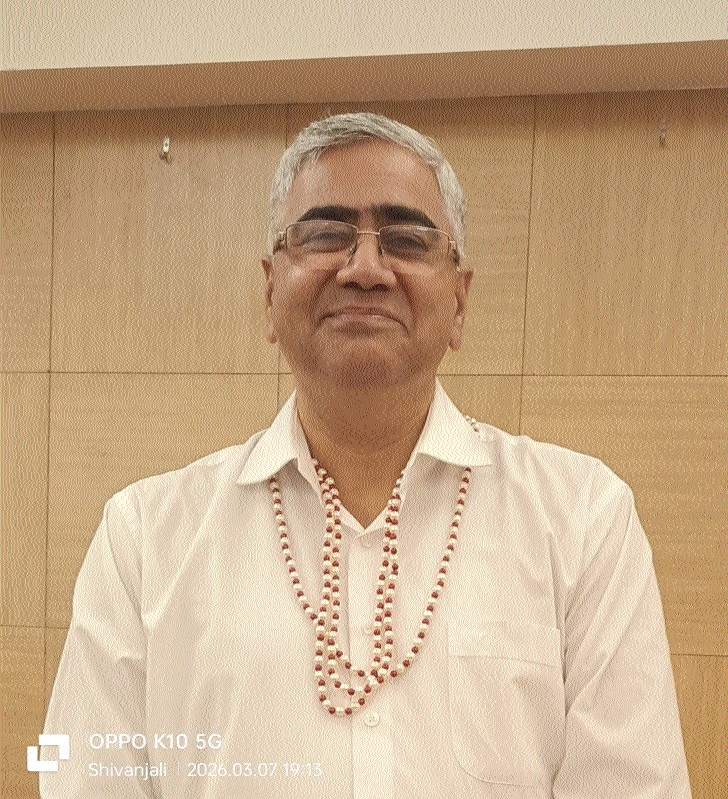
By Shivanjali Verma : Dr Satya Prakash Yadav, who currently serves as Director, Pediatric Hematology, Oncology and Bone Marrow Transplant at Medanta- The Medicity in Gurugram, is one of the pioneers in starting performing BMTs in 2005.
Having over 31 years of experience in paediatric blood disorders, leukemia, Dr Yadav has performed over 1,000 Bone Marrow Transplants (BMT). He is an expert in matched related/unrelated, cord blood and haploidentical transplants.
Dr Yadav was in the city to attend a program with the blood donors determined to work for Thalassemia. While talking to ‘The Hitavada’, Dr Yadav shared about advancing Paediatric Bone Marrow Transplants in India and many other aspects.
Q: Could you reflect on the early challenges you observed regarding paediatric thalassemia care in India?
Upon assuming my duties as MD of Paediatrics at Sir Ganga Ram Hospital, Delhi, I was confronted with the profound helplessness of managing paediatric thalassemia. In the mid-1990s, India lacked the specialised infrastructure required to offer curative treatments for paediatric blood disorders and cancers. Patients were often relegated to a cycle of regular blood transfusions, which, while life-sustaining in the short term, failed to provide a long-term quality of life, leading to premature mortality.
Q: How did your fellowship in Australia influence your approach to these challenges?
Recognising this systemic gap, I pursued a fellowship at Westmead, Sydney, Australia, under the mentorship of Dr Peter Shaw, a global pioneer in Bone Marrow Transplant (BMT) for children. The objective was to acquire the technical expertise necessary to implement permanent curative solutions for pediatric patients upon returning to India.
Q: What were the initial steps taken to build a local expertise base in this field?
Recognising that a single practitioner could not address the vast national demand, I prioritised medical education. In 2005 at Sir Ganga Ram Hospital, we launched India’s first two-year degree course in Paediatric Hematology-Oncology under the National Board of Examinations. This initiative produced a generation of experts, including Dr Sunil Bhatt, Dr Vikas Dua and Dr Gaurav, who have since become leaders in the field. At that time, BMT was largely performed by adult physicians at only ten centres across India, but today, we have a robust network of paediatric BMT specialists.
Q: How has the landscape of BMT evolved in India over the last few decades?
The progress has been exponential. Between 1983 and 2005, India recorded only 300 to 400 BMT procedures.
By 2025, that figure has surpassed 30,000. In India, we are currently performing 4,000 to 5,000 transplants annually, with projections suggesting a four-to-five fold increase over the next five years. However, a significant gap remains, as approximately 1,00,000 patients require transplants annually in our country.
Q: Why is BMT considered the definitive solution for thalassemia?
Thalassemia accounts for roughly one-third of all transplants in India. While patients often live normally for the first decade through transfusions, the subsequent accumulation of iron severely compromises cardiac and hepatic functions. This leads to frequent hospitalisations and requires specialised care that current public facilities are often not equipped to provide for the 15 - 25 age group. Bone Marrow Transplant offers a definitive cure. When conducted within the first five years of life using a fully matched sibling donor (HLA-matched), the success rate ranges between 95% and 98%.
Q: What is the focus of your
current collaboration with the Madhya Pradesh Government?
Public awareness is critical, families must understand that blood transfusion is a bridge, not a final solution. Proactive HLA Typing - the test required to match donors and patients - is the essential first step.
Through the Medanta Foundation, we have partnered with the Madhya Pradesh Government to provide free HLA Typing tests, with the Foundation bearing all associated costs. This programme is currently operational in Indore, Ujjain and Dewas. We have already registered over 1,000 children and will conduct regular camps throughout the year.
Furthermore, the Thalassemia Bal Seva Yojana - supported by Coal India Limited - provides financial assistance of Rs 10 lakh per patient for BMT.
To qualify for this scheme at one of the 17 approved centres (including Medanta Gurugram), the patient must be under 12 years of age, family income must be below Rs 8 lakh per annum and a fully matched donor must be available.
Q: What are the immediate next steps for the families involved in this programme?
Speed is a major advantage of this initiative, our reports are processed within two weeks, significantly faster than many international registries. Once a full match is identified, we proactively contact the families to guide them through the BMT process under the Thalassemia Bal Seva Yojana. This partnership between Medanta and MP Government represents a significant step towards making life-saving cures accessible to the underprivileged.
Q: What are the futuristic approaches in the field of Thalassemia treatment?
While BMT is the current gold standard, Gene Therapy represents the future of hematology. This process involves the genetic modification of a patient’s own bone marrow to repair the Thalassemia defect, eliminating the need for an external donor.
Currently, international gene therapies cost between Rs 16 crore - Rs 20 crore, which is prohibitive for the Indian populace. Consequently, Indian scientists at ICMR, CSIR, and institutions like IIT Kanpur are developing indigenous alternatives. Notably, Dr Divyajyoti Chakraborti has patented a domestic gene-editing formula currently undergoing animal trials, with clinical applications expected within the next few years.
Similarly, India has seen success in CAR-T Cell Therapy for cancer. Collaborative efforts between IIT Mumbai and Tata Memorial Hospital have reduced the cost of this therapy from international rates of Rs 3-4 crore to approximately Rs 20 - 25 lakh in India, significantly increasing accessibility and affordability for the general public.