ED moves HC to expunge special court’s observations against it
Date :10-Mar-2026
NEW DELHI :
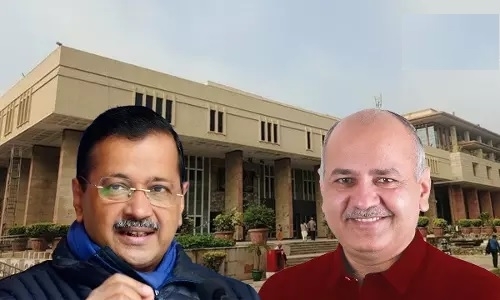
THE Enforcement Directorate has approached the Delhi High Court to expunge observations made by a trial court on its money laundering investigation against former Chief Minister Arvind Kejriwal and others linked to the CBI’s excise policy case.
The Enforcement Directorate (ED) said the February 27 order was a “clear case of judicial overreach” because the court neither examined the agency’s evidence nor heard it while passing strictures against it.
The Central Bureau of Investigation (CBI) chargesheet relates to alleged irregularities in the 2021 Delhi excise policy introduced by the then Aam Aadmi Party (AAP) Government. The CBI and the ED investigated the case independently.
“It is trite law that a court cannot overlook the basic and vitally essential tenet of the Rule of Law that no one should be condemned unheard, and that when there is no relevance to the subject matter of adjudication, it is certainly not desirable for courts to make comments or observations reflecting on the bona fides or credibility of any person or authority,” the ED said in its petition filed on March 7.
The petition is listed for hearing before Justice Swarana Kanta Sharma on Tuesday.
The over 960-page petition in which the anti-money laundering agency said that if the trial court’s observations stand, it will cause “irreparable injury” to the agency in discharging its statutory mandate.
The court of Special Judge Jitendra Singh made several observations regarding the PMLA and ED probe.
The ED, in its petition, pointed to several paragraphs of the order, stating that the court’s observations against it were “adverse, sweeping and unwarranted” because the agency was not party to the deliberations and only the merits of the CBI probe were under consideration.
If such sweeping, unguided and bald observations, which have been passed behind the back of the ED based on pure conjectures, without anchoring itself on any material or evidence gathered by the ED, are permitted to stand, grave and irreparable prejudice would be caused to the public at large as well as the petitioner (ED), the petition said.