Mah economy grew alongside debt, State remains financially sound, says Fadnavis
Date :12-Mar-2026
MUMBAI :
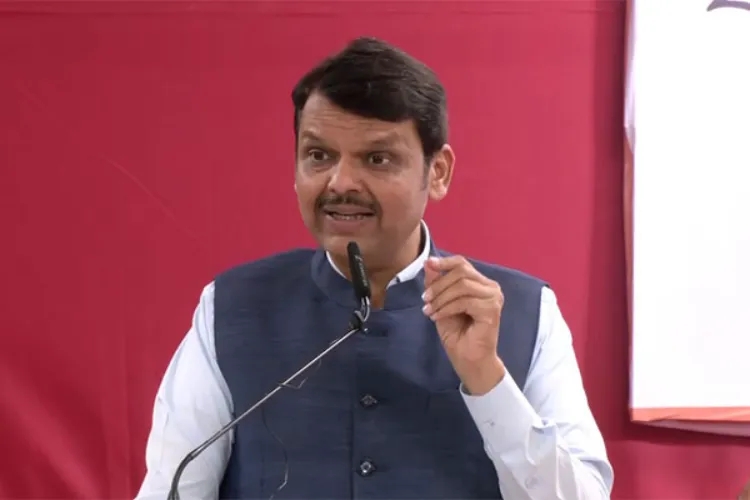
MAHARASHTRA Chief Minister Devendra Fadnavis on Wednesday acknowledged financial pressures on the State economy while asserting that the State’s debt-to GSDP ratio is lower than several other states, and rejected allegations that allocations to the social sector have been cut or diverted.
Replying to the debate on the State budget in the legislative Assembly, the Chief Minister said statistics should not be viewed in a one-sided manner, as both the debt stock and the size of the economy have grown over the past decade. He said the state’s debt stock has risen from about Rs 3 lakh crore in 2013 to Rs 9.32 lakh crore, while the Gross State Domestic Product (GSDP) has increased from Rs 16 lakh crore to Rs 51 lakh crore.
“Maharashtra’s debt-to-GSDP ratio stands at around 18 per cent, which is lower than several other States, including Telangana, Karnataka, Andhra Pradesh, Kerala and Tamil Nadu,” said Fadnavis, who holds the Finance portfolio. Maintaining that the state still has borrowing capacity, he said the key issue is to ensure that funds raised through borrowings are utilised properly. The Chief Minister acknowledged financial pressures but said the Government has the capacity to find solutions. He rejected allegations that allocations to the social sector have been reduced or diverted.
“Welfare initiatives such as the Laadki Bahin scheme and free electricity for farmers have been implemented while maintaining fiscal discipline. The fiscal deficit stands at about 2.78 per cent of the GSDP, while the revenue deficit is around one per cent,” he added.
Fadnavis emphasised that the social sector hasn’t been neglected and despite the Ladki Bahin Scheme and free electricity to farmers, the state remains financially sound.
The Chief Minister said the State’s final irrigation potential is estimated at 81 lakh hectares, of which irrigation capacity has been created for about 57 lakh hectares, with nearly 70 per cent utilisation.
Highlighting the state’s focus on renewable energy, Fadnavis said non-conventional energy generation is expected to reach 52 per cent by 2030 and 65 per cent by 2035.
Concerns raised over Farmer ID data security, Govt assures action:
THE Congress on Wednesday raised concerns in the Maharashtra Assembly over the involvement of private agencies in generating farmer identification numbers and the possible risk to the sensitive data of cultivators.
Speaking during Question Hour, the first hour of the Assembly sitting, Congress legislature party leader Vijay Wadettiwar claimed that in some places, Farmer ID cards were allegedly being printed and sold to farmers through Common Service Centres (CSCs) or other agencies. He demanded that the Government conduct an inquiry to ascertain if private entities were involved in irregularities.
In a major push towards digitising the agriculture sector, farmers across the country are being provided with a unique ID similar to Aadhaar.
Wadettiwar sought to know whether private companies had been entrusted with the work. He also questioned whether the tender process for assigning such work had been conducted transparently.
The senior legislator said the Farmer ID system involves the collection of sensitive information, including personal and bank-related details of farmers, and sought to know what safeguards were in place to prevent data misuse, cyber hacking or theft.
State Agriculture Minister Datta Bharane clarified that Farmer ID cards are not officially meant to be printed and sold. If any CSC or service centre is found to be involved in such activities, strict action will be taken, he said.
He said the Government has not received any formal complaints so far regarding the sale of Farmer ID cards, but assured the House that any irregularities brought to its notice would be investigated and appropriate action would follow.
The Minister said the process of creating Farmer IDs was simple and aimed at streamlining the delivery of Government schemes to eligible farmers through digital infrastructure in the agriculture sector.
He said that according to the agricultural census, Maharashtra has around 1.71 crore farmers, and as of March 4, 2026, Farmer IDs had been generated for over 1.31 crore farmers. Maharashtra is among the leading states in issuing these cards, he said.
Relief and Rehabilitation Minister Makrand Patil said the State has provided relief assistance worth Rs 15,817 crore to farmers affected by crop losses during the 2023-24 Kharif season.
Responding to questions, Patil said around 1.02 crore farmers in the state suffered crop damage covering 79.82 lakh hectares, and the government extended financial assistance to provide relief.
He said Jalgaon district alone reported crop losses worth about Rs 22 crore, of which the Government has already disbursed Rs 15.77 crore as aid.
The Minister said the state provides compensation to farmers in accordance with the National Disaster Response Fund (NDRF) norms.
However, as a special measure, the Government increased the eligibility limit for assistance from two hectares to three hectares of affected land and also extended aid to farmers whose fields were submerged due to floods, even if rainfall levels were relatively lower.
Some legislators raised concerns that nearly 97,000 farmers in certain talukas were left out of relief as rainfall in their areas did not meet the prescribed criteria for excessive rain.
Patil said assistance can be extended only if rainfall data meets the parameters set under NDRF guidelines.
He added that if any member provides specific details or written representations regarding farmers who were left out, the government will take appropriate action.
The minister also addressed concerns regarding unseasonal rains in January-February this year in Nanded district, saying the Government will examine proposals submitted by local representatives and take a decision accordingly.
On pending payments under the Rs 32,000 crore special relief package announced for farmers affected during the 2023-24 Kharif season, Patil said some beneficiaries have not received assistance due to KYC (know your customer) and technical issues, which are being resolved.
He said in Yavatmal district, about Rs 1,270 crore has already been credited through Direct Benefit Transfer (DBT) to the bank accounts of nearly seven lakh farmers.
Forest Minister Ganesh Naik addressed concerns over illegal mining in certain areas, saying that while minor instances may occur, the authorities are vigilant.
Naik appealed to members who might have specific details regarding illegal extraction of minerals, including division, range, and village names, to share them with the administration.
“The Tahsildar, police, and forest department are all alert. I cannot claim that no thefts are happening, but any information provided by aware citizens will lead to immediate action,” he said.
The Minister emphasised the Government’s commitment to curbing unauthorised mining while encouraging public cooperation in reporting violations.