For NMC, operating cost of electric buses higher than diesel buses... Why?
| Date :15-Mar-2026 |
By Kabir Mahajan :
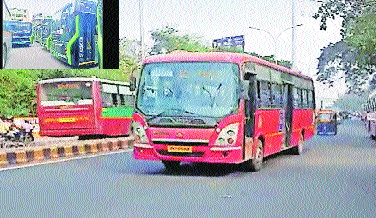
At the time when the civic bodies are opting electrical vehicles (EVs) for cost benefit it offers over conventional vehicles, the electric buses being operated by Nagpur Municipal Corporation (NMC) are showing rather opposite trend as the operating cost of electric buses is exceeding operating cost of diesel buses plying on same route.
As per the NMC Transport Department’s data obtained by The Hitavada, the highest operating cost among all units of diesel buses is Rs 67.93 per km whereas for the electric buses, the highest cost goes upto Rs 74.27 per km. While electric vehicles are globally touted for their lower long-term operational costs, the per-kilometer rates currently paid by the NMC tell a more complex story.
NMC introduced electric buses as part of its mission towards sustainability by increasing electric buses across 110 routes.
The expectation was of reducing the operational cost of running a bus fleet and also controlling pollution in the city. While the pollution emission has shown promise, the operational cost has not met with the expectations. The data shows that cost gap between operating traditional diesel buses and modern electric units is
far narrower than previously imagined.
Cost comparison:
A narrow margin
According to the latest depot-wise operator rates, the cost of running a standard diesel bus is remarkably similar to its electric counterpart. For instance, at Khapri, Patwardhan, and Hingna depots, diesel MIDI buses are operated at a rate of Rs 67.93 per km.
In contrast, the electric MIDI buses (Olectra) at Wadi Naka depot carry a rate of Rs 74.27 per km, which is actually highest among all units. The longer 12-meter EKA electric buses are operated at the cost of Rs 70.22 per km, revised in the month of January. While some electric units, like those at Wathoda depot, run at a lower rate of Rs 54.82 per km, whereas 50 newly-added PMe-buses which were inaugurated in the month of February at Koradi depot run at the cost of Rs 63.45 per km. This reveals that the electric revolution will not provide cheaper expenses for the civic body’s treasury.
Operational costs
are pre-decided
by operators
When questioned about the different costs of running electrical buses, a Transport Department official informed ‘The Hitavada’ that these figures are driven by quotes from the operators of these buses during agreement process.
Currently, six operators are in charge of operation of electric buses on various routes in the city. “The per-kilometre rate is quoted by the operator during the agreement process. According to our agreement, the NMC pays this fixed rate, However, if operational costs surplus these figures, the operator must bear the extra burden,” the official explained. These agreements are not static; they undergo rigorous reviews and are renewed every 6 to 12 months, depending on the market situation and the physical condition of the fleet, the official added.
Citizens happy with AC
buses at similar cost
Eventhough the operating cost for electric buses is similar to that of diesel buses, the passengers are happy for the improved quality of their commute. Despite the shocking similarity in operational rates, citizens seem to adapt the change, focusing instead on the dramatic upgrade in service quality.
“I was shocked to hear that electric bus costs as much as a diesel one to run, but honestly, as a passenger, I’m okay with it,” said Shreyash Maskare, a regular commuter from Dharampeth. “For the same price, we are getting a silent, air-conditioned ride. In Nagpur’s 40-degree heat, that AC is a lifesaver,” he added.
Another commuter added,
“If the cost is the same, why would we ever want diesel. The electric buses don’t emit black smoke or make that deafening noise. It’s better for our lungs and the city’s environment. If NMC is paying roughly the same, at least they are paying for a cleaner future.”
As Nagpur continues its transition currently operating 310 electric buses alongside 195 diesel units the focus remains on ‘Green and Sustainable Mobility,’ even if the price of progress remains on par with the legacy of the past.