Gunas: Map Of Evolution
| Date :15-Mar-2026 |
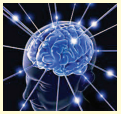
By DR BHUSHAN KUMAR UPADHYAYA :
Ancient Yogic philosophy
views all of the nature
including human mind being
governed by three fundamental
forces called Gunas, Tamas, Rajas ,
and Sattva. Although they are the
philosophical principles, they offer
subtle psychological evolutionary
map of human development.
Viewed along with evolutionary
and neuroscience, the framework
appears remarkably insightful and
relevant.
In the Sankhya and Yoga philosophy, Gunas are the primary qualities of Prakriti or nature. Tamas
represents inertia, darkness,
resistance, and physical stability.
Rajas is the symbol of movement,
desire, activity, and dynamism.
Sattva embodies clarity, harmony,
balance , and light.
Every individual person and
mental state reflect a constantly
shifting combination of these three
Gunas.
From evolutionary point of view,
Tamas corresponds to the most
primitive survival structures. In
biology, it indicates the evolution
in early organisms and primary
basic survival instincts.
It conserves energy and maintains
physical stability, avoiding dangers. Even in human brain, the
oldest sub cortical systems as the
brainstem and besal ganglia regulate autonomic and repetitive
patterns, essential for survival.
Inertia is not negative in itself, it provides gravity and
structure. However,
when it dominates
human nature, it
expresses in forms of
lethargy, ignorance,
rigidity, and resistance to growth.
Rajas represents
leap towards evolution with
mobility, competition, and adaptation. As life evolved, movement
and desire became essential for
higher form of life. In human brain
this corresponds with the limbic
system.
Amygdala and hypothalamus regulate emotions and reward
centres. These neural circuits drive
goal seeking and ambition, fuellling energy, progress , innovation,
and achievement. Unchecked
Rajas leads to restlessness, anxiety, anger , and endless craving.
Modern life with constant stimulation and performance pressures
amplifies this Rajasic mode of living. Sattva is the higher refinement of consciousness. According
to evolutionary science , humans
developed neocortex specially
prefrontal cortex, responsible for
executive control,
ethical reasoning,
long term planning,
empathy, and self
regulation.
Neuroscientific
research on meditation and Yogic
practices shows
increased activities
and connectivities
in these higher cortical areas.
At
the same time, meditational practices registered less stress and
reactivity in the amygdala. This
finding aligns with the Yogic claim
that in the state of Sattva, clarity,
balance , and inner harmony
enhance.
From the psychological standpoint, the move from Tamas to
Sattva is a journey of evolution.
Tamas gives physical strength, but
binds in ignorance and inertia.
Rajas provides drive and movement, but shackles in stress and
clinging. Sattva liberates by fostering awareness and discriminatory power.
Yoga does not suppress Gunas,
but refines and integrates them.
Through Yoga practices, instincts,
impulses and cognition work in
perfect harmony.
Instincts and
impulses are always under the
control of intelligence. The theory
of the emotional intelligence is
also akin to this Yogic concept.
Cultivation of Sattva is not an
escape from the daily life, but it is
the culmination of human evolution. Biological evolution unfolds
through natural selection based
upon self cultivation of inner
awareness . Human brain is not
fixed , but it operates from the
higher layers of consciousness
through the refinement of Gunas.
Thus the Yogic map of Gunas
extends from personal growth to
the societal evolution. It is the
timeless model of not only cosmic
evolution, but the inner growth of
consciousness also.
(The writer is Former DG
Police & CG, Homeguards,
Maharashtra)
■
