Durg achieves milestone in water conservation
| Date :04-Apr-2026 |
Staff Reporter
:
Acting under the directives of Collector Abhijit Singh, the ‘Mor Gaon Mor Pani Mahabhiyan’ (My Village, My Water
Mega-Campaign), an initiative aimed at water conservation within district has successfully evolved into a mass
movement. By completing the construction of 32,058 rainwater harvesting structures within a mere 15 days in houses built under the Pradhan Mantri Awas Yojana (Rural), Durg district has established an unprecedented record in the field of water conservation. Through this campaign, a major initiative aimed at improving groundwater levels has proven highly successful.
Operated under the leadership of Bajrang Dubey, Chief Executive Officer of the District Panchayat, this initiative saw the launch of the ‘Ekech Goth, Ekech Bani: Boond-Boond Bachabo Pani 2.0’ campaign on March 13, 2025.
In the first phase of the campaign, the district earned an entry in the ‘Golden Book of Records’ by constructing 1,764 soak pits in the homes of PMAY beneficiaries within a span of just two hours.
In the second phase, on December 8, 12,418 soak pits were constructed, bringing the total number of soak pits built through voluntary effort to 14,182.
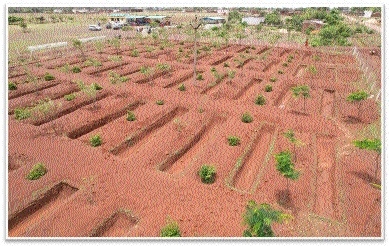
Additionally, under the ‘Mor Gaon Mor Pani’ campaign, the construction of 23,889 contour trenches and water absorption trenches has also been completed. By ensuring public participation in water conservation works through the MGNREGA scheme, details regarding 32,058 structures have been successfully entered into the official portal to date.
Villagers actively stepped forward to contribute ‘Shramdaan’ to this initiative, thereby firmly establishing the campaign as a true mass movement. The rainwater harvesting structures constructed in every Pradhan Mantri Awas home will not only fulfill current water requirements but will also ensure water security for the future. Under this campaign, various water conservation structures have been constructed, including 24 low-cost works, 15 borewell recharge units, 3 check dams, 5,875 contour trenches, 7 gully plugs, 3 nullha bunds, 18 open well recharge units, 7 percolation tanks, 537 recharge pits, 5 recharge shafts, 817 rooftop water harvesting structures, 6,676 soak pits, 09 tanks, 48 village ponds, and 18,014 water absorption trenches. Through these structures, the conservation of rainwater will lead to an improvement in groundwater levels and promote sustainable water management.