Chhattisgarh’s SISF to run on industry-funded deployment model: ADGP Sinha
Date :12-May-2026
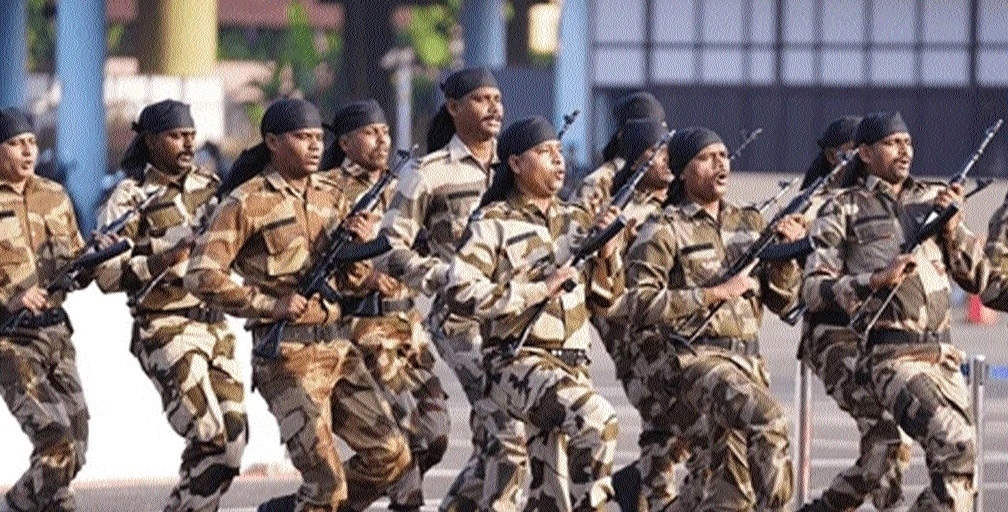
By Mukesh S Singh
RAIPUR
■Initial deployment likely within next one-anda-half months through CAF, DEF personnel
■ SISF framework drafted after detailed study of CISF Act and industrial security models of Maharashtra, Jharkhand and Odisha
WHEN the Chhattisgarh government quietly published Act
No. 15 of 2025 in its State gazette
on May 20, what emerged
was far more than routine
legislation.
The Chhattisgarh State
Industrial Security Force Act,
2025 lays the legal foundation
for a wholly new armed force,
purpose-built, self-financing,
and modelled unmistakably on
the Central Industrial Security
Force (CISF), to stand guard
over the state’s vast and strategically sensitive industrial corridor. A copy of the
Chhattisgarh State Gazette,
Act No. 15 of 2025, notified
May 20, 2025, accessed by ‘The Hitavada’, reveals that for a state that hosts some of India’s
densest concentrations of steel plants, coal blocks, power stations,
and mineral refineries, many located in remote tribal districts with
complex security histories, the creation of a dedicated State Industrial
Security Force (SISF) is a calculated and consequential step.
Significantly, the new force is by all probabilities expected to be seen
operating on the ground within the next one-and-a-half months.
Initial deployment is likely to be carried out on deputation basis,
drawing personnel from various branches and units of the
Chhattisgarh Armed Forces (CAF) and the District Executive
Force (DEF) of several Chhattisgarh Police districts.
Adding further momentum to this timeline, a comprehensive set
of operational regulations, formally titled SISF Rules-2026, was submitted to the Chhattisgarh Government just four days ago, signalling
that the administrative groundwork for the force’s launch is now
nearly complete.
Notably, both the Act and the Rules have been crafted after an indepth study and rigorous analysis of the CISF Act and its real-time
ground operations and capabilities, in addition to a careful examination of similar state industrial security forces already operational
in Maharashtra, Jharkhand, and Odisha, lending the framework both
national precedent and regional context.
The Act, it has been learnt, was not drafted overnight. A fourmember core team of senior IPS officers of Chhattisgarh, backed
by technical and legal experts, is understood to have meticulously
drafted the legislation before submitting it to the state government.
The team was led by Vivekananda Sinha, Additional Director General
of Police (ADGP- CAF), and included Sadanand Kumar (IPS, 2010
batch), currently serving as Deputy Inspector General of Police
(DIG-CAF); Ashutosh Singh (IPS, 2012 batch), presently on central
deputation as Deputy Inspector General (DIG) in the Central Bureau
of Investigation (CBI); and Vikash Kumar (IPS, 2020 batch), currently posted on deputation as Superintendent of Police (SP) in the
National Investigation Agency (NIA). The composition of the drafting team, drawn from counter-insurgency, intelligence, investigative, and field policing backgrounds, underscores the seriousness
and strategic depth with which the state government has approached
this initiative. The SISF is no ordinary security arrangement.
Structurally, it mirrors a paramilitary organisation, divided into battalions, companies, platoons, and sections, all operating under the
supreme command of the Director General of Police (DGP),
Chhattisgarh, with its permanent headquarters anchored at Nava
Raipur, Atal Nagar. Two distinct wings give the force its operational
character. The executive wing, responsible for all ground-level security duties, draws its officer cadre from Special DGP and Additional
DGP level downward through Commandants and Company
Commanders. The secretarial wing manages administrative functions, ensuring the force’s institutional machinery runs independently of the regular police establishment. Deployment authority
vests entirely with the DGP, who can position Force units anywhere
within Chhattisgarh or outside the state, depending on assessed
threat and operational necessity
SISF to run on industry-funded
deployment model: ADGP Sinha
TALKING to ‘The Hitavada’,
ADGP CAF Vivekananda Sinha
explained that unlike conventional law enforcement
funded entirely by State, the
SISF operates on a strict userpays principle, where the
industries that seek its protection bear the full cost of
deployment, leaving the public exchequer untouched.
Any industrial establishment seeking Force coverage
must first submit a formal
request to the DGP along with
an upfront assessment fee of
Rs 1,00,000. The Act further
mandates that no deployment
shall involve fewer than 59
personnel per industrial site,
a minimum threshold
designed to ensure meaningful, not token, security presence. Sinha further pointed
out that to sustain operational
morale, SISF personnel
deployed at industrial sites
will receive a 12 per cent additional allowance, while host
industries are legally obligated to provide free medical
facilities, housing or house
rent allowance, dedicated
parade grounds, and on-site armouries.
The SISF’s mandate extends
well beyond armed patrolling. Under the Act, it is formally empowered to serve as a paid technical consultant to private industrial
establishments, offering expertise in security auditing, fire safety
protocols, and disaster management planning. Fees collected from
such consultancy services flow directly into Chhattisgarh’s
Consolidated Fund, making the force a modest revenue generator
for the state. Every SISF member holds full police officer status,
authorised to arrest and search without warrant under defined circumstances, yet is simultaneously prohibited from joining trade
unions, engaging politically, or seeking outside employment.