Census teams face tough challenge in slums as Google Maps misses internal lanes
| Date :18-May-2026 |
Staff Reporter :
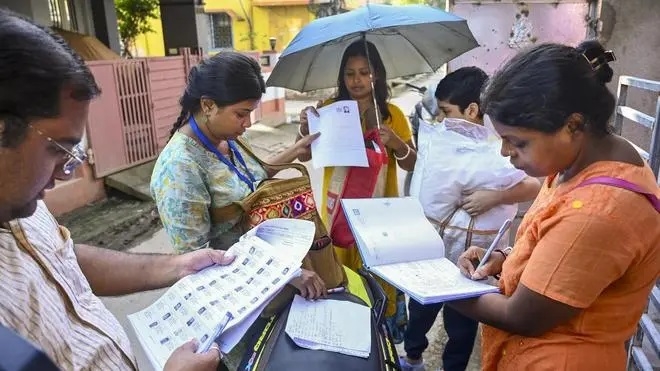
The second phase of the 16th National Census, which began on May 16, is proving to be a difficult task for enumerators working in city’s densely populated slum areas. Poorly planned layouts, narrow passages and the absence of proper digital mapping are slowing down the work on the ground.
Nearly 4,500 enumerators have started door-to-door visits across the city’s 3,992 house-listing blocks. Official surveys and records of the Nagpur Municipal Corporation (NMC) show that Nagpur has around 446 to 453 slum pockets spread across its 10 administrative zones.
But officials involved in the exercise say the real challenge begins in the slums, where even locating and marking houses becomes a complicated process.
A female enumerator working in the congested localities near Futala said preparing maps in slum areas has turned into one of the toughest parts of the census work.
“Older slum areas are extremely difficult to map. The lanes are narrow, irregular and confusing. Sometimes it feels like moving through a maze,” she said. “In many places, we have to manually draw maps and mark house numbers because Google Maps often doesn’t show these internal lanes.”
She explained that while enumerators assigned to organised residential colonies completed their mapping work relatively quickly, teams working in slum pockets are struggling to meet the May 19 deadline fixed for submitting maps to the civic body.
Officials said the actual door-to-door enumeration process will begin only after the mapping work is completed.
Enumerators also pointed out that many residents are still unaware of the government’s ‘Self-Enumeration’ facility. According to them, greater awareness and participation in the online option could have reduced the workload and made the process smoother.
Verification checklist
However, concerns over potential scams, the Nagpur Municipal Corporation (NMC) is urging citizens to verify the identity of officials before sharing
any household data.
NMC Deputy Commissioner Nirbhay Jain emphasised that every legitimate official will carry specific identification. To ensure you are speaking with a certified enumerator, check for the NMC issued ID card: Every enumerator must carry a physical ID card featuring their photo, name, and the official NMC seal/stamp. Charge number: A unique Charge Number or ID will be mentioned on the card, identifying their specific assigned block. Appointment letter: Officials also carry a formal appointment letter containing a layout map of the specific area they are authorised to cover.
Digital tools: Data collection is conducted strictly through the ‘House Listing Operation (HLO) App’ on mobile devices; no paper forms are being used for primary data entry in this phase.
“Citizens should demand to see the official ID card. It contains the enumerator’s photo and is duly stamped by the NMC. Each enumerator is responsible for approximately 300 houses and will visit you individually,” stated Nirbhay Jain.
If you have completed the digital self-enumeration earlier this month, you only need to provide your 11-digit SE ID to the visiting official. For others, the enumerator will ask 34 specific questions regarding housing conditions and basic family amenities.