Double Whammy: Delayed wheat procurement, nature’s fury force distress sales below MSP
| Date :05-May-2026 |
Staff Reporter :
A lethal combination of administrative delays and unseasonal weather has dealt a double blow to the farming community in the State, leaving cultivators in a state of deep financial distress. A ground report by ‘The Hitavada’ indicates that approximately 60 to 70 per cent of farmers have been forced to offload their wheat harvest to private traders at prices significantly lower than the Government-mandated minimum support price (MSP). While the State has set a procurement price of Rs 2,625 per quintal, desperate farmers are accepting rates as low as Rs 2,280 to Rs 2,400 per quintal.
Administrative delays trigger market exploitation: The primary grievance voiced by farmers is the late start of the official procurement process, which they argue should have commenced by March 20. Cultivator Yogendra Kaurav (name changed) shared that he was forced to sell his produce at Rs 2,390 because he could not afford to wait for government centres to open while facing urgent financial needs. This sentiment is echoed across the region, where farmers claim the current system inadvertently benefits private traders. These middlemen purchase the grain at a discount from farmers unable to wait and subsequently sell the same stock to the government at the full MSP, pocketing the profit meant for the growers.
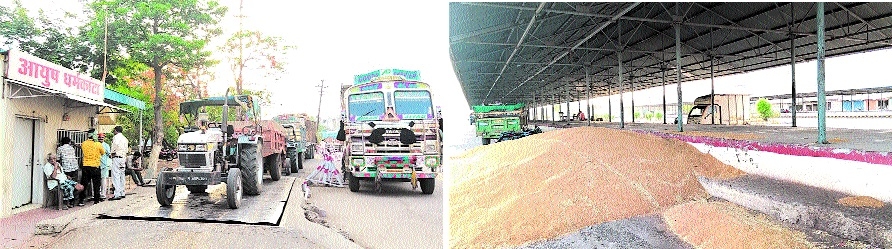
Nature’s fury and the burden of rejection: For those who waited for the official process, the decision has proven catastrophic due to unseasonal rain and hailstorms. Some farmers reported that their produce, drenched while waiting for a slot, is being flatly rejected at centres. One farmer highlighted the frustration of a failing digital booking system; by the time he secured a slot for late May, several quintals of his harvest had already rotted. The farming community maintains that they are being unfairly penalised for quality issues caused by weather damage that occurred solely because the government procurement began too late.
Suresh said that he was trying to book a slot since last 15 days but could not do successfully and now it’s booked for May 18 to 23, but his approx 500 quintal wheat is bearing the brunt, many quintal of wheat has soaked up in the rain so wasted and rest he is trying to dry up else it won’t pass the quality check and he won’t be able to gain the cost of the produce. He asks what’s his fault in this situation and what should he do?
Systemic corruption and poor infrastructure: The experience at procurement centres has been described as gruesome and hectic. A few farmers detailed a harrowing environment where they battle the summer heat without access to basic fans or clean drinking water.
More troubling are the widespread allegations of red tapism and corruption. Multiple farmers confirmed being allegedly asked for commissions or bribes of Rs 100 to Rs 200 per quintal to facilitate weighing (tulai) or to prevent rejection. In some cases, farmers alleged that produce
initially rejected on quality grounds was miraculously accepted after paying a bribe of Rs 1,000 to Rs 1,500. One of the farmers said, “If we can wait for a week or so, then we will get full price else we will be asked to pay a percent to get the money”. In the centres at different points we are asked to pay price even to begin the process we need to bribe. Some of us cannot afford to get in this hectic process hence we choose to sell to the private traders.
Economic stranglehold and demands for reform: The inability to secure fair prices has left families unable to cover essential costs, including bank loans, the purchase of seeds and fertilisers, and wedding expenses.
Farmers noted that even payments are not made on the spot, often taking a week or longer, with some centres allegedly demanding a 1 per cent cut for immediate disbursement. The community is calling for the total elimination of middlemen and a legal guarantee that no private trader can bid below the MSP. Currently, many feel that only the presence of high-ranking officials like the SDM or DM ensures a fair transaction, while the standard daily conduct continues to choke their sole source of livelihood.