YOUR PLATE ISYOUR MEDICINE
Date :01-Jul-2026
By Anika Santani :

INDIA is referred to as the diabetes capital of the world due
to its rapidly rising diabetes
cases. It ranks second highest in
diabetes cases globally. As per statistics over 100 million people are
estimated to have diabetes, 136
million are pre-diabetic and by
2050 diabetes prevalence in India
is projected at 156.7 million.
To truly understand this health
crisis, we first need to move beyond
the myths and misconceptions
and understand the science
behind it. While diabetes is often
deduced as a disease related only
to blood sugar, it actually is a metabolic condition involving various
factors like insulin resistance, hormonal imbalances, gut health,
inflammation, lifestyle factors and
body composition.
Explaining Diabetes:
Think of your cells as locked
rooms, to open these rooms and
allow glucose to enter, we need the
key called insulin. After you eat
food, glucose enters your blood
stream and insulin opens the doors
of the cells to let this glucose enter
the cell room.
This happens in the
case of normal physiology.
In Type 1 diabetes the immune
system attacks the body’s beta cells
due to which the pancreas are
unable to produce insulin and the
glucose remains in the blood
stream, as there is simply no key
to open the cells. This is why people with Type 1 diabetes need lifelong injections to supply the key
externally.
In Type 2 diabetes the insulin is
made but the cells (locks) become
so resistant/rusty that the key is
unable to open, as a result pancreas produce more insulin and it
keeps piling up in the bloodstream.
However, on the brighter side
Type 2 diabetes can be managed
and in some cases even be placed
into remission with the help of
timely intervention and lifestyle
changes.
The Indian Thali:
The Indian thali does cover a lot
of nutrients and is a beloved one,
but for someone with diabetes it
is a carbohydrate bomb. It usually consists of two vegetables,
curd/buttermilk or lassi, papad,
puri/roti, rice, sweets, dal. Most
of the food items being high Gi food
which lead to glucose entering the
blood stream easily and spiking
blood sugar.
Diabetes Plating:
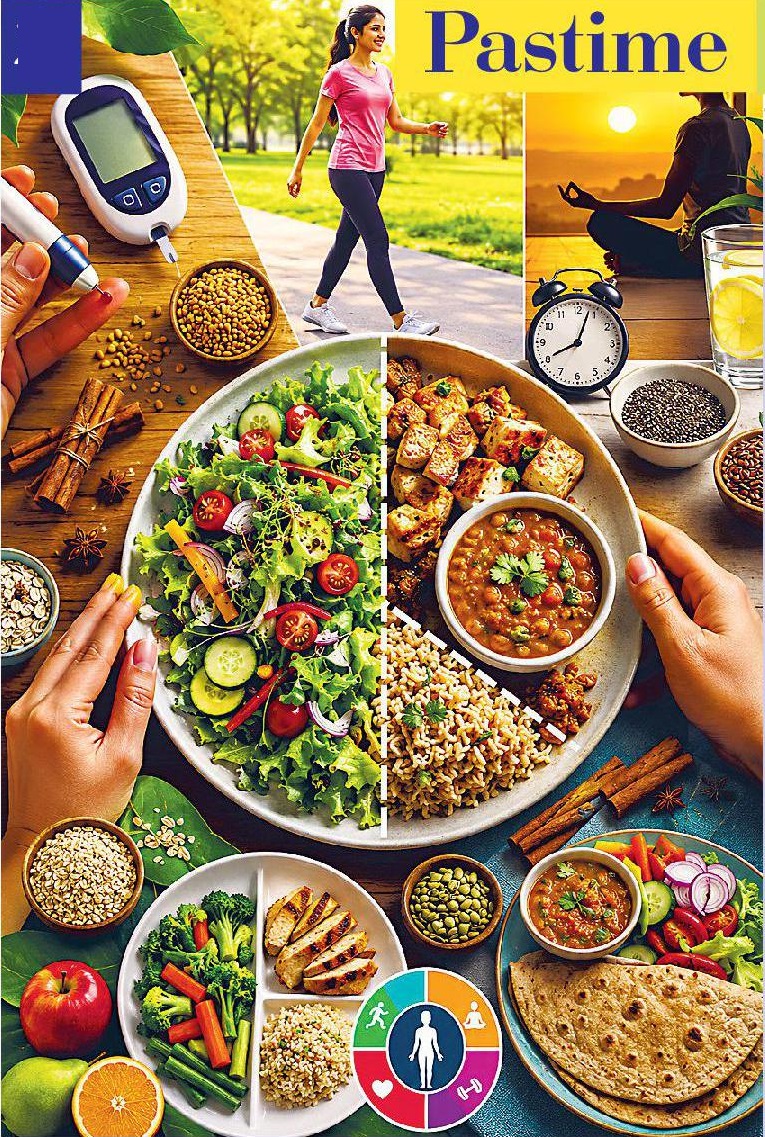
Here's how an ideal plate should
look for managing diabetes:
● 1/2 your plate should be filled
with vegetables (non-starchy)
● ¼ plate should consist of protein (eggs, paneer, tofu, dal, fish
etc)
● The remaining 1/4th plate
with whole grains (millets, millet
roti, brown rice, wheat roti). Think
of your gut as a drain pipe, when
you eat carbohydrates first in the
body, they get drained into the
blood stream and glucose spike is
instant. Now when you eat fibre
first, the fibre forms a gel -like substance with water and acts like a
strainer and reduces the speed of
release of glucose in the blood
stream. Hence the dominance of
vegetables or soluble fibres is
essential element in a diabetes
friendly plate.
Smart Feeding Techniques For
Diabetes:
By following these strategies one
can optimise glucose levels, reduce
insulin load, and improve your
metabolism.
1. Fiber First Strategy
First things first eat fiber, especially soluble fiber. Soluble fiber
forms a gel like layer in the gut
which slows down glucose release
in the blood stream and supports
better insulin response. Foods with
soluble fiber are chia seeds, isabgol, oats, apple, pears,barley, flax
seeds and citrus foods.
However, along with soluble
fiber, insoluble fiber is necessary
too. Include foods like lentils,
beans, vegetables.
Think of the eating order as
Salad, then proteins and then carbohydrates.
2. Time Restricted Eating
Maintaining a 10-12 hour eating window in alignment with the
circadian rhythm has shown to
improve insulin sensitivity, bring
down fasting glucose and support.
When one follows a fasting window the body enters the process
of autophagy (auto= self, phagy=
eating). Autophagy is basically the
housekeeping team for your body,
cleaning out damaged components of cells and helping cells
function more efficiently. So maintaining an eating window anywhere between 8 am to 6 pm aligns
with the circadian rhythm and also
helps with diabetes management.
3. Prioritise Proteins:
Building every snack, every meal
around proteins is essential.
Including proteins will make one
feel fuller, satiated and help flatten insulin spike. Including around
10-20 grams protein 15 min before
every carb-rich meal will prevent
any form of post prandial glucose
spike.
4. Sequence Eating Method:
Consider your lunch plate to
have salad, vegetables, proteins
like eggs/ lentils and a small serve
of roti/ rice. The correct sequence
would be to eat your salad and vegetables first, followed by proteins
combined with fats (example eggs,
dal, paneer ) and the serving of
roti/rice last. Essentially one
should complete half quantity of
their fibre and proteins before taking a morsel of carbohydrates.
This is because you need to form
a strainer in your gut, so that the
carbohydrates don't release glucose instantly into the blood
stream.
5. Smart Meal Enhancers:
Our Indian kitchen is the pharmacy, we have various ingredients
that help control our blood sugar
levels. Naming a few of them here:
● Fenugreek seeds are known
to improve insulin response.
Including a tsp of the same in the
form of soaked seeds, kadha or
meal add ons will give benefits.
●Cinnamon also known as dalchini has been shown to reduce
cravings and improve blood sugar levels. One can include this by
adding a pinch of the same in tea,
coffee, dal, fruits or oats porridge.
●Essentials seeds like flax seeds
and chia seeds have high amount
of soluble fibre which help to
reduce glucose spike and keep you
fuller for longer. Flax seeds can be
grounded and added on curd (prebiotic + probiotic), while chia seeds
can be soaked and consumed as
it is or with coconut water, curd.
Having spoken of the smart feeding techniques, apart form the
same, just including 10 minutes
of walk post every meal and including exercise around 150 min/ week
helps improve insulin sensitivity
and lower Hba1c.
The key to managing your health
is in your own hands, and in your
own food plates in fact. Just the
correct order of eating, plating for
diabetes, alignment with circadian rhythm fix it all.
(The author is a Certified
Nutritionist)
Moong Sprouts & Paneer
Salad Bowl
High in protein, fiber and low on glycaemic load
Ingredients (Serves 2)
1 cup steamed moong sprouts
100 g low-fat paneer, cubed
1 cucumber, diced
1 tomato, chopped
1 small onion, finely chopped
1 carrot, grated
1 tbsp roasted peanuts, crushed
1 tbsp chopped coriander
Juice of
1 lemon
½ tsp roasted cumin powder
Salt and black pepper to taste
1 tsp extra virgin olive oil (optional)
Method
1. Steam the moong sprouts for 5–7 minutes until just tender.
2. Lightly grill the paneer cubes on a nonstick pan.
3. In a large bowl, combine sprouts, paneer,
cucumber, tomato, onion and carrot.
4. Add roasted peanuts and coriander.
5. Mix lemon juice, cumin powder, pepper, salt and olive oil into a dressing.
6. Toss everything together and serve
immediately.
Why it's good for diabetes: The combination of protein, fibre and healthy fats
slows glucose absorption and helps prevent
sugar spikes.
Diabetes-friendly recipes
Oats & Vegetable Cheela A wholesome breakfast that keeps you full for hours
Ingredients (Makes 4 cheelas)
1 cup rolled oats (powdered) ¼ cup besan (gram flour)
1 grated carrot ½ cup finely chopped spinach 2 tbsp chopped capsicum
1 green chilli, chopped
1 tsp grated ginger ½ tsp turmeric ½ tsp cumin seeds Salt to taste Water as required
2 tsp oil for cooking Method
1. Mix oat flour and besan.
2. Add all vegetables and spices. 3. Pour in water gradually to make a smooth batter.
4. Heat a non-stick pan and lightly grease it.
5. Spread a ladleful of batter like a pancake.
6. Cook on medium flame until crisp on both sides.
7. Serve with mint chutney or plain curd. Why it's good for diabetes: Oats provide soluble fibre (beta-glucan), which helps improve insulin sensitivity and slows the release of glucose into the bloodstream. ■
Hidden sugar traps
Not all sugary foods taste sweet. Many everyday staples can quietly raise blood sugar because they are high in refined carbohydrates or have a high glycaemic index. Being aware of these hidden sugar traps can help people make smarter choices.
Foods to limit:
● White bread and pav
● Refined flour (maida)-based snacks like biscuits, naan and bakery products
● White rice in large portions
● Sweetened breakfast cereals
● Fruit juices and packaged smoothies
● Flavoured yogurt and milkshakes
● Sugary tea and coffee
● Namkeen mixtures and chips, which are often made with refined starches Better swaps:
● Brown rice or millets instead of polished white rice
● Whole wheat or multigrain bread instead of white bread
● Fresh fruit instead of fruit juice
● Plain curd with fresh fruit instead of flavoured yogurt
● Roasted chana, nuts or sprouts instead of processed snacks Remember, even healthy foods can affect blood sugar if eaten in excess. Portion size is just as important as food choice. Reading nutrition labels and avoiding foods with added sugars or refined flour can go a long way in improving blood sugar control.
Myths vs Facts
Myth: Only people who eat too much sugar get diabetes.
Fact:Diabetes develops due to a combination of genetics, lifestyle, body weight, physical inactivity and insulin resistance - not sugar alone.
Myth: People with diabetes can never eat fruit.
Fact: Whole fruits like apples, pears, berries and guava are rich in fibre and can be enjoyed in moderation. Fruit juices, however, should be avoided.
Myth: Only overweight people develop Type 2 diabetes.
Fact:Lean individuals can develop diabetes due to family history, poor diet, stress or low muscle mass.
Myth:Diabetes means giving up all your favourite foods.
Fact: With mindful portions, healthier cooking methods and the right meal timing, many favourite foods can still fit into a diabetesfriendly lifestyle.
Myth: If your blood sugar becomes normal with medication, you're cured.
Fact: Medication controls diabetes but does not cure it. Healthy eating, exercise and regular monitoring remain essential.