Chintan Shivir 3.0 concludes at IIM
| Date :06-Jul-2026 |
RAIPUR :
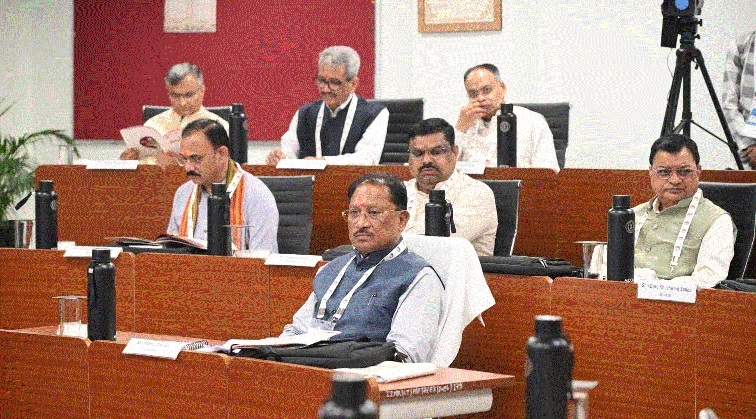
A two-day ‘Chintan Shivir 3.0’ successfully concluded at Indian Institute of Management (IIM) Nava Raipur Atal Nagar on Sunday, aiming to formulate a long-term strategy for building a developed Chhattisgarh, enhance the effectiveness of good governance, and develop administrative capacity to meet future challenges.
Chief Minister Vishnu Deo Sai, cabinet ministers, senior administrative officials, and distinguished policy experts, academicians, and subject experts engaged in comprehensive deliberations on various dimensions of governance, development, and public service.
Chief Minister Sai said that the ‘Chintan Shivir’ is no longer merely a platform for the exchange of ideas but has become an effective medium for bringing about concrete improvements in the governance system. He affirmed that the State Government is committed to developing an administration that is modern, transparent, technology-driven, and responsive to the aspirations of the citizens.
He expressed confidence that the suggestions emerging from Chintan Shivir 3.0 would give a
new direction to the development journey of a developed Chhattisgarh and would soon be implemented through policy and administrative initiatives.
Speaking at the session titled ‘Tourism as an Engine of Sustainable Prosperity’ held today, senior IAS officer and tourism policy expert. Suman Billa stated that Chhattisgarh possesses immense potential to emerge as a leading ‘high-value, low-impact’ tourism destination in the country, particularly in the realms of nature, tribal, and cultural tourism. He emphasised tourism infrastructure, community participation, investment, responsible tourism, and a tourism model grounded in good governance.
He specifically stated that through better coordination between the central and state governments, Chhattisgarh, particularly the Bastar region, could carve out a new identity on the national and international tourism map. The state’s industrial policy could also play a significant role in giving fresh momentum to tourism investment.
Speaking on the theme ‘Development-oriented politics through collective effort’ (Sabka Prayas), Lok Sabha member Shashank Mani Tripathi stated that the district should be the true fulcrum of growth. He emphasised the need for development-oriented plans for every district, development strategies aligned with local economic potential, and planning based on District GDP. While presenting the concepts of ‘Amrit Prayas’, ‘Banyan Revolution’, and participatory governance, he stated that the district-centric development model would impart new momentum to entrepreneurship, employment, agricultural transformation, local innovation, and the development of human potential, proving to be transformative-particularly for Tier-2 and Tier-3 regions.
In the valedictory session, Dr Vinay Sahasrabuddhe shared his views on good governance, effective policy implementation, leadership development, and various dimensions of public administration under the leadership of Prime Minister Narendra Modi. Chief Minister Sai stated that the State Government has successfully implemented the suggestions received during the last two ‘Chintan Shivirs’ (brainstorming sessions).
The implementation of the e-Office system in the Mantralaya has made the file disposal process faster, more transparent, and time-bound. An effective system has been established for the speedy resolution of citizens’ grievances through the Chief Minister’s Helpline 1076, while citizen services have been made simple, accessible, and transparent by making over 520 services from 36 departments available online via ‘Seva Setu’. He stated that the greatest success of this deliberative process is that ideas are now manifesting as tangible results on the ground.