Over 2.5 lakh Kolar residents may face water crisis by summer 2027, Only 20% of restoration work completed seven months after gate collapse; dam storage capacity reduced from 15 to 7 million cubic meters
Date :06-Jul-2026
Staff Reporter :
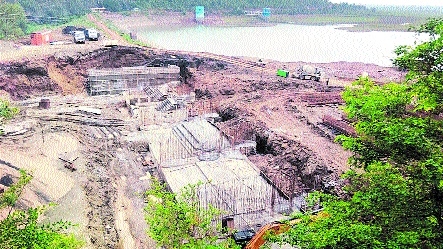
The sluggish pace of repairs at the Kerwa Dam, which meets the drinking water requirements of lakhs of residents in the State capital, has sparked fears of a severe water crisis in the Kolar region in the coming year. Seven months after a vital section of the dam was damaged in November 2025, only 20 per cent of the restoration work has been completed. With the arrival of the monsoon season, construction activities have ground to a complete halt. Although Water Resources Department officials had confidently pledged to finish the project within five months, their administrative apathy has left the vital infrastructure completely neglected far more than half a year later.
Constructed between 1975 and 1980, this critical reservoir possesses a total water storage capacity of 22 million cubic meters. Under normal conditions, up to fifteen million cubic meters of water can be safely retained up to the gate level. However, on November 11, a massive concrete slab built over gate number eight collapsed. While work on a new gate bridge commenced shortly after the accident, the structure remains highly incomplete. Due to this unresolved structural risk, the dam cannot be filled to its maximum capacity, forcing authorities to restrict the current safe storage limit to just seven million cubic meters.
Supply deficit looms for over two lakh Kolar residents
The Kerwa Dam serves as the primary life source for approximately 2.5 lakh residents residing across Bhopal’s expansive Kolar township. To fulfill the annual potable water demands of this densely populated zone, the municipal corporation requires a minimum of eight million cubic meters of water. In stark contrast, the dam’s restricted safety limit of seven million cubic meters leaves a clear deficit of one million cubic meters. Even if the region receives abundant rainfall during the current monsoon, the damaged gate bridge will force engineers to prematurely discharge excess water, preventing the reservoir from reaching its crucial target volume.
Municipal Superintending Engineer Udit Garg maintained that the current presence of seven million cubic meters of water in the reservoir is sufficient to prevent immediate disruptions. However, environmental experts and local analysts warn that the administration is shortsightedly focusing on immediate supply while ignoring the long-term impact, as the failure to accumulate sufficient water during the monsoon will trigger a devastating scarcity during the next summer season.