Monitoring of empty plots to prevent dengue-chikungunya
| Date :07-Jul-2026 |
Staff Reporter :
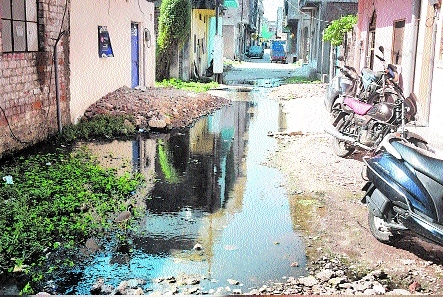
With the onset of monsoon season, persistent rainfall has led to widespread water accumulation in various parts of the city. These stagnant pools of water serve as primary breeding grounds for mosquitoes, triggering a significant rise in risk for vector-borne diseases such as dengue, malaria. For the prevention and eradication of mosquito-borne diseases in the city, action is being taken under the zonal plan by the District Malaria Office. When ‘The Hitavada’ team spoke to the District Malaria Officer (DMO) Smita Namdeo regarding the work ongoing at the ground
level and the field situation, she stated that anti-larval activities are being carried out in all municipal corporation zones since the month of January.
She mentioned that according to departmental reports and data, Chikungunya cases in Bhopal this time are five times lower compared to last year. Work is being done to control mosquito-breeding conditions in all areas of the city.
However, complaints regarding the non-arrival of teams and the absence of house-to-house larva surveys are emerging from several areas of the city. Raja, a resident of Saket Nagar, shares that no team from the malaria department has visited their area so far, nor has any spraying of pesticides been conducted, even though water has accumulated in potholes at multiple places across the area.
Similarly, Prachi, a resident of Gautam Nagar, stated that no malaria control team has reached her locality, and due to water accumulation, the mosquito population has increased significantly, but no action like fogging has been carried out in the colony so far. Sachin, a resident of Ashoka Garden, points out that there is severe filth in his neighbourhood, and due to the accumulation of dirty water, mosquitoes and disease-causing germs are rapidly breeding in it, making people sick, but no spraying has been initiated yet to control the situation.
When asked about the complaints, the District Malaria Officer explained that this work is done based on a fixed ‘Zone-Wise Action Plan’ (ATP). Based on the availability of the team, the survey of a designated colony is completed first, after which the team moves forward to another colony.
Currently, this survey is ongoing in one colony or another within all zones. To further strengthen the field work, all employees of the malaria office whose duties were previously assigned elsewhere (SIR) have now returned and are engaged in field and office tasks.
In this connection, the State
Programme Officer (Vector Borne Disease Control Programme) Dr Himanshu Jayaswar held a review meeting at the District Malaria Office and directed that all teams deployed on the field must remain fully alert in view of the transmission season. Under this arrangement, special monitoring will now be kept on empty plots in all municipal corporation zones. In case of water accumulation there, plot owners will initially be given a warning, but if waterlogging is continuously found even after that, strict chalan action will be ensured through the Municipal Corporation. Apart from this, instructions have been given to spray BTI on temporary water sources and water collected in empty plots, and to use Gambusia fish as required.
Under the prevention activities, wherever positive cases of dengue-chikungunya are reported, fogging, pesticide spraying, live survey, and source reduction are carried out simultaneously. To prevent breeding in temporary water sources, around 30,000 Gambusia fish have been released so far with the co-operation of the Municipal Corporation, while the Municipal Corporation is handling the work of oil balls for stagnant water.